
Deities of Hrit Chakra

Guardians of the Eight Directions – The Ashta-Dikpalas
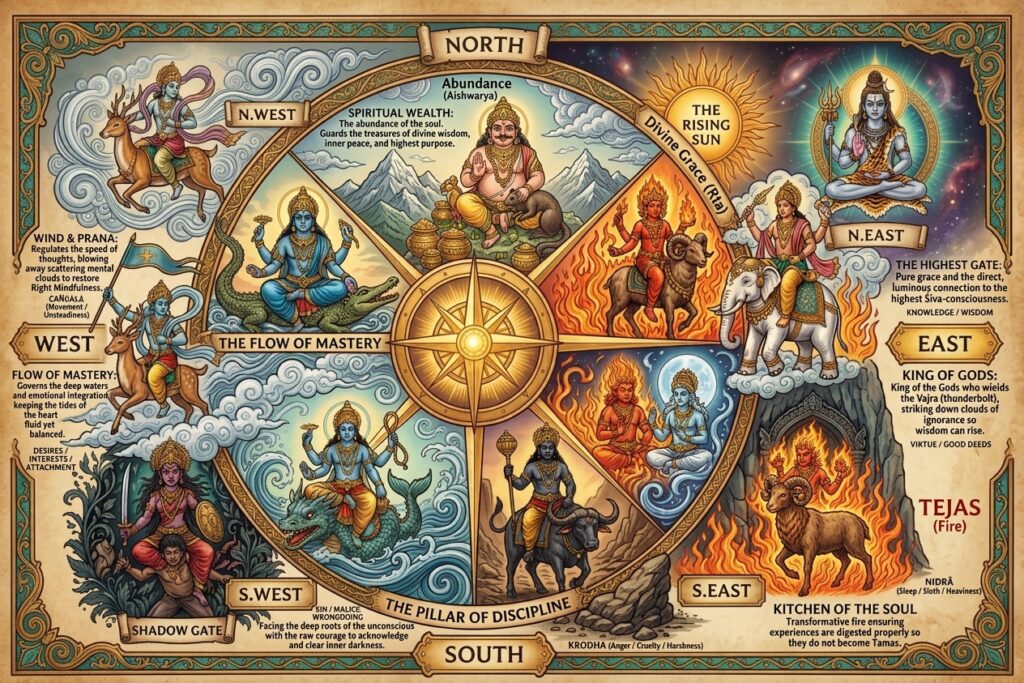
A circular classical mandala depicting the eight directional guardians (Ashta-Dikpalas) around the Hrit Chakra, complete with their elemental attributes and psychological gateways.
An integrated visual matrix of the eight directions of the Hrit Chakra, mapping the Ashta-Dikpalas, their elemental forces

The vṛttis of the Hṛt-chakra are not simply emotional states, but eight distinct directional winds—aspects of our nature that our mind navigates as it walks around the petals. Each direction is governed by a guardian deity (Dikpāla) who anchors a specific elemental gate.

When you encounter inner heaviness or unprocessed experiences, you stand at the Southeast petal, where Agni’s transformative fire must digest these impressions before they can cloud the mind. When you are focused, luminous, and clear, you rest on the Northeast petal, where Īśāna grants access to pure grace.

These entities are the keepers of the boundaries (āvaraṇa). They ensure that the outer elemental perimeter is fully balanced and sealed before you pass through to the Kalpavṛkṣa (Wishing Tree) at the unmoving centre.
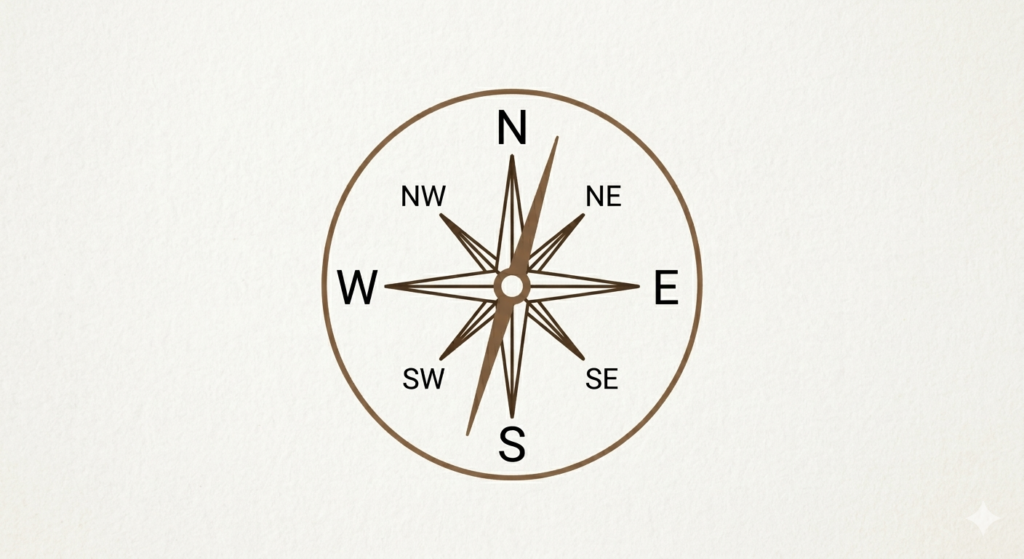
A clean, minimalist digital illustration of a traditional compass rose centered on a light, textured off-white background. The design features a circular outer border enclosing an eight-pointed star that marks the cardinal directions—North, South, East, and West—along with the intercardinal directions—Northeast, Northwest, Southeast, and Southwest—labeled in a simple, dark brown sans-serif font. A stylized, vintage-inspired magnetic needle with a gold hue cuts vertically through the centre, pointing slightly east of north.
A compass serves as a visual anchor for orientation, historical cartography, and navigation.
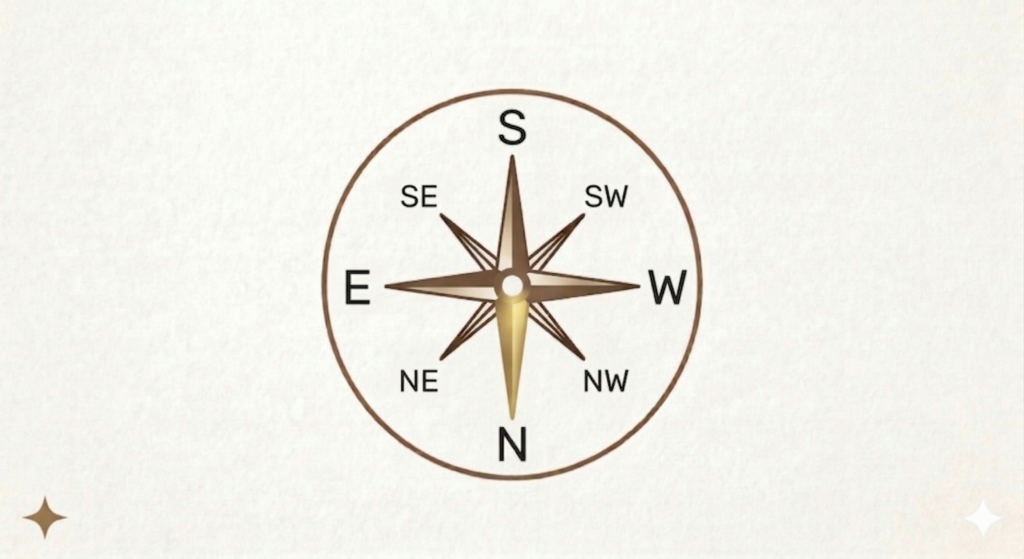
A minimalist digital illustration of an unconventional, upside-down compass rose centered on a light, textured off-white background. The circular brown border encloses an eight-pointed star displaying inverted cardinal and intercardinal points: South (S) is positioned at the top, North (N) is at the bottom, East (E) is on the left, and West (W) is on the right. The corresponding diagonal directions follow this flipped layout with Southeast (SE) and Southwest (SW) near the top, and Northeast (NE) and Northwest (NW) near the bottom. The main points feature a metallic gold-and-brown gradient shading.
From where we sit in the the southern hemisphere, the points of the compass are different. South is downwards, West is inland, North is upward and East is where the sun rises.

Guardians of the Eight Directions — The Ashta-Dikpalas

Direction Guardian Deity Primary Vṛtti / State Psychological Gateway & Attribute
North (N) Kubera Śānta (Peace & Contentment) Spiritual Wealth: The abundance of the soul. Guards the treasures of divine wisdom, inner peace, and highest purpose.
Northeast (NE) Īśāna Knowledge / Wisdom The Highest Gate: Pure grace and the direct, luminous connection to the highest Śiva-consciousness.
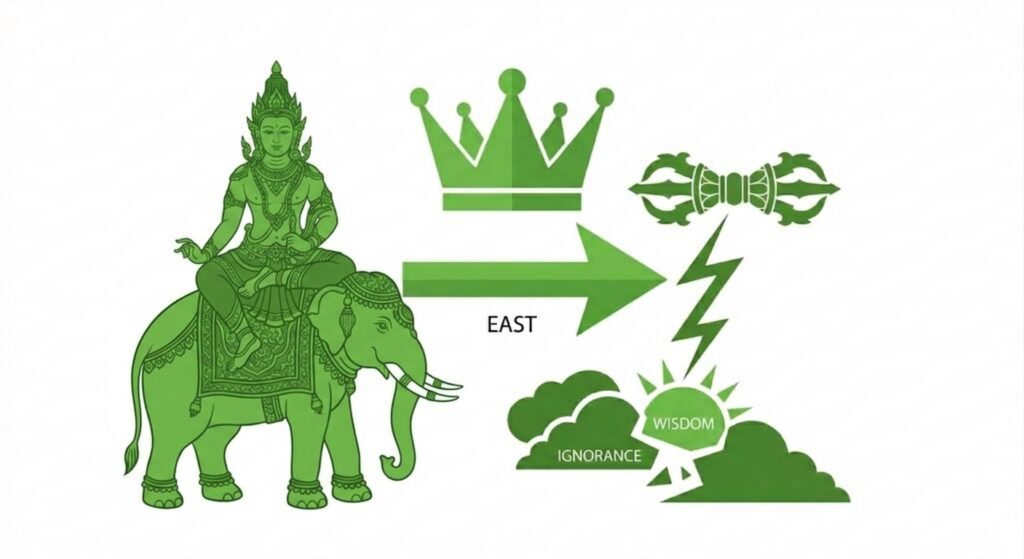
East (E) Indra Virtue / Good Deeds The Rising Sun: King of the Gods who wields the Vajra (thunderbolt), striking down clouds of ignorance so wisdom can rise.
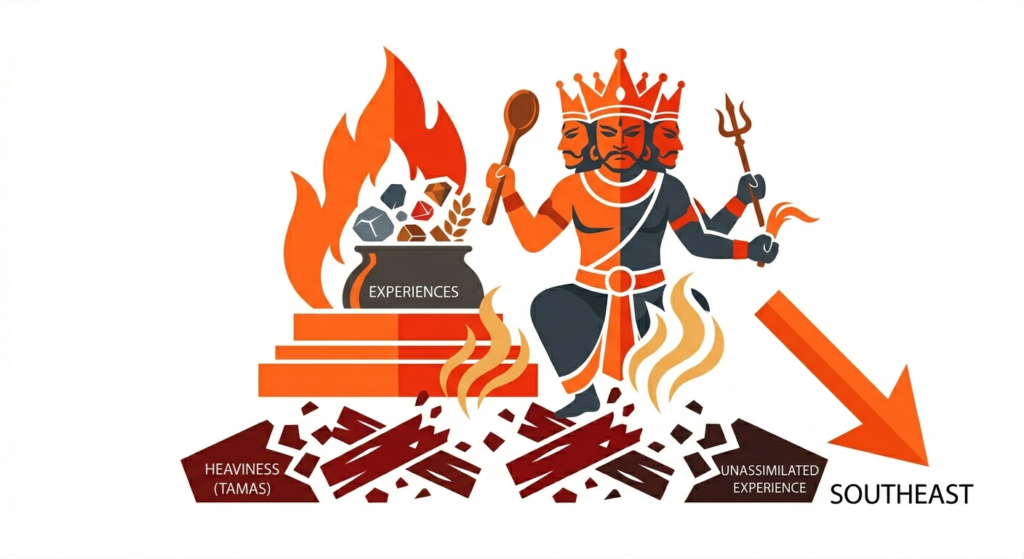
Southeast (SE) Agni Nidrā (Sleep / Sloth / Heaviness) Kitchen of the Soul: Transformative fire ensuring experiences are digested properly before turning into Tamas.
South (S) Yama Krodha (Anger / Cruelty / Harshness) Pillar of Discipline: Uses the Pāśa (noose) to catch the ego, tempering over-indulgence and determining right action.
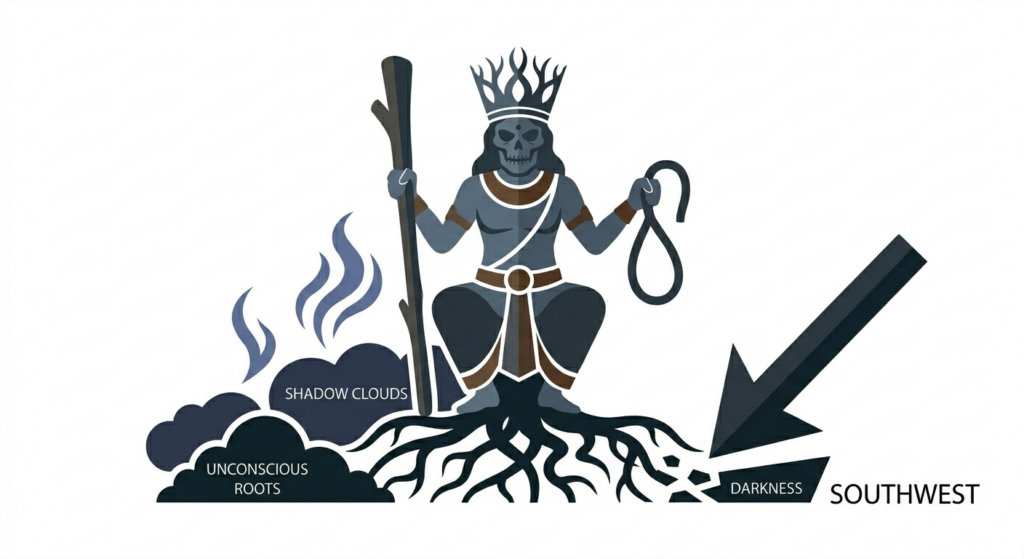
Southwest (SW) Nirṛti Sin / Malice / Wrongdoing Shadow Gate: Facing the deep roots of the unconscious with the raw courage to acknowledge and clear inner darkness.
West (W) Varuṇa Desires / Interests / Attachment Flow of Mastery: Governs the deep waters and emotional integration, keeping the tides of the heart fluid yet balanced.
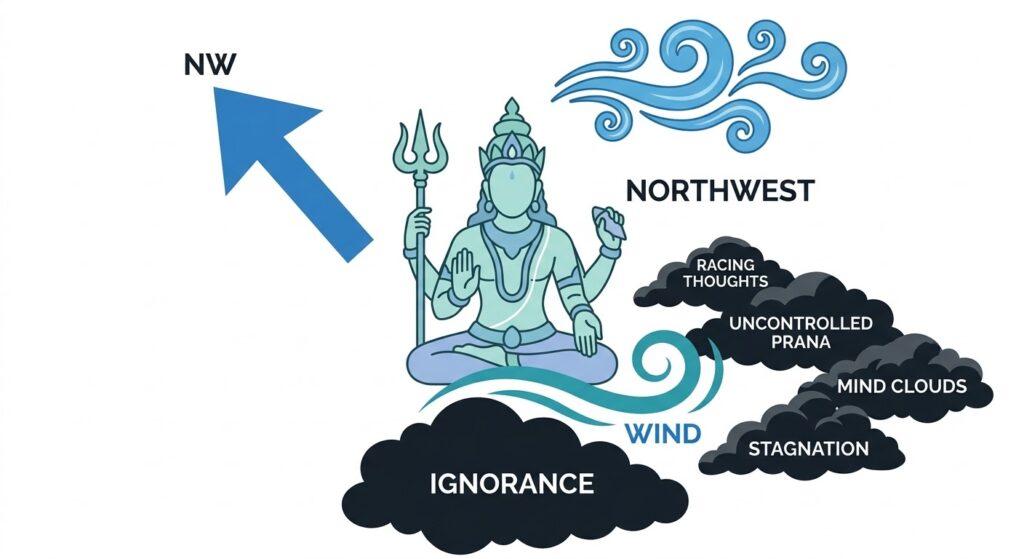
Northwest (NW) Vāyu Cañcala (Movement / Unsteadiness) Wind & Prāṇa: Regulates the speed of thoughts, blowing away scattering mental clouds to restore Right Mindfulness.

Understanding the Map: Ancient Architecture Meets Modern Contemplation

To approach this practice with clarity, it helps to understand how these two streams of wisdom unite on the page:

  • The Classical Āgamic Foundation: In traditional Tantric scripture, the Ashta-Dikpālas function as objective cosmic protectors (āvaraṇa). They establish the sacred geometric boundary, ensuring the outer perimeter is sealed so the inner sanctuary remains undisturbed.
  • The Modern Contemplative Synthesis: Mapping these directional gates to specific internal states (vṛttis)—such as meeting personal heaviness through Agni’s fire or finding discipline at Yama’s gate—reflects a 19th/20th-century psycho-spiritual framework that makes these cosmic symbols actionable for self-reflection.

By holding both together, the ancient structure provides the unshakeable outer walls, while the modern synthesis gives us the key to navigate our own minds.

The Eight States of Mind

Think of these eight petals as the directional winds that sweep through your awareness when you are under pressure. Depending on where your mind settles, your unshakeable center can feel miles away:

When you feel heavy or slothful: You are resting on the Southeast petal (Nidrā), where Agni’s transformative fire must be called upon to digest unprocessed impressions before they turn into stagnant inertia.
When you feel harsh or reactive: You have moved to the South petal (Krodha), where Yama’s discipline and restraint are needed to temper the ego and restore right action.
When you feel pulled into wrongdoing or shadow: You stand on the Southwest petal (Nirṛti), requiring the courage to face unconscious darkness, clear residual karmic debris, and realign with integrity.
When you feel swept up by desire or attachment: You are navigating the West petal (Varuṇa), where the fluid tides of emotion must be contained within clear boundaries to maintain inner balance.
When you feel fickle and scattered: You are spinning on the Northwest petal (Cañcala), where Vāyu’s wind element is dispersing your focus and requires steady prāṇāyāmic breath to restore mindfulness.
When you feel deep peace and contentment: You have found your way to the North petal (Śānta), resting in Kubera’s domain of spiritual wealth and unshakeable inner abundance.
When you feel open to divine grace and pure clarity: You are aligned with the Northeast petal (Īśāna), where intellectual effort dissolves directly into transcendent Śiva-consciousness.
When you feel inspired to virtue and noble action: You stand on the East petal (Indra), where the vajra (thunderbolt) strikes down clouds of ignorance so wisdom and right conduct can rise.

The Rising Sun (East & Southeast)

Green arrow pointing in the direction of East, the direction of Wisdom over ignorance
East (Indra): This is where you find virtue. Indra is the King of the Gods who wields the Vajra, striking down the clouds of ignorance so wisdom can rise.
flames and ashes of Agni guarding the southeast direction of the digestion of experiences so we don't feel heavy
Southeast (Agni): This is the “Kitchen of the Soul.” Before wisdom can be used, it must be purified. Agni, god of fire ensures that your experiences are digested properly so they don’t turn into heaviness (Tamas)
The Pillar of Discipline (South & Southwest)
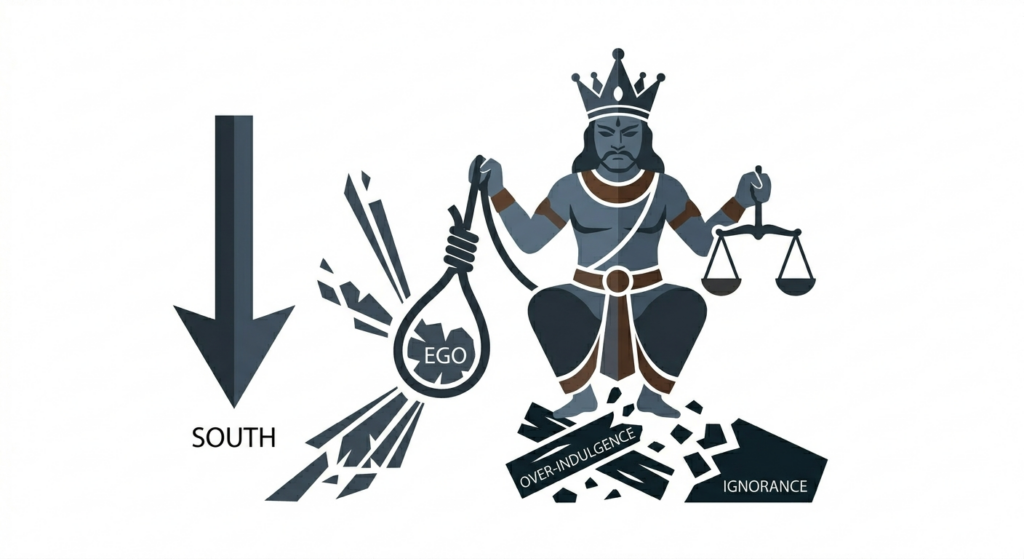
grey god guarding the south holding a noose to reign in our thoughts and scales to act as good judgement
South (Yama): This is where the discipline for spiritual study lives. Yama uses the Pasha (Noose) to catch the ego. If you feel yourself drifting toward Prashraya (over-indulgence), it is Yama who pulls you back to Right Resolve. Yama is a judge who determines the next step of the soul based on its actions.
grey god, Nritti guarding the roots of our unconscious, our shadow self and darkness holding a noose and staff Transmutation, Nirriti, Ignorance, Shadow work.
Southwest (Nirriti): This is the most difficult gate. Nritti faces the roots of the unconscious with the courage to look at the shadow. Honor Nirriti’s role by acknowledging the darkness so it can be cleared.
The Flow of Mastery (West & Northwest)
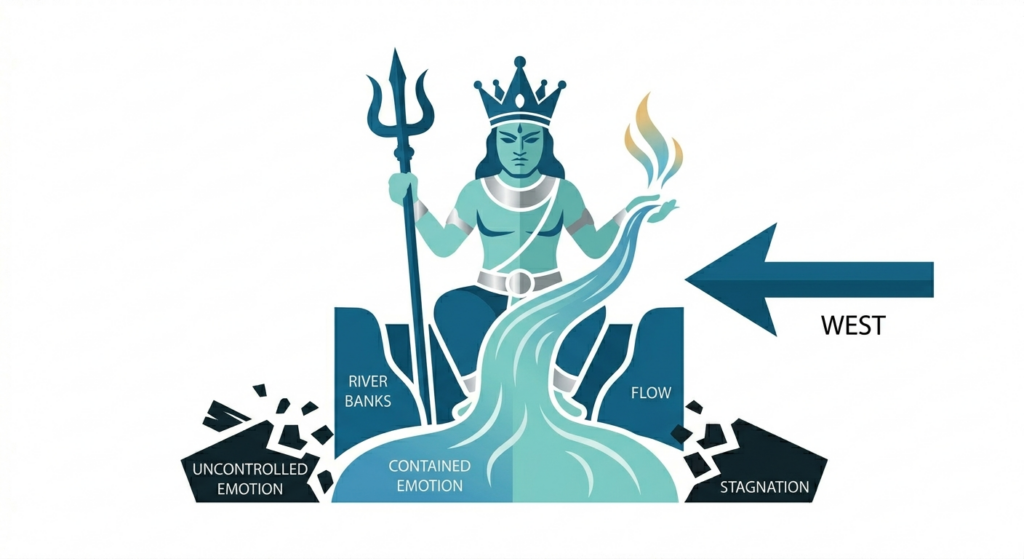
flowing blue and green water to represent flowing emotions gurdin the west by Varuna
West (Varuna): Varuna governs the Waters and Emotional Mastery. He helps you keep the waters of your heart fluid but contained like the banks of a river.
Diagram of the Northwest petal of the Hrit Chakra showing Vayu, wind elements, and obstacles like mind clouds and stagnation.
Northwest (Vayu): Vayu is the Wind and the movement of prana. This relates to the speed of your thoughts. When your mind is racing, call on Vayu to blow the clouds away and restore Right Mindfulness.
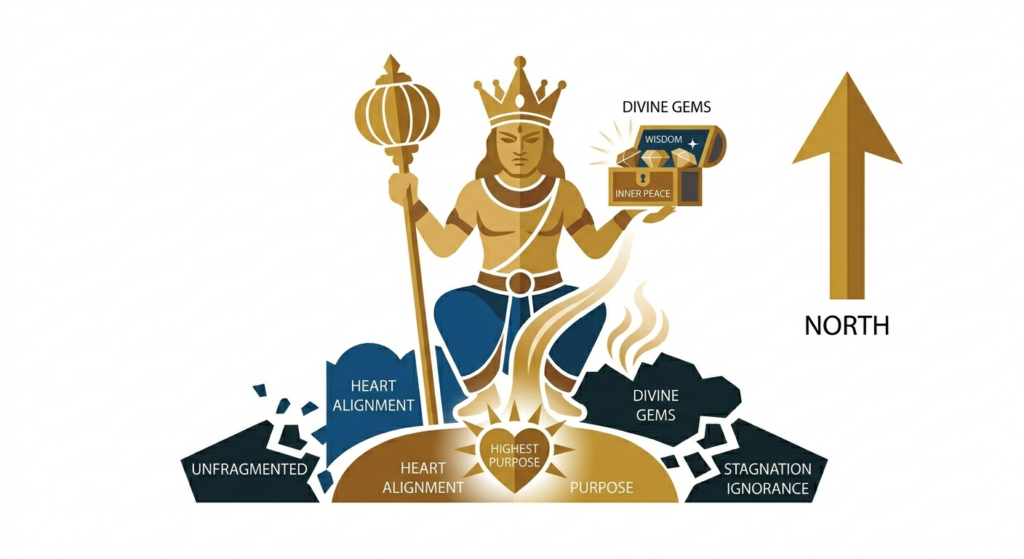
Kubera guarding our thoughts leading toward our highest purpose
North guarded by Kubers – Spiritual Wealth, the abundance of the soul. He guards the treasures of divine wisdom and inner peace, reminding you that true prosperity is found when your heart is aligned with its highest purpose.”
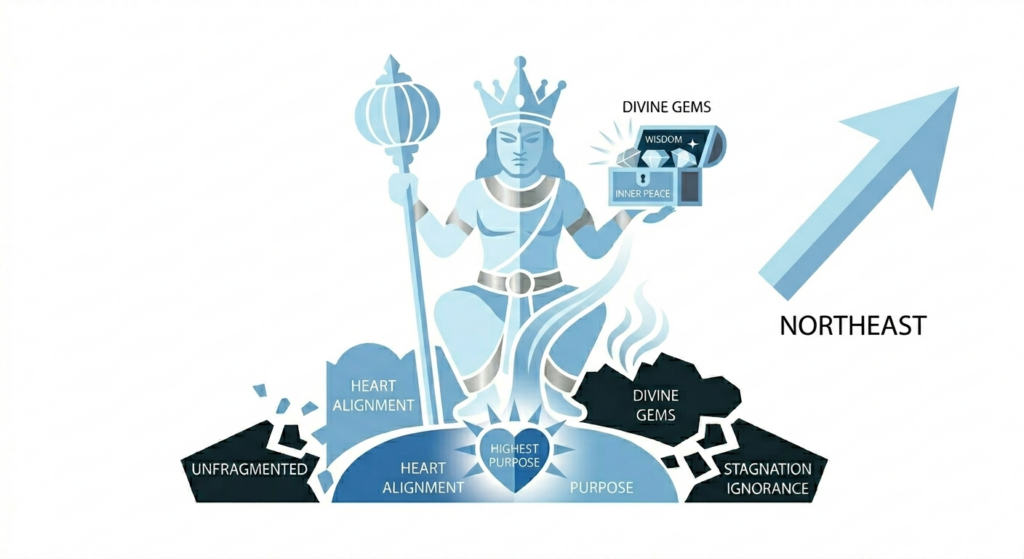
Blue figure of Ishana pointing to the northeast aligning our heat with our true purpose to grant us the highest divine gems, wisdom and inner peace
Northeast (Ishana): Pure grace and the connection to the highest Shiva-consciousness. This is the Highest Gate, where grace enters.

Notice how these guardians have shifted from the physical in Muladhara to the spiritual in Hrit Chakra.

Requesting the Blessing of the Eight Guardians

Before you can enter the inner sanctuary of the heart lotus, you must pause at each of the eight outer petals to honour the guardians of the eight directions. By internally acknowledging each guardian’s divine authority, weapon, and vehicle, the seeker is asking for their permission and blessing. This seals the outer perimeter of the inner heart against chaotic subtle influences, external distractions, and karmic fluctuations. Only when the eight directional gates are respectfully honoured and secured will the guardians step aside and grant safe passage for awareness to step into the unmoving stillness at the lotus centre.