
The Inner Guru
Deities are not only mythological figures; they are representations of the spiritual functions within each chakra. At the level of the Ajna Chakra, their function shifts to the realization of non-dual consciousness, where everything becomes one. Rather than being experienced merely as external symbols, they become the quiet voice of wisdom within—our Inner Guru. As energy settles into the Third Eye, we stop searching outside ourselves for the truth, discovering that the true teacher, intuitive guidance, and highest truth have been residing within us all along.
Presiding Deity: Ardhanarishvara
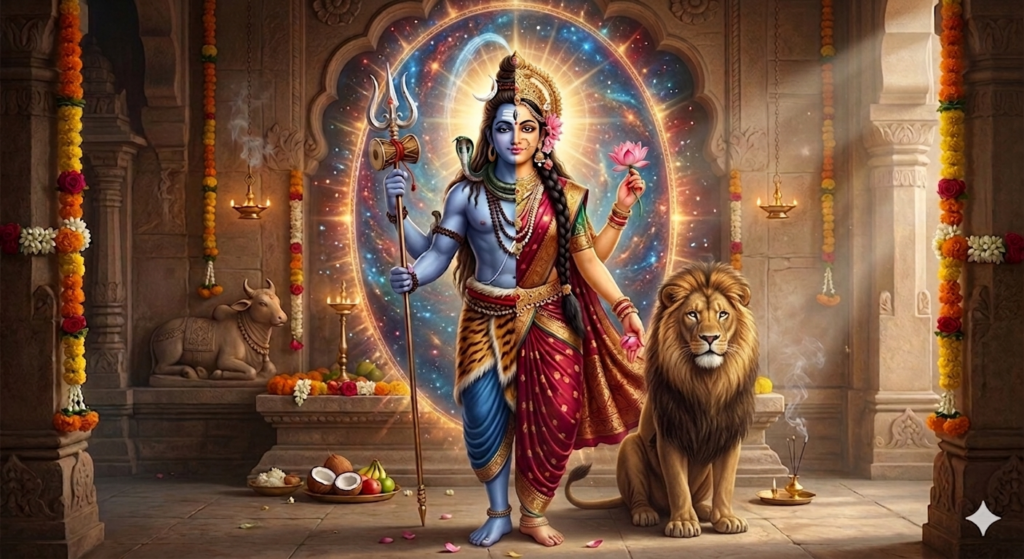
The primary deity of the Ajna Chakra is Ardhanarishvara — a singular form that is half-male (Shiva) and half-female (Shakti). Standing within a glowing white lingam of pure light — the Itara Linga — this divine figure shows that the complete integration of masculine and feminine energy reveals our true, non-dual nature.
The Masculine Side (Shiva)
With cool, glowing blue skin, the right half represents Pure Consciousness—the quiet, unchanging observer of the universe. He is the potential within emptiness, providing the open canvas for ideas to take shape. Pure consciousness doesn’t “do” anything; rather, it effortlessly holds the space for everything to occur.
- Nandi the Bull: Shiva’s sacred animal represents stability. His statues sit at the gateway to Shiva’s temples, unmoved by the chaos around. At the Ajna Chakra, Nandi represents a mind that has stopped wandering, remaining perfectly anchored in its own still centre.
- The Trident: Shiva’s trident represents mastery over our internal energy. Its outer prongs symbolize the dual channels of feeling (Ida) and logic (Pingala), which merge into the central staff of awareness (Sushumna). When these moving energies meet and settle into stillness, they anchor us back into the undivided awareness within.
The Feminine Side (Parvati / Shakti)
Depicted with radiant pink skin, a crimson sari, and gold ornaments, Shakti represents the creative, active, living energy of nature. She is the life-force that fills all of existence with movement and form.
- Her Lotus and Mirror: She holds a pink lotus as the ultimate symbol of purity and spiritual awakening, and a mirror symbolizing the physical world of senses and illusion.
- The Sacred Lion: Her sacred animal is a lion whose wild nature dissolved when it entered her calm, spiritual aura. It sat quietly, guarding her for thousands of years. This story demonstrates that we don’t need to crush the ego. When we meditate, our wild nature transforms into a controlled, protective power that serves our higher truth.
Harmonizing Consciousness and Energy
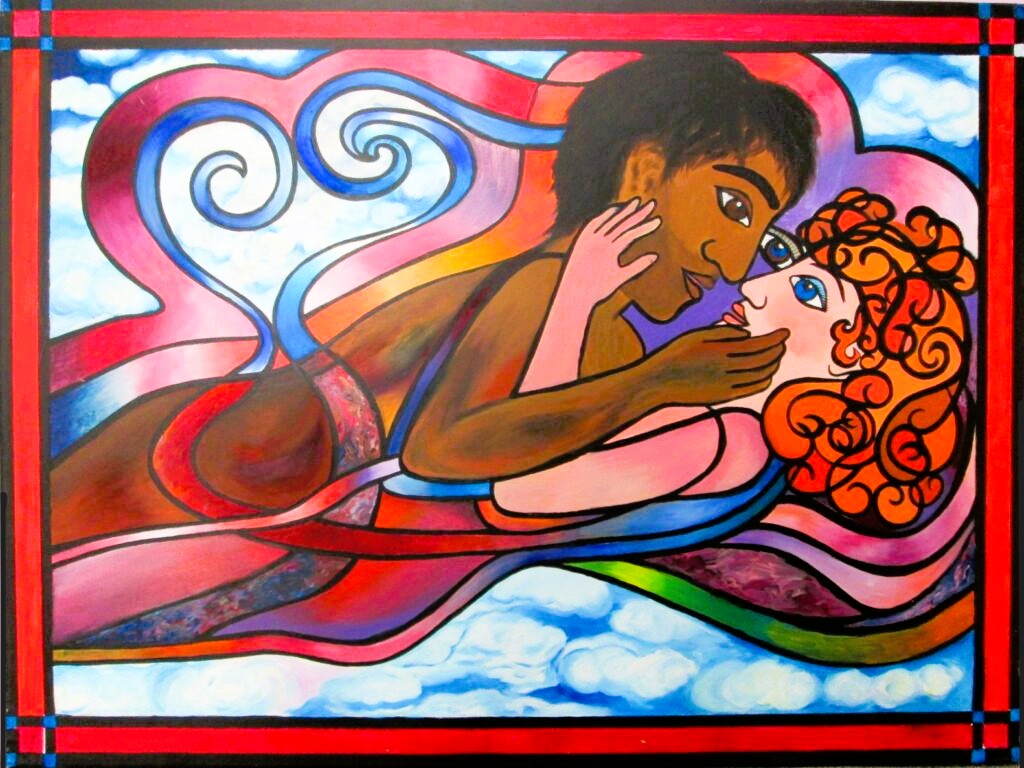
This artwork captures the harmony between stillness and action. The unmoving masculine space of pure consciousness holds the vessel, while the vibrant feminine energy steps forward to embrace the world. When these two opposing forces unite within the Third Eye, inner vision aligns with outward action—and dreams become reality.
Together, Shiva and Shakti share a central Third Eye. Through this unified vision, Ardhanarishvara pierces the final inner obstacle: the knot of the individual ego, spiritual pride, and subtle distractions. Piercing this knot brings thoughts and breath into complete harmony, allowing energy to safely rise toward the Sahasrara (Crown) Chakra.
The Activating Energy: Shakti Hakini
While Shakti represents the vast, universal creative force, within the Ajna Chakra she acts as a personal portal — manifesting specifically as Shakti Hakini, the specialized energy governing the mind, intuition, and higher intellect.
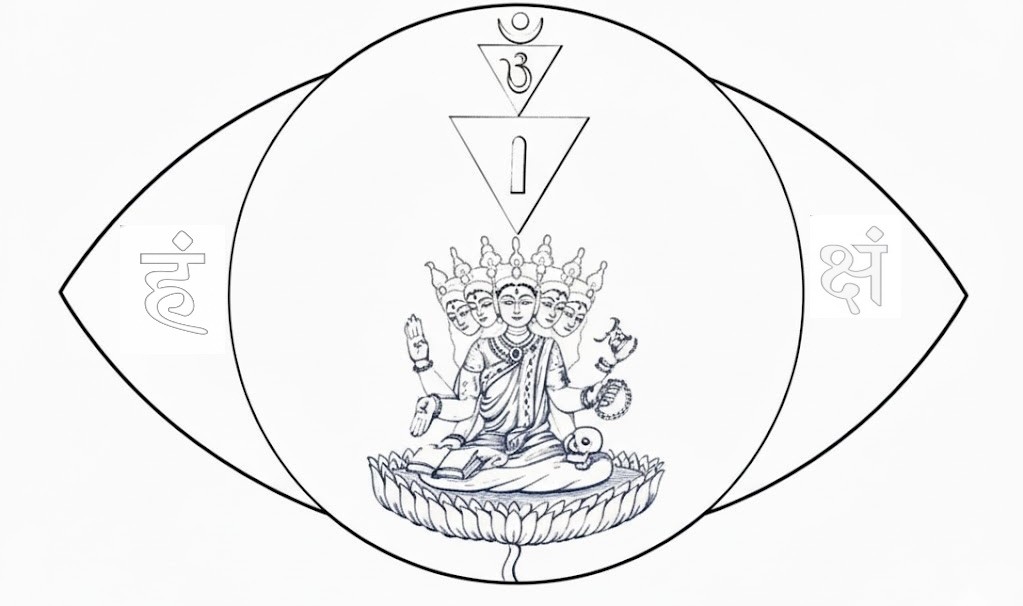
Seated upon a divine pink lotus, Hakini is depicted with six moon-white faces and six arms holding symbolic tools. As the ruler of mental clarity, she commands all five energy centres beneath her.
- The Inner Meaning: Through the portal of Hakini, we access the infinite wisdom of universal Shakti within our own mind. Meditating upon her quiets lower mental chatter and awakens higher vision, guiding us beyond surface dualities into a direct, profound understanding of the true Self.
Mantra: Om Hakini Namaha
Beyond “Wishing”: The Alchemy of True Manifestation
The world lights up when dreams become reality.
Most people are taught that manifestation is about wanting something hard enough, writing it down a hundred times, or forcing a positive mindset. But if you are trying to manifest from a place of stress, lack, or an overactive mind, you are essentially spinning your wheels.
Ready to experience the formula?
True manifestation isn’t a mental trick. It is a precise, ancient energetic alignment.
The Shift from Effort to Alignment: When you learn to work with the deeper mechanics of your energy system, the entire process flips.
In my upcoming immersive course, we go far beyond the theory. I will guide you step-by-step through the exact practices, breath mechanics, and internal shifts required to still the mind, open the energetic gateways, and step into total alignment with your highest potential.
👁️ Explore Ajna & Beyond
Return to the main Third Eye Chakra hub or ascend to the Crown Chakra.