
Sadashiva
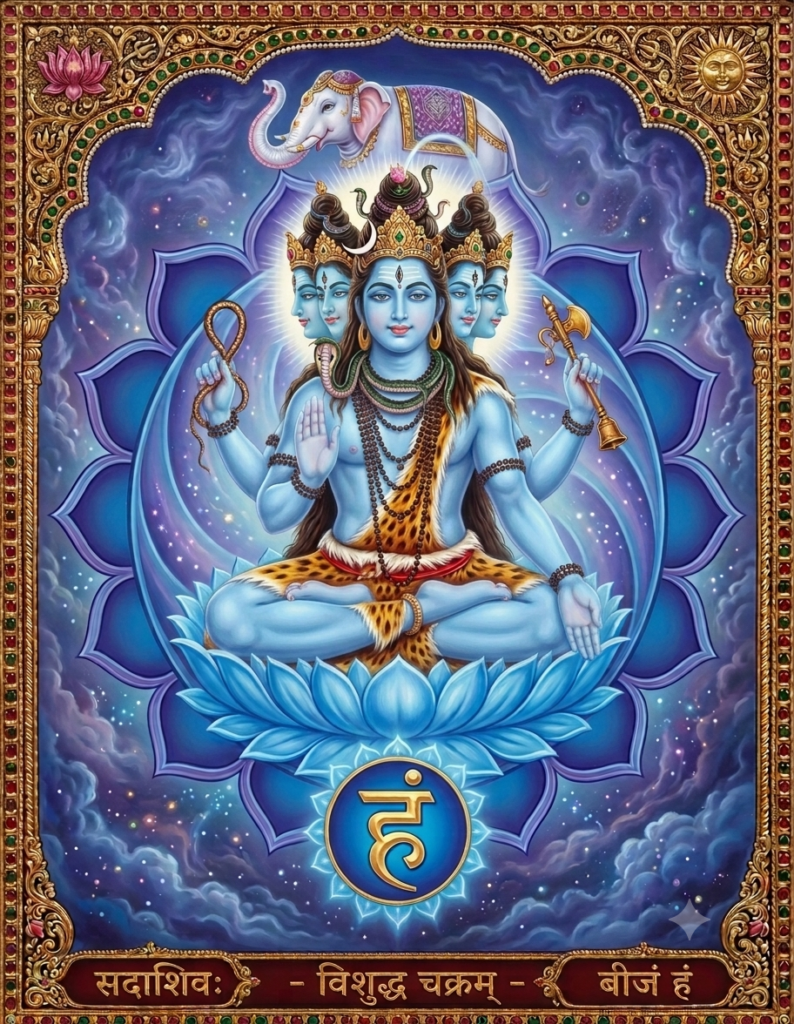
The presiding deity of Vishuddha is Sadashiva. His five faces symbolize the five elements: earth, water, fire, air, and space, and the five powers of Shiva: creation, preservation, destruction, illusion, and grace. The three eyes in each face embody the sun, moon and fire and give him the ability to transcend and observe all three realms of time: past, present, and future.
Shiva drank the cosmic poison (Halahala) to save the universe, holding it in his throat without letting it descend or consume him, turning his throat blue. It is the ultimate mythological embodiment of transforming harsh realities, processing difficult truths, and mastering what we project out into the world.
He has four arms holding a noose, symbolizing control over the senses, and a goad, representing control over the mind. A goad is a long stick used to move livestock in the desired direction, as we strive to guide our minds. His other two hands are in Abhay Mudra to dispel fear, and Varada Mudra, the gesture of bestowing boons.
His Mantra is the Bija Ham. The Bija mantra is the essence.
Ardhanarishvara
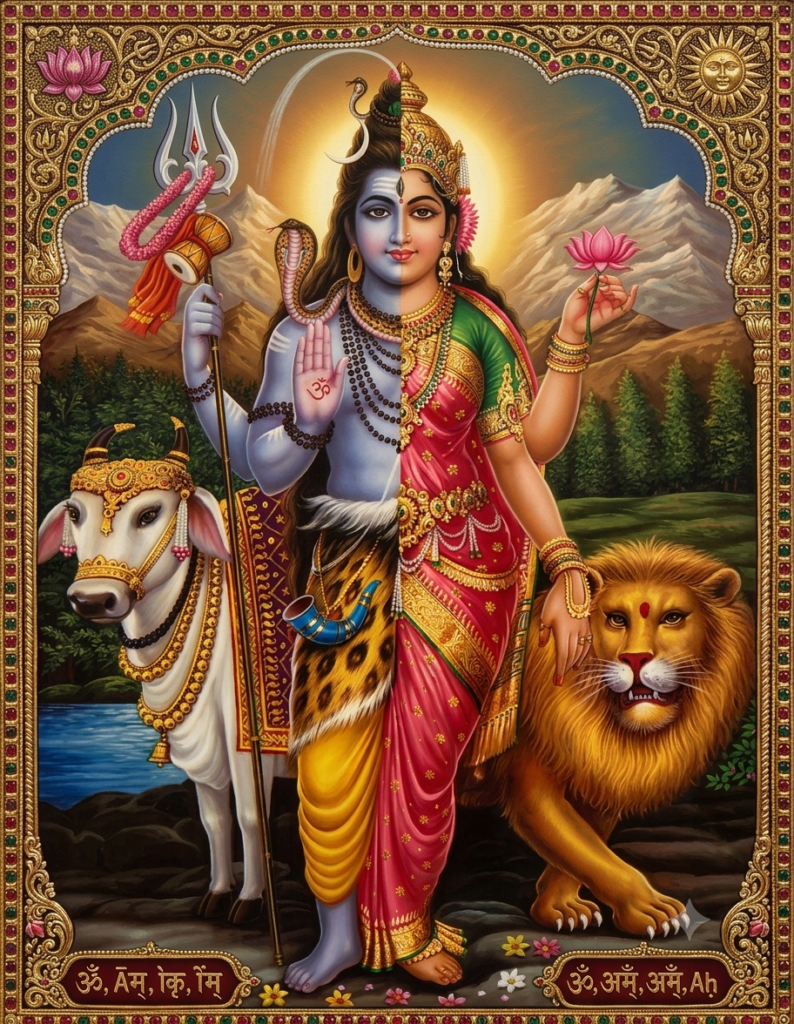
With Parvati in his heart, Sadashiva is often depicted in the androgynous form of Ardhanarishvara, symbolizing the inseparable union of masculine and feminine energies, to teach us the importance of balance, unity, and harmony in all aspects of life. Ardhanarishvara embodies the concept of Purusha (the cosmic male principle) and Prakriti (the creative female principle) being unified.
Of golden colour on the left, Shakti is seated on a half-lion and of snow-white colour on the right, Shiva sits upon a half-bull, wearing the skin of a tiger and adorned in a garland of snakes.
Depicted with a single face split cleanly down the center—radiating divine feminine grace on the left and serene masculine focus on the right, the god/goddess wears a tiger skin and has ten arms, holding a trident, battle-axe, sword, vajra, symbolizing the properties of a diamond (indestructibility) and a thunderbolt (irresistible force), fire, the great snake, a bell, a goad and a noose, and making the gesture of dispelling fear.
Shakini Shakti
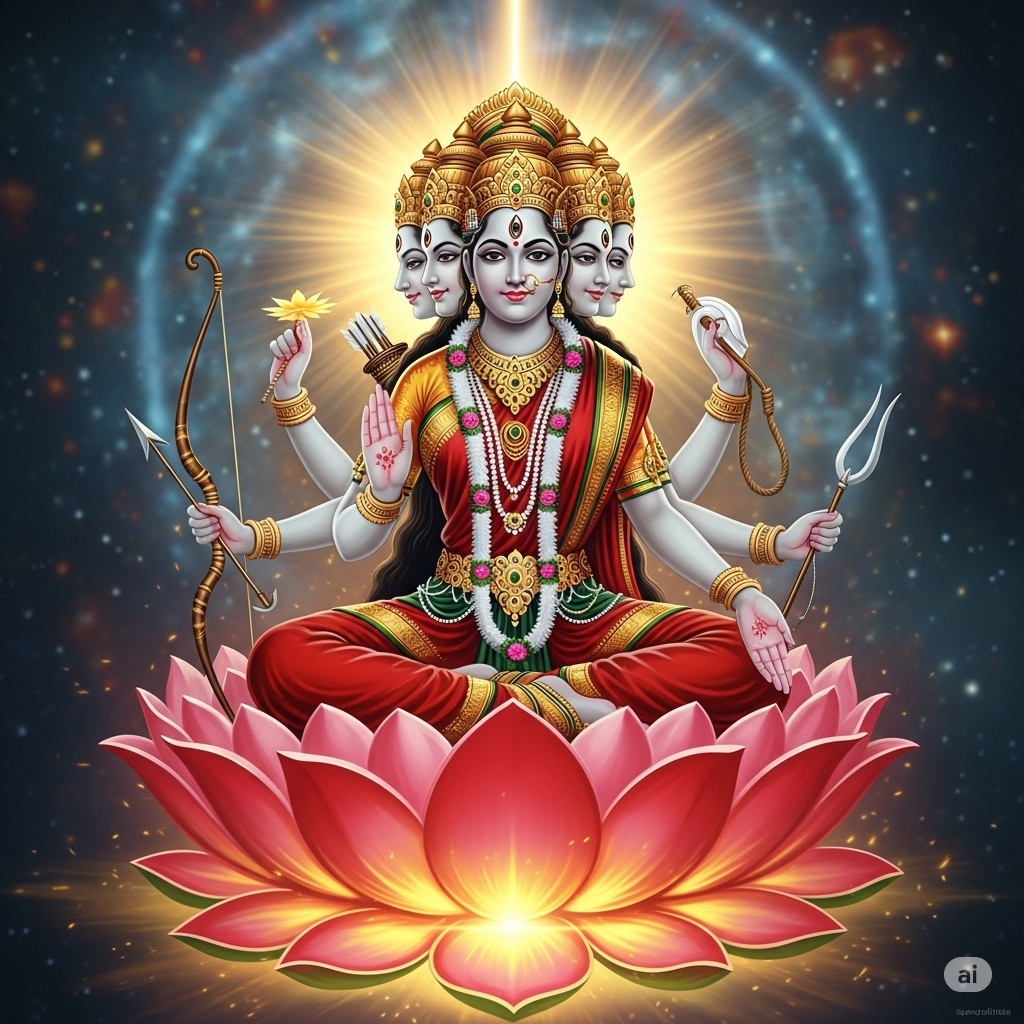
The shakti power of Vishuddha comes from Shakini, the activating energy of Sadashiva.
Shakini Shakti is purer white than the ocean of milk, luminous in the light of the full moon of the Chakra. Wearing yellow and seated on a red lotus in Jnana mudra she has five faces, each with three eyes. Holding a skull, as she is the goddess of our bones; an ankusha, a staff used to control an elephant; the scriptures, representing knowledge; and mala beads.
Shakini Shakti is the bestower of higher knowledge and siddhis (powers). She is the gatekeeper to the door of liberation for a practitioner whose senses are pure and controlled.
She governs the power of speech, self-expression, and the ability to articulate one’s truth with authenticity and grace. Within this purification centre she separates truth from falsehood and transforms negative experiences into wisdom.
Goddess Matangi
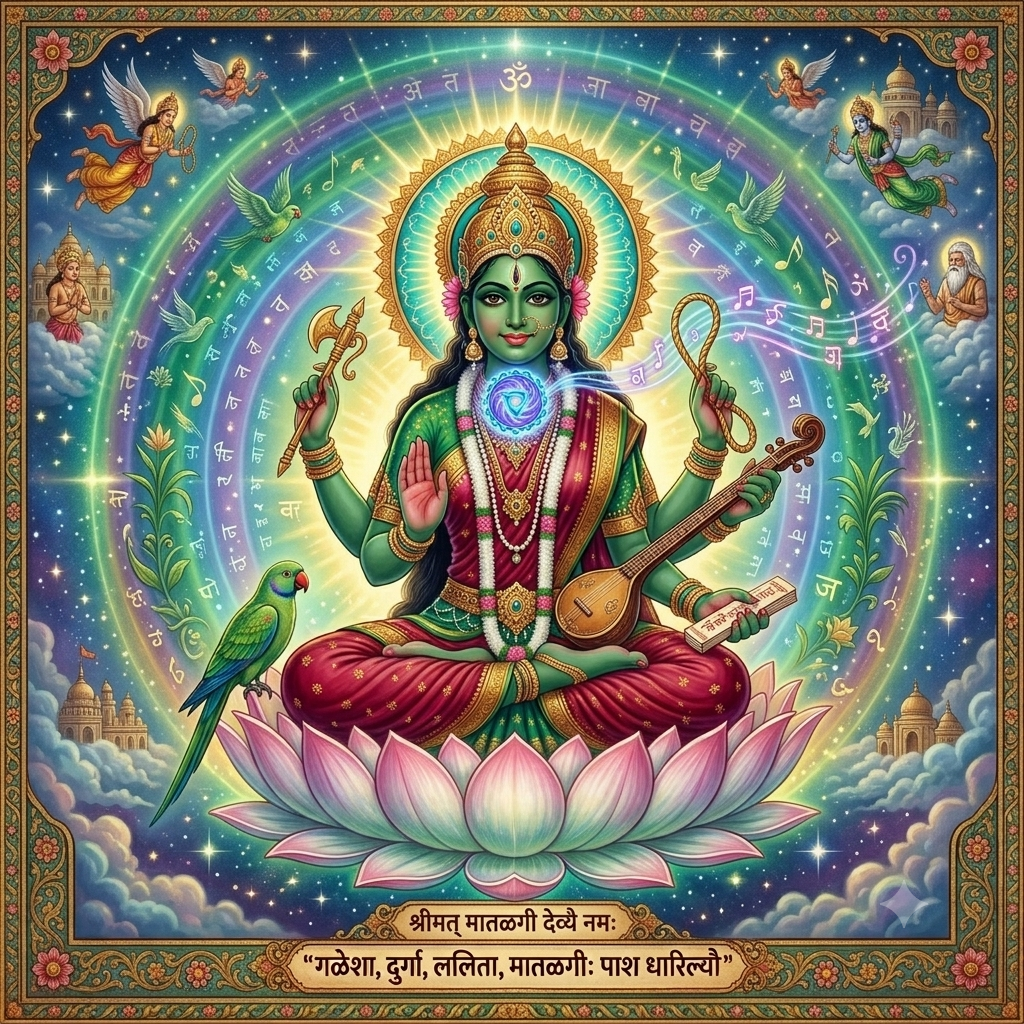
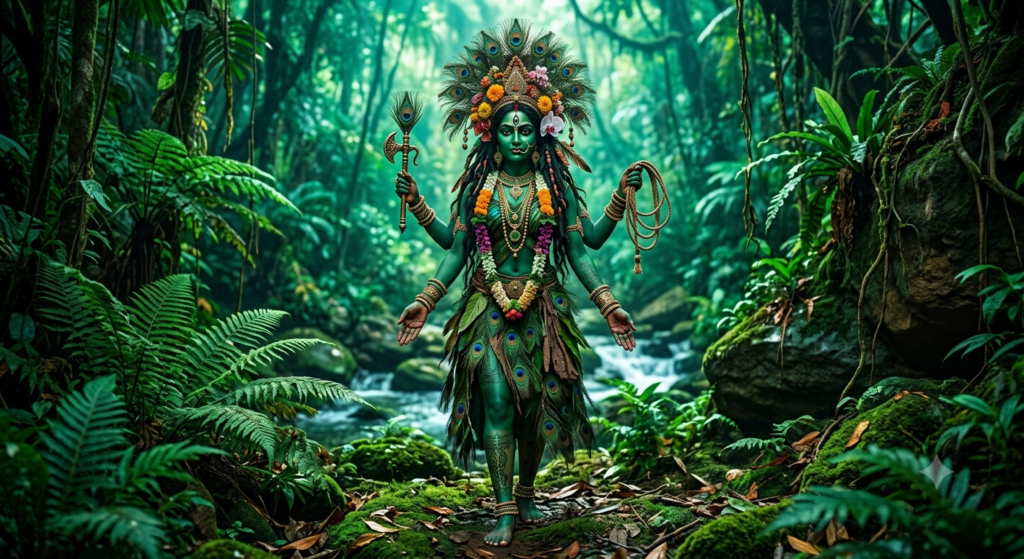
Matangi is the emerald-green, esoteric counterpart to Saraswati. While Saraswati rules mainstream arts, Matangi governs the raw power of the spoken word, creative inspiration, and supreme knowledge that breaks society’s conventions. Her primary residence in the subtle body is the Throat Centre, where she rules over Nāda — the inner cosmic sound. By grounding consciousness in this unmanifest vibration, she transforms silent inner truth into authentic outer expression.
Unlike forces that pull consciousness inward, Matangi embodies how divine energy projects outward into your auric field, translating silent ideas into song, art, and speech. Because she thrives on the periphery, her energy extends to the very edges of your energetic boundary, capturing chaotic external frequencies and transforming them into raw creative fuel. By invoking her lasso within the throat centre, you capture wandering thoughts and anchor them into alignment, ensuring your outward expression remains clear, potent, and true.
The 16 Nityās (Goddesses) – Awakened Awareness
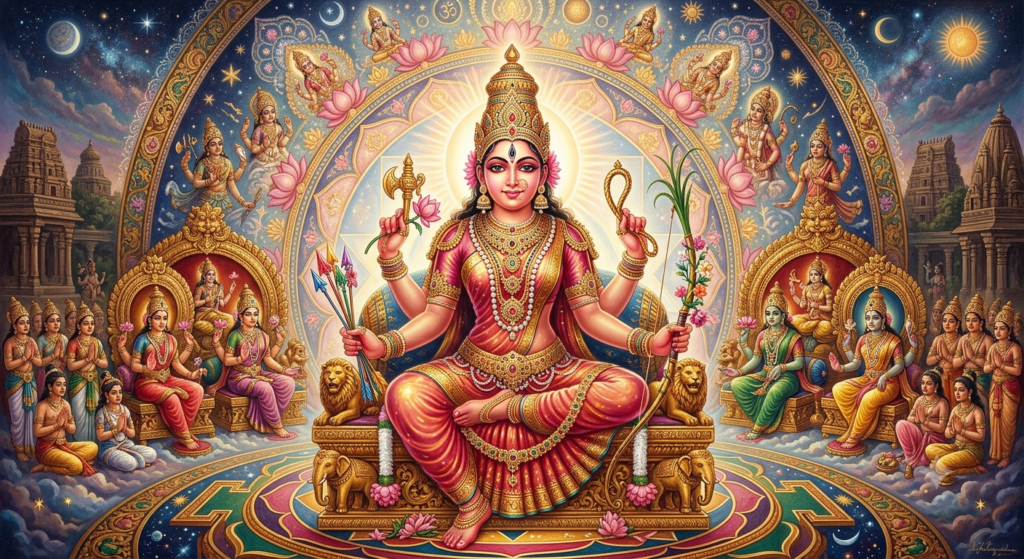
Vishuddha Chakra houses 16 energy goddesses—the Nityās—one for each petal of Vishuddha Chakra. Together, they form a cohesive map bridging astronomy, human expression, and psychological transformation.
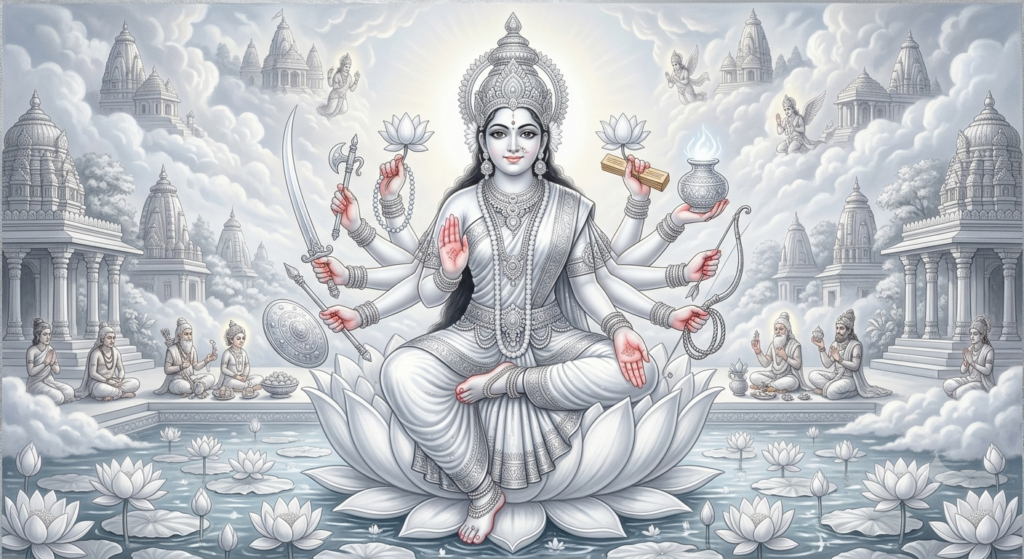
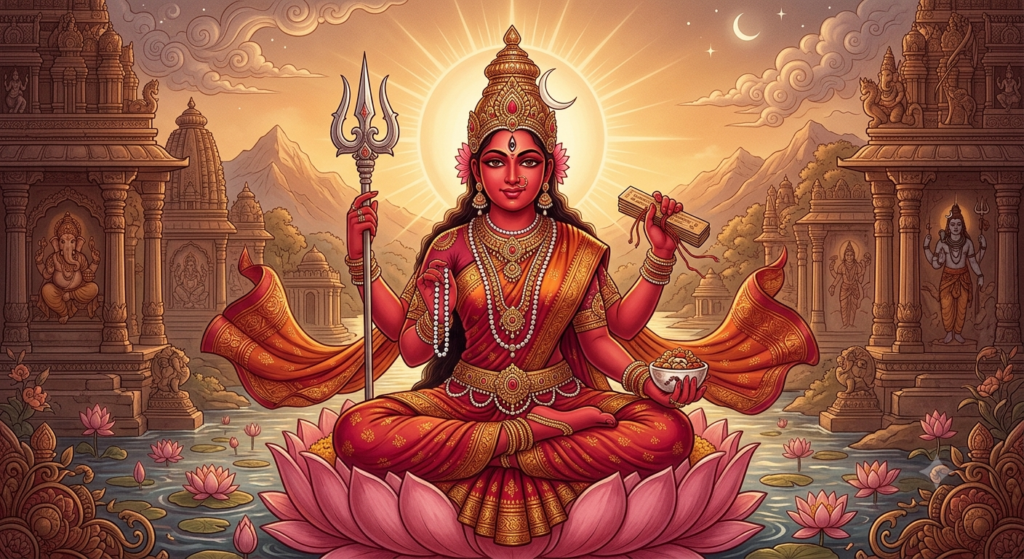
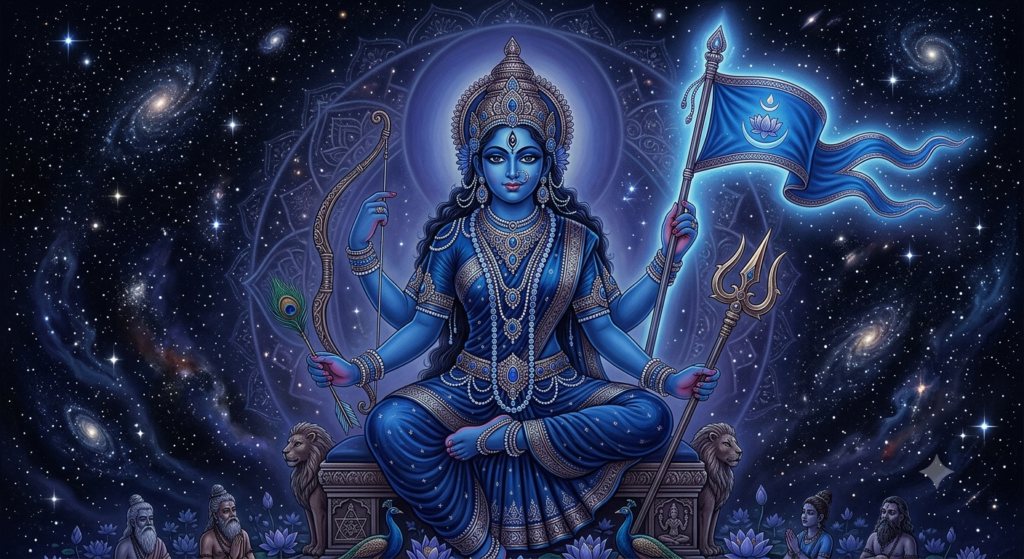
These 16 goddesses correspond to the 15 lunar days of the waxing and waning moon, with Mahā Tripurasundarī standing as the eternal 16th element (the full moon or central Bindu). Each goddess aligns with one of Vishuddha’s 16 sacred sounds. They trace the step-by-step journey of how an unspoken idea becomes reality:
- Intention & Longing: Raw desire to express (Kāmeśvarī)
- Charm & Heart: Infused with warmth and empathy (Bhagamālinī & Nityaklinnā)
- Clarity & Conviction: Purified by the fire of truth (Vahnivāsinī & Vajreśvarī)
- Structure & Form: Shaped by rhythm and grammar (Kulasundarī & Nīlapātākā)
- Offering & Release: Spoken selflessly before returning to silence (Sarvamaṅgalā & Mahā Tripurasundarī)
Ranging from serene, crystal-white deities to fierce, fire-bearing queens, the Nityās reflect the full spectrum of human emotion—offering an inner manual for your mind, voice, and subtle energy.
This is just a glimpse into their rich symbolism. We will uncover the full depths of all 16 Nityās, their seed sounds, and their place within Vishuddha in my upcoming chakra course.
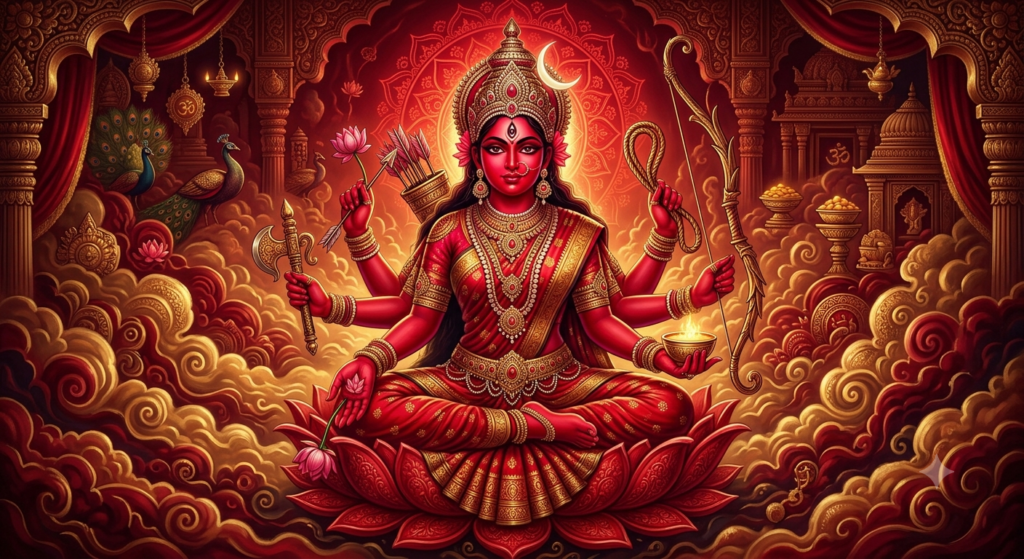
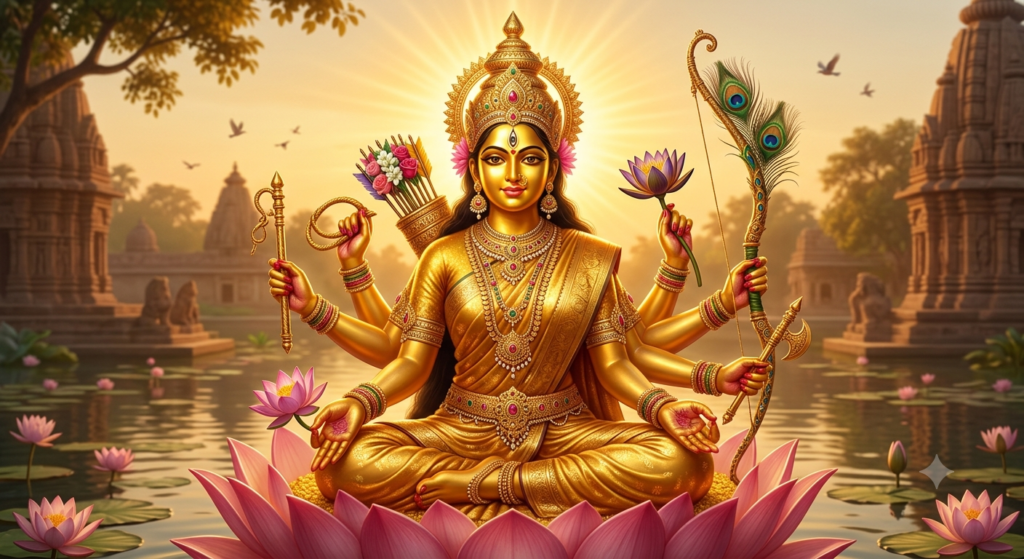
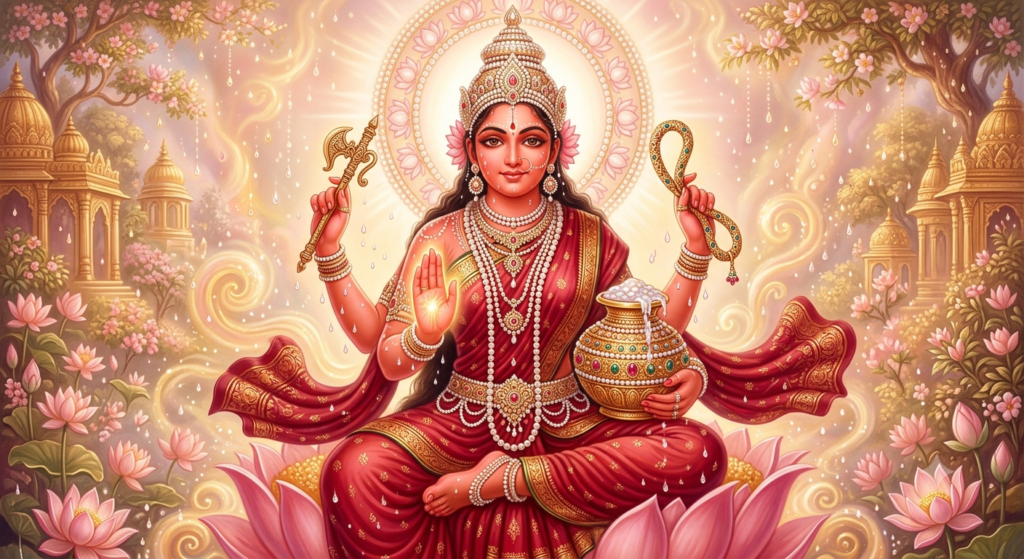
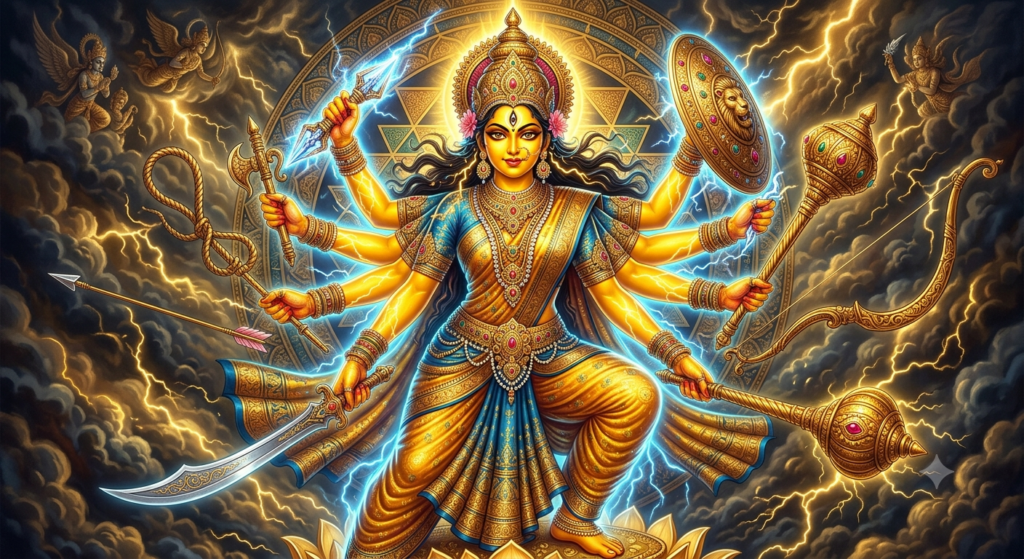
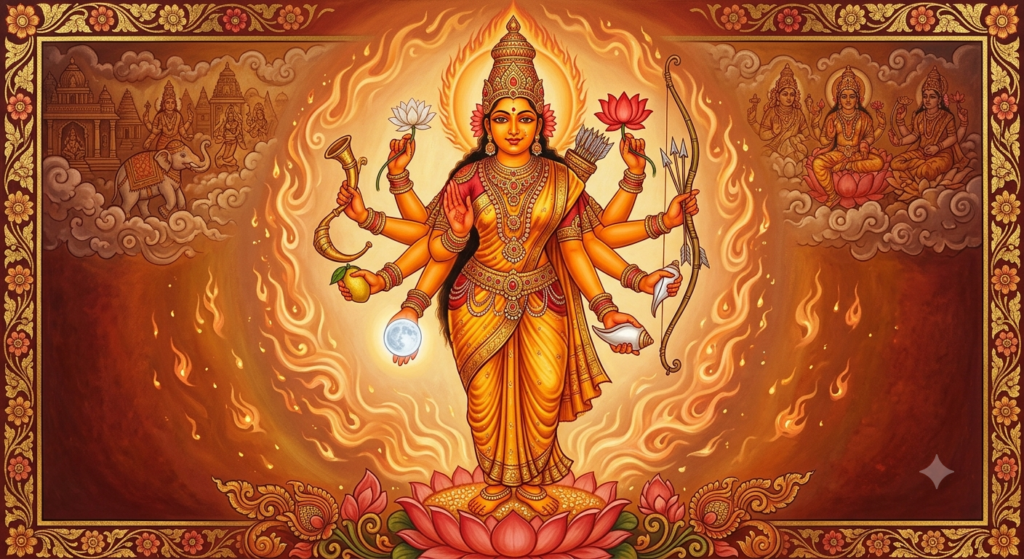
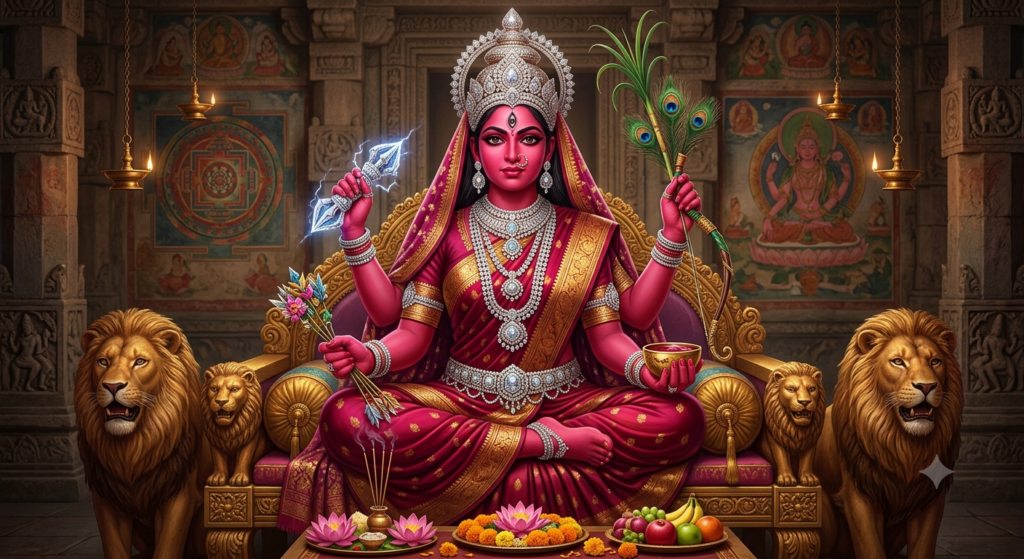
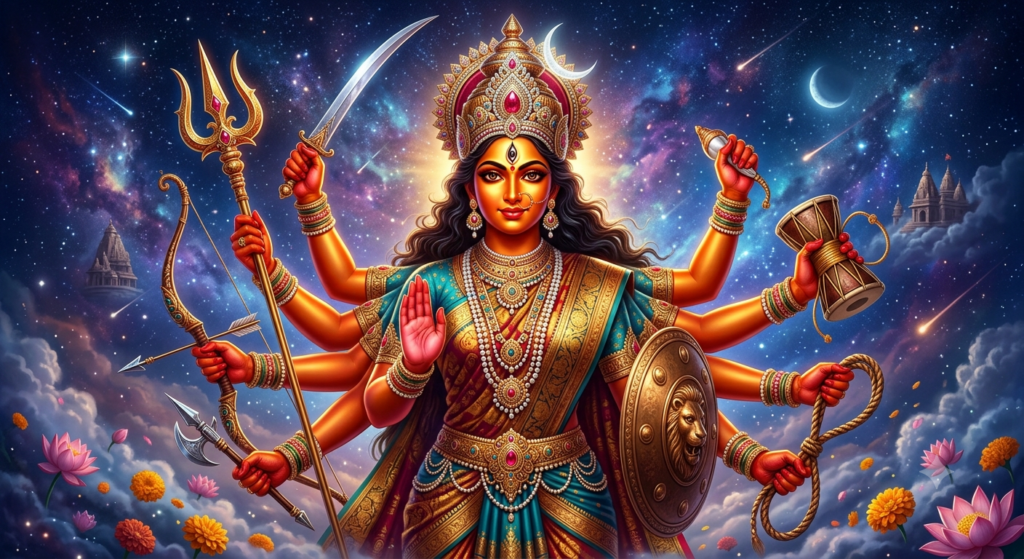
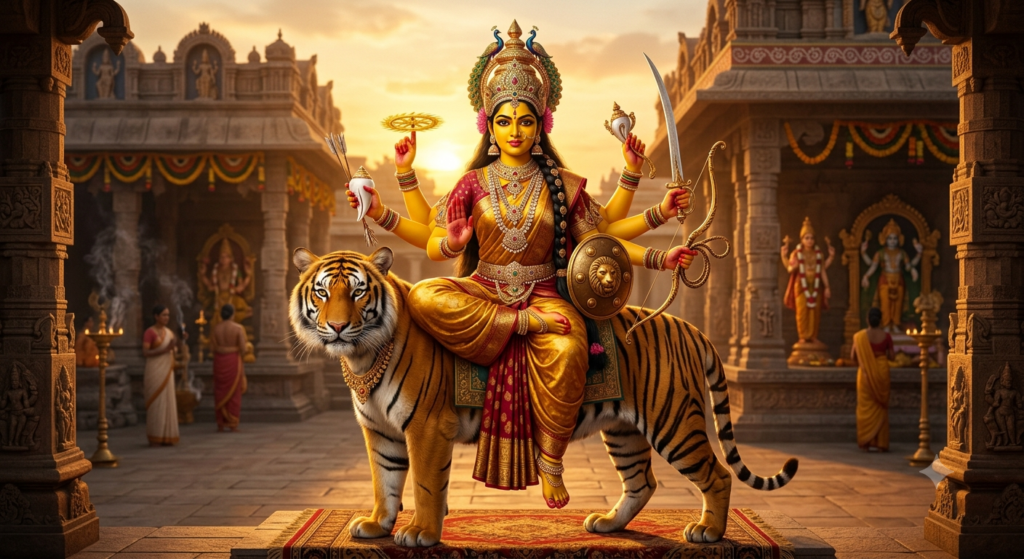
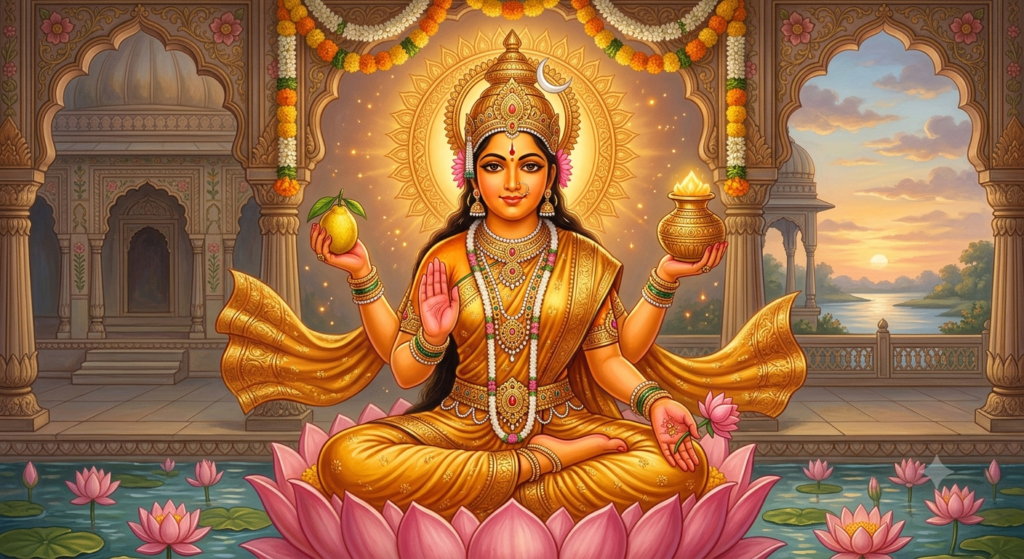
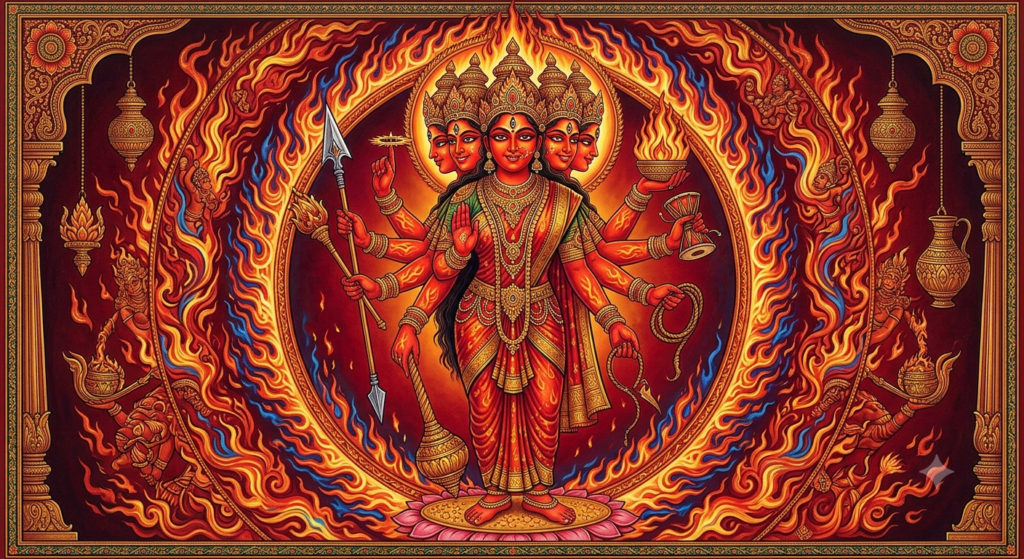
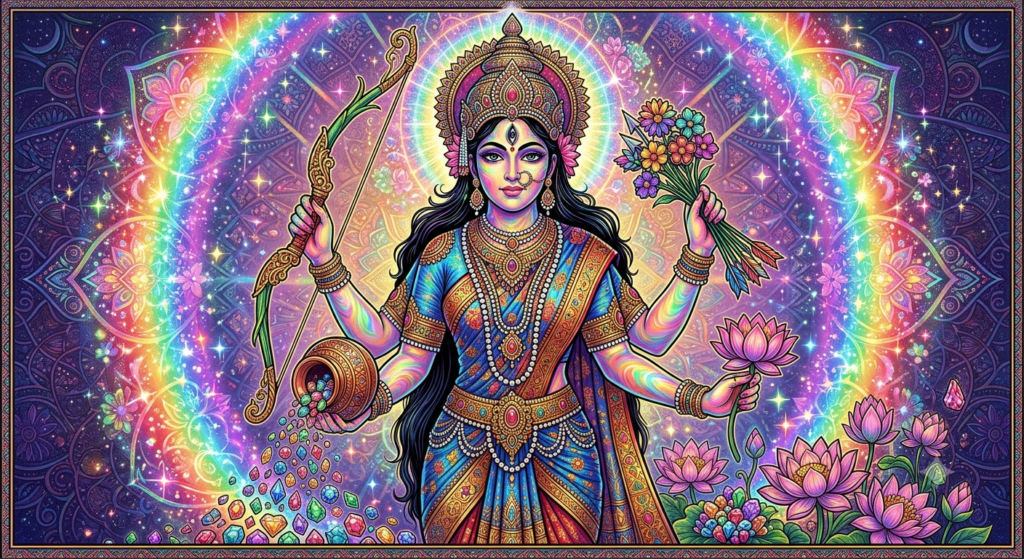
✨ Explore All 16 Nityās & Their Inner Facets (Click to expand)
Kāmeśvarī (The Primal Spark / Pure Intent)
- The Inner Facet: The initial urge to exist, create, and express. It represents pure, unadulterated passion and the seed of all motivation.
Bhagamālinī (Radiant Warmth & Magnetism)
- The Inner Facet: Creative magnetism, joy, and the solar light within us that draws harmonizing people, ideas, and beauty into our field.
Nityaklinnā (Fluid Compassion & Empathy)
- The Inner Facet: Emotional fluidity and deep empathy. It is the capacity of the heart to remain tender, open, and receptive rather than rigid or hardened.
Bheruṇḍā (Resilient Power & Protection)
- The Inner Facet: Fierce inner boundaries and spiritual fortitude. It represents the unwavering strength that protects our peace against destructive external forces.
Vahnivāsinī (Transformational Fire & Alchemy)
- The Inner Facet: The internal fire (Tapas) that digests life experiences, transmutes emotional friction into wisdom, and clarifies intention.
Mahā-Vajreśvarī (Diamond Clarity & Unshakable Truth)
- The Inner Facet: Indestructible mental clarity. Like a diamond, this facet cuts through self-doubt, confusion, and deceptive patterns.
Śivadūtī (Cosmic Alignment & Reconciling Dualities)
- The Inner Facet: The bridge between the sacred and the mundane. It allows us to communicate our deepest inner truths effectively in the outer world.
Tvaritā (Adaptability & Swift Action)
- The Inner Facet: Quick, intuitive responsiveness and grace under pressure. It is the ability to adapt instantly to life’s shifting currents without friction.
Kulasundarī (Structural Elegance & Aesthetic Harmony)
- The Inner Facet: Order, sacred geometry, and discernment. It governs the mind’s ability to organize complex thoughts into clear, beautiful expressions.
Nityā (Unbroken Presence & Continuity)
- The Inner Facet: Eternal awareness. It is the quiet, unchanging witness within that remains calm beneath the constant movement of thoughts and moods.
Nīlapātākā (Higher Vision & Strategic Direction)
- The Inner Facet: Expanded perspective and spiritual direction. It provides the clarity to see the bigger picture and navigate life with purposeful intent.
Vijayā (Victorious Conviction)
- The Inner Facet: Courage and triumph over internal obstacles—such as fear, inertia, or imposter syndrome—allowing us to move forward with confidence.
Sarvamaṅgalā (Universal Grace & Abundance)
- The Inner Facet: Generosity of spirit and the recognition of inherent wholeness. It transforms speech and action into a selfless blessing for others.
Jvālāmālinī (Radiant Illumination & Purifying Energy)
- The Inner Facet: The intense spiritual energy (Tejas) that burns away remaining shadows, rigid conditioning, and subconscious blockages.
Citrā (Creative Wonder & Infinite Variation)
- The Inner Facet: Artistic inspiration, playfulness, and the appreciation of diversity. It celebrates the infinite ways life manifests through voice and form.
Mahā Tripurasundarī (Supreme Transcendence & Integration)
- The Inner Facet: Pure, unified consciousness (Mokṣa). The realization that all 15 preceding facets are simply variations of a single, radiant Self.
The 108 Arms: Mapping Time, Sound, and Transformation
The 16 Nityās have a combined total of 108 arms; their physical forms embody the sacred cosmic number 108:
- 108 Cosmic Energy Channels: In Tantric physiology, 108 is the sacred number representing the total completion of energy lines (nadis) converging at the heart and subtle centers.
- The Full Lunar Cycle: Because the 16 Nityās govern the 15 lunar days (tithis) plus the 16th full moon Bindu, their 108 arms represent the complete, unbroken cycle of time, lunar light, and creative manifestation.
- Tools of Transformation: Each arm holds a specific weapon, mudra, or sacred tool (like a sugarcane bow, lotus, book, or shield), signifying the 108 distinct ways divine awareness acts upon the mind to dissolve illusion and bring enlightenment.
🌌 Explore Vishuddha & Beyond
Return to the main Throat Chakra hub or continue ascending through the energetic system.