Non-attachment or Vairagya is often the most misunderstood word in yoga. Many people think it means giving up or becoming cold and indifferent, but it is something much more powerful. It is the ability to stay calm in a storm. Coming from the Sanskrit root vi (without) and raga (color/passion/attachment), Vairagya literally means dispassion or without attachment.
1. The Mountain of the Heart
In the map of the Hrit Chakra, the Still Lake was placed inside a circle of Mountains. Those mountains are Vairagya. They keep the winds of the world—praise, blame, loss, and gain away. If the mountains weren’t there, those winds would whip the lake into a storm. With Vairagya – the boundaries of the mountains, you still feel the wind, but the lake of your soul remains flat and clear. You are “protected and held” by your own internal boundaries.
2. The Alchemist’s Perspective
In my personal experience as a massage therapist, as I work on a client, I am present and compassionate, but I don’t take on their pain as my own. If I did, I couldn’t help them. The space between my compassion and their suffering is Vairagya. It is the ability to be fully engaged in the world without being coloured or stained by it. At the end of each session, I cut cords and ties with my clients. As I say a small prayer for their health and healing, I visualize their energy moving through me and out through my feet into the ground, and then I wash the heavy energy from my hands and arms with cold water.
3. The Two Stages of Vairagya
In the Yoga Sutras, there are two levels that match your journey:
- Apara Vairagya (Lower): This is the conscious practice of choosing not to be enslaved by your desires. It’s the discipline of a practitioner.
- Para Vairagya (Higher): This is the natural result of lifetimes of practice. Once you have seen the “Island of Gold” and tasted the nectar of the Kalpataru, you don’t have to try to be detached anymore. The world simply loses its grip because something infinitely more beautiful has been found inside.
Vairagya is loving the world so much that you refuse to possess it. It turns the “heavy” energy of attachment into the “light” energy of Laghima (the Siddhi of Lightness).
The High Vantage: Loving Through the Silence
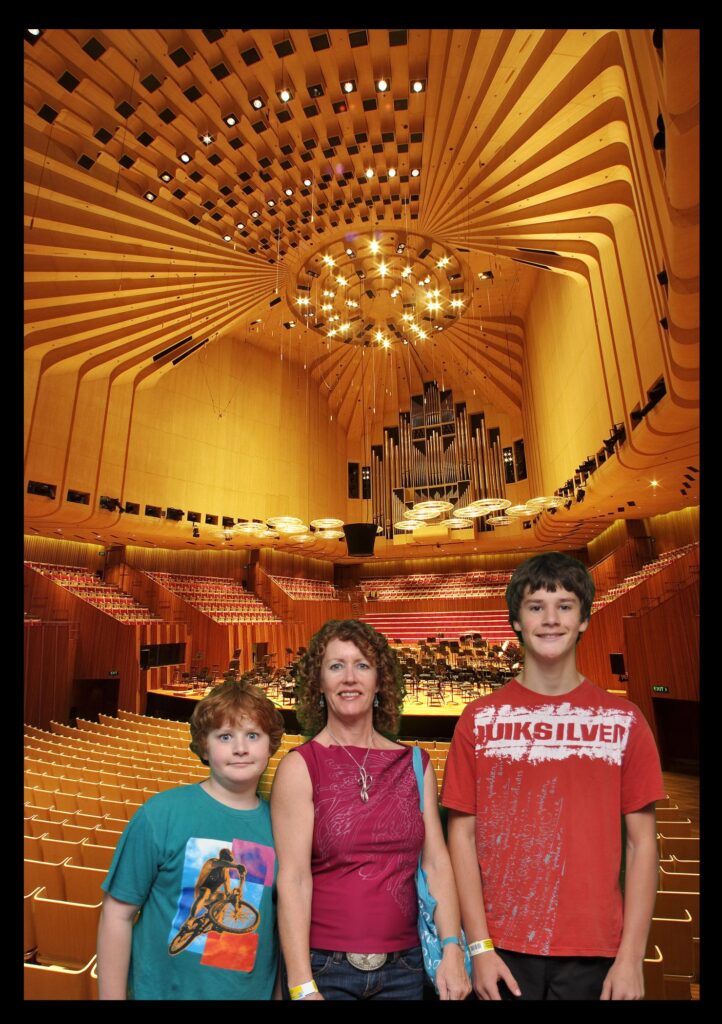
Many people ask how it is possible to endure a decade of silence from one’s own children, as I have, without my heart breaking into a thousand irreparable pieces. In the world’s eyes, a “broken heart” is the only logical response. But in the landscape of the Hrit Chakra, I learned a different way.

The Space Between the Mountains
As I practiced yoga for the 10 years of silence, I became detached from the hurt. Every time a painful thought arose in my mind, I replaced it with a kind thought to send out to my children. What I felt for my children is like the water in the still lake—vast, deep, and life-giving. However, detachment—the Mountains of Vairagya—is what allowed that water to remain pure. During those ten years of silence, the mountains taught me that my feelings did not require their permission or even their presence to exist.
I realized that their journey—the silence, the growth, the distance—is their own path, if they chose to go along that path without me, if they chose to walk a path that didn’t include me, I had to honor their right to that journey. If I tried to grab their attention it would ripple the water of my own soul and distort the reflection of the Kalpataru—the Wish-Fulfilling Tree. Like the mountains hold the lake, I hold a still container of peace for my sons and daughter to return to, whenever that day might come. Because I’m not burdened by the heaviness of grief, I am light enough to send pure, unburdened thoughts to all three of them. Vairagya is not the absence of love; it is the expansion of it.
I experienced the truth of this just today while I was resting. As I came back to consciousness, my mind was filled with a pool of light, and in that light, I saw my daughter with exceptional clarity. A thought came to me in that clear pool, that I have no idea what she is doing. And I know that she received my thought. This is the very definition of the lake being flat and clear: seeing reality exactly as it is—the complete unknown of her current life—without the waters being whipped up by grief, anger, or the need to force an outcome. Knowing so clearly that she received that unburdened thought speaks to a connection that exists entirely outside the traditional rules of physical presence or ongoing conversation.
Vairagya is not the absence of love; it is the expansion of it.
The Alchemical Gold
This is the Gold of the Alchemist. It is the process of taking the leaden weight of “motherly longing” and refining it into the golden light of universal compassion.
My 12+ years of massage and 15 years of teaching yoga aren’t just about physical postures or relaxation—they are the training ground that has allowed me to stand steady during some of my own life’s greatest storms. The Siddhis (like stability and lightness) aren’t magic tricks—they are the tools I use when life gets difficult.
“The heart doesn’t break when it is as vast as the mountains…”
To understand how a lifetime of practice becomes the anchor in life’s greatest storms, I invite you to read the personal story behind the stillness.
READ MY HEART’S DESIRE