

1st Chakra – Root Chakra
New Age Concepts

Muladhara At a Glance
Foundations of the Mind
Mula means root and Adhara means foundation or support. A balanced 1st chakra creates a solid foundation for opening the other six chakras. Because the first three chakras are “Chakras of Matter,” they are deeply physical. This energy centre deals with your root issues, such as your sense of security, basic needs, family, relationships, and feeling at home in your body and your place on Earth.
An imbalance in these primal desires often leads to insecurity, stress, and a loss of personal bearings:
- Life (The fear of dying)
- Sex
- Food
- Sleep
The Modern Symbol
The symbol is a four-petalled lotus flower containing a square and an inverted triangle. At its heart is the Bīja Mantra LĀM—the sound of spiritual awakening. Chanting LĀM (pronounced LUM or LUNG) releases tension, removes blockages, and activates the chakra’s energy.
Signs of Balance & Dysfunction
- Balanced: Emotional stability, feeling grounded yet free as a bird. Having patience and compassion for yourself and others.
- Emotional Dysfunction: Hoarding, greed, isolation, anxiety, anger, and rage.
- Physical Dysfunction: Lethargy, lower back pain, issues with the colon or bladder, painful feet, and inflammation. Eating disorders or prostate problems in men may also be a sign of a root chakra imbalance.
Healing and Integration
To heal Muladhara, you must learn to trust and love yourself and to let go of fear. As you work on balancing the Root chakra, you will notice a feeling of optimism, trust, confidence, and vitality grow stronger day by day.
- Emotional Release: Buried hurts, unprocessed emotional traumas, and disappointments that are deeply etched into our psyche come to the surface when working on Muladhara so they can finally be healed and resolved. Psychotherapy can be very helpful.
- Earth Connection: Connect with the earth and those you love. Do gardening, go out in nature, walk through the bush, feel the energy in trees, and be aware of the pull of gravity grounding you to the earth. Connecting with your environment will help you feel balanced and safe while being at peace with who you are.
- Inner Work: Practice meditation and yoga. Let your awareness of what truly matters be your guide when you make decisions. Let go of the material world and connect with your inner self by allowing feelings of restlessness, frustration, and aggression to subside.
As you work on balancing Root chakra you will notice a feeling of optimism, trust, confidence and vitality grow stronger day by day.
The Guardian of the Root: Lord Ganesh
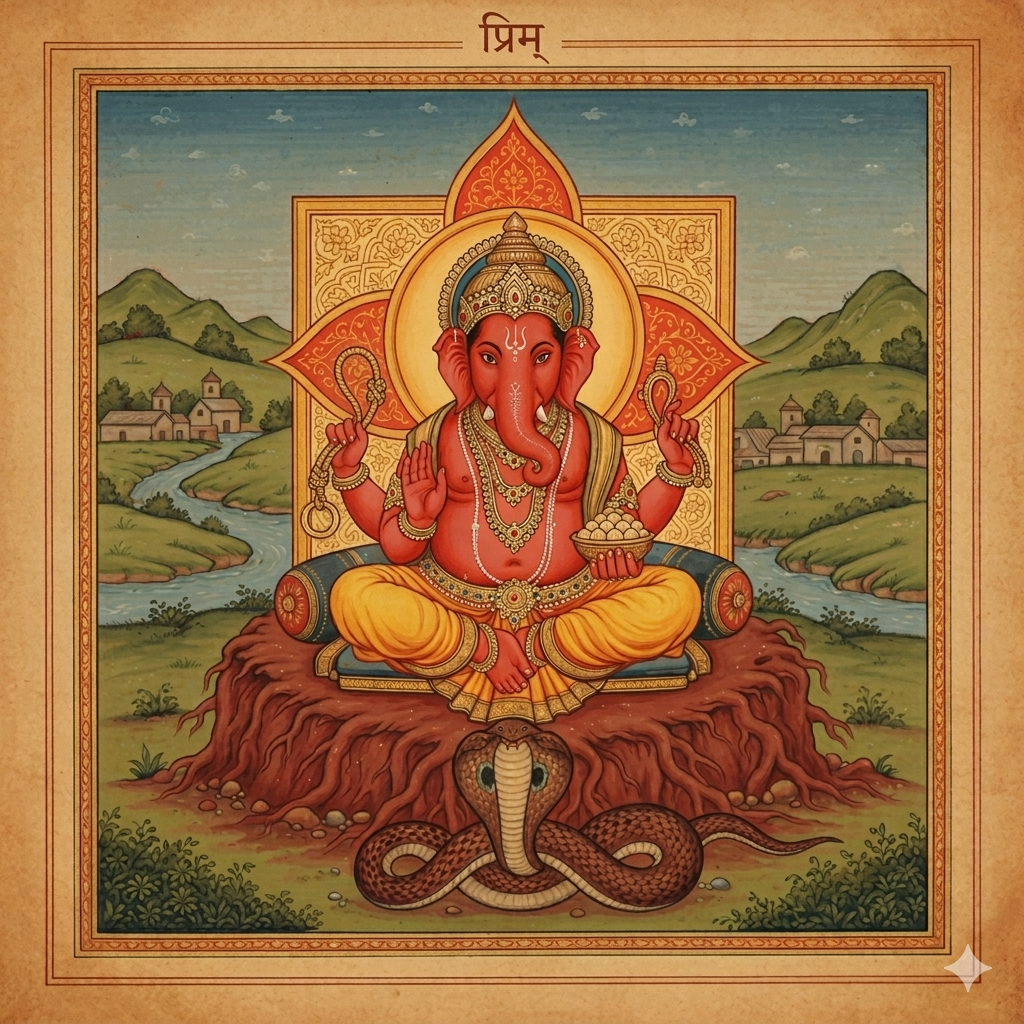
Lord Ganesh is the presiding deity of the root chakra, representing wisdom, prosperity, and the removal of obstacles. Often invoked at the beginning of new ventures, he has become the most beloved guardian of the Root chakra in modern practice because he embodies the stability and “Obstacle Removing” energy needed to begin a Kundalini awakening.
The Gatekeeper Logic Ganesh protects the gateway to higher consciousness, ensuring that our energy is properly grounded before it begins to ascend. Because you must “pass” the Root to reach higher states, Ganesha (the Lord of Beginnings) is the natural choice for the starting line. It is his role to ensure we have a solid foundation of spiritual study and right living.
Animal Instinct to Divine Intelligence Ganesha’s form—an elephant head on a human body—powerfully represents the transition from the animal instincts of the Muladhara to the divine intelligence of the Sahasrara (crown chakra).
Emotional and Physical Security The modern view of Muladhara is centered on emotional security. Contemporary yoga focuses on psychological grounding (safety, home, and finances), which aligns perfectly with Ganesha’s role as a provider of success and stability.
Grounding Tools
Gemstones
- Red Jasper: Known as the “stone of endurance,” it provides stability and physical energy.
- Garnet: Stimulates energy, passion, and stability, helping to build confidence and a feeling of safety.
- Black Tourmaline, Black Onyx, and Obsidian: Protect against negative energy and are excellent for emotional stability, stress reduction, and boosting self-esteem.
- Smoky Quartz: Effectively grounds, transmutes negative energy, and replaces it with peace and stability.
- Ruby: A very powerful stone for root chakra activation, promoting groundedness, strength, and courage.
Essential Oils
- Myrrh: Soothing and protective; relieves nervous tension.
- Earthy Scents: Sandalwood, Rosewood, Rosemary, Black Pepper, Cedar, Clove, and Ginger.
- Vetiver: Deeply grounding and tranquilizing; helps to reduce anxiety.
- Patchouli: Earthy and anchoring; helps connect to the physical body.
- Cedarwood: Strengthening; promotes stability and a sense of belonging.
- Frankincense: Sacred grounding; fosters peace and reduces fear.
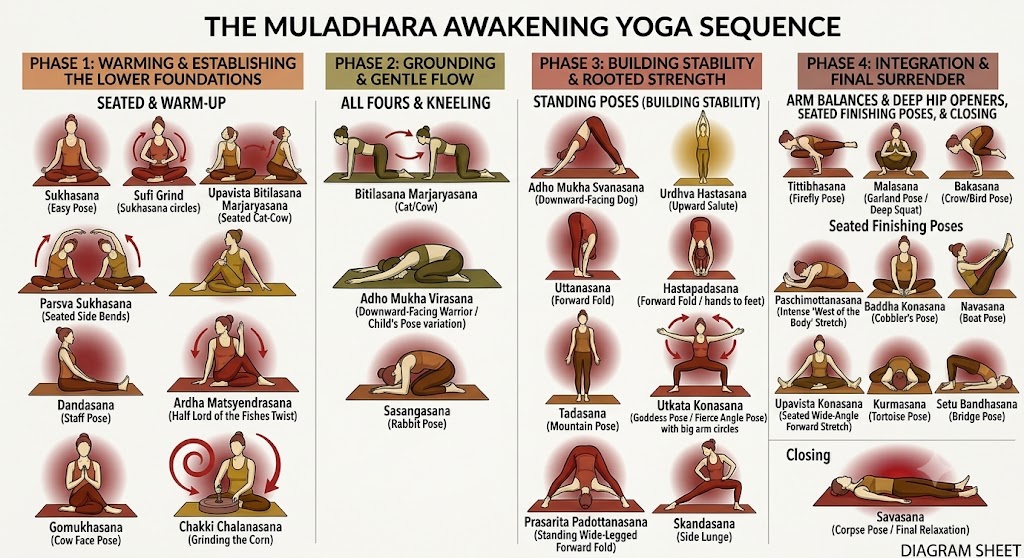
Yoga Sequence for Muladhara
(Only attempt what is accessible and safe for your body today. Use blocks or blankets where needed.)
Begin with Anjali Mudra: This is a gesture of offering. It means we are honouring and celebrating this moment and the potential for an intention to progress toward our greatest spiritual awakening.
Seated & Warm-up
- Sukhasana: Easy Pose
- Sufi Grind: Sukhasana circles
- Upavista Bitilasana Marjaryasana: Seated Cat-Cow
- Parsva Sukhasana: Seated Side Bends
- Dandasana: Staff Pose (legs stretched out in front)
- Ardha Matsyendrasana: Half Lord of the Fishes Twist
- Gomukhasana: Cow Face Pose
- Chakki Chalanasana: Grinding the Corn
All Fours & Kneeling
- Bitilasana Marjaryasana: Cat/Cow
- Adho Mukha Virasana: Downward-Facing Warrior (Child’s Pose variation)
- Sasangasana: Rabbit Pose
Standing Poses (Building Stability)
- Adho Mukha Svanasana: Downward-Facing Dog
- Urdhva Hastasana: Upward Salute
- Uttanasana: Forward Fold
- Hastapadasana: Forward Fold (hands to feet)
- Tadasana: Mountain Pose
- Utkata Konasana: Goddess Pose (Fierce Angle Pose) with big arm circles
- Prasarita Padottanasana: Standing Wide-Legged Forward Fold
- Skandasana: Side Lunge
Arm Balances & Deep Hip Openers
- Tittibhasana: Firefly Pose
- Malasana: Garland Pose (Deep Squat)
- Bakasana: Crow/Bird Pose
Seated Finishing Poses
- Paschimottanasana: Intense “West of the Body” Stretch
- Baddha Konasana: Cobbler’s Pose
- Navasana: Boat Pose
- Upavista Konasana: Seated Wide-Angle Forward Stretch
- Kurmasana: Tortoise Pose
- Setu Bandhasana: Bridge Pose
Closing
- Savasana: Corpse Pose (Final Relaxation)
Mula Bandha: The Root Lock
🧘 Practice: The Root Lock (Mula Bandha)
To ground your energy, sit quietly and gently lift the muscles of the pelvic floor. Imagine drawing red light from the center of the earth up into your spine. This “Lock” creates the stability needed for all other spiritual work.
Practice this for 1-3 minutes during your daily meditation.
While the Muladhara Chakra provides the spiritual foundation, Mula Bandha is the physical key that locks that energy in place. Known as the “Root Lock,” it is a foundational practice in Hatha and Kundalini yoga used to prevent your vital life force (Prana) from leaking downward and instead directing it upward through the central channel.
The Benefits
- Energetic: Reverses the downward flow of energy, helping to wake up the dormant Kundalini.
- Physical: Strengthens the pelvic floor, supports the spine, and stabilizes the core.
- Mental: Creates a sense of deep “groundedness” and safety, even in the midst of chaos.
How to Practice Mula Bandha
- Find a comfortable seat: Sit cross-legged or in a chair with your spine tall and shoulders relaxed.
- Locate the center: * For men: The area is between the anus and the scrotum (the perineum).
- For women: The area is at the base of the cervix.
- The Engagement: On an exhalation, gently contract and lift the muscles of the pelvic floor upward toward your navel.
- Hint: It feels similar to the “stopping the flow of urine” sensation, but more internal and focused on the lift.
- The Breath: Keep your breathing steady and calm in the upper chest. Do not hold your breath; let the breath flow around the lock.
- Release: Soften the contraction on your next exhale and feel the energy grounding back into the earth.
Note for Beginners: Start with a “soft” lock—don’t squeeze too hard. It’s a subtle internal lift, like a flower closing its petals, not a forceful grip.
🔴
Continue Your Journey Through Muladhara
Explore the complete trilogy of dedicated guides for the Root Chakra.
🟠
Rise Into the Sacral Center
Now that your foundation is grounded, follow the flow of energy upward into the waters of Svadhishthana.