
The weapons wielded by the deities are manifestations of power (shakti). They aren’t just tools for combat, they are metaphors for the internal tools we use to navigate the challenges of the human experience. Everything in the universe is a vibration, each weapon has a bija. When you chant the Bija of a weapon, the action of that weapon is invoked within your own consciousness.
The Thunderbolt – Vajra
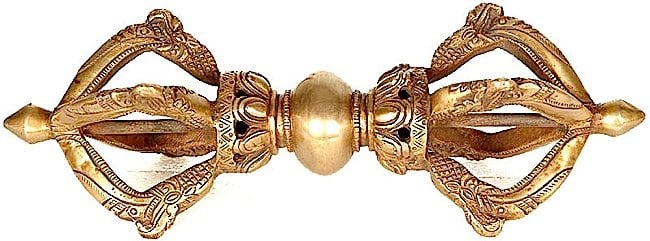
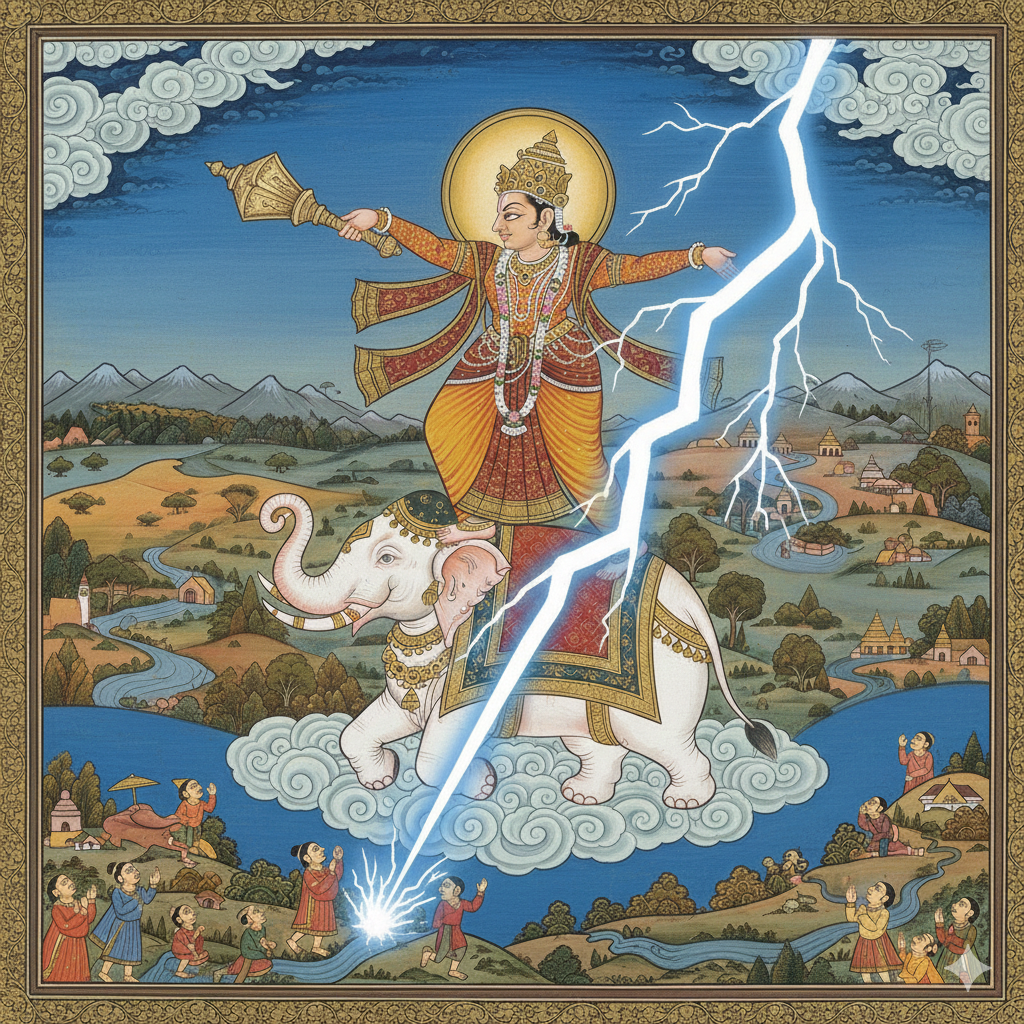
The Thunderbolt (vajra) is wielded by Indra, the King of the Heavens. Vajra means both diamond and thunderbolt: the Indestructibility of the soul and the force that can rent ignorance and ego.
The bija of the Vajra is KROM (क्रों)
It represents the unstoppable force of the divine and our indestructible will-power. The Thunderbolt energy shocks the system out of its dullness. If you feel stuck, heavy, or unable to move forward, mentally visualize a lightning bolt striking your solar plexus while chanting KROM. This “shocks” the Manipura out of lethargy. Its power is used to shatter Kashaya (the “ash” or spiritual numbness) and Sushupti (the “sleep” of the soul).
The Spear (Shakti)
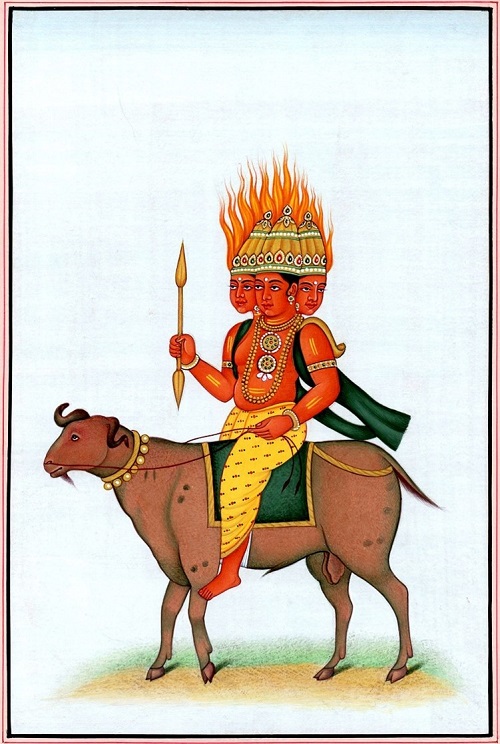
The spear is a weapon of one-pointed focus.
The bija mantra is HRAUM (ह्रौं)
Agni holds a spear to pierce through delusion and obsession. It doesn’t just push the desire away; it pierces its centre, allowing the desire to seep out until it holds no power over you. While the thunderbolt shatters, the spear targets. If you are distracted by a specific craving or a confusing thought, visualize a point of red-hot light (the spear tip) piercing through the centre of that thought while chanting HRAUM.
The Sword (Khadga)
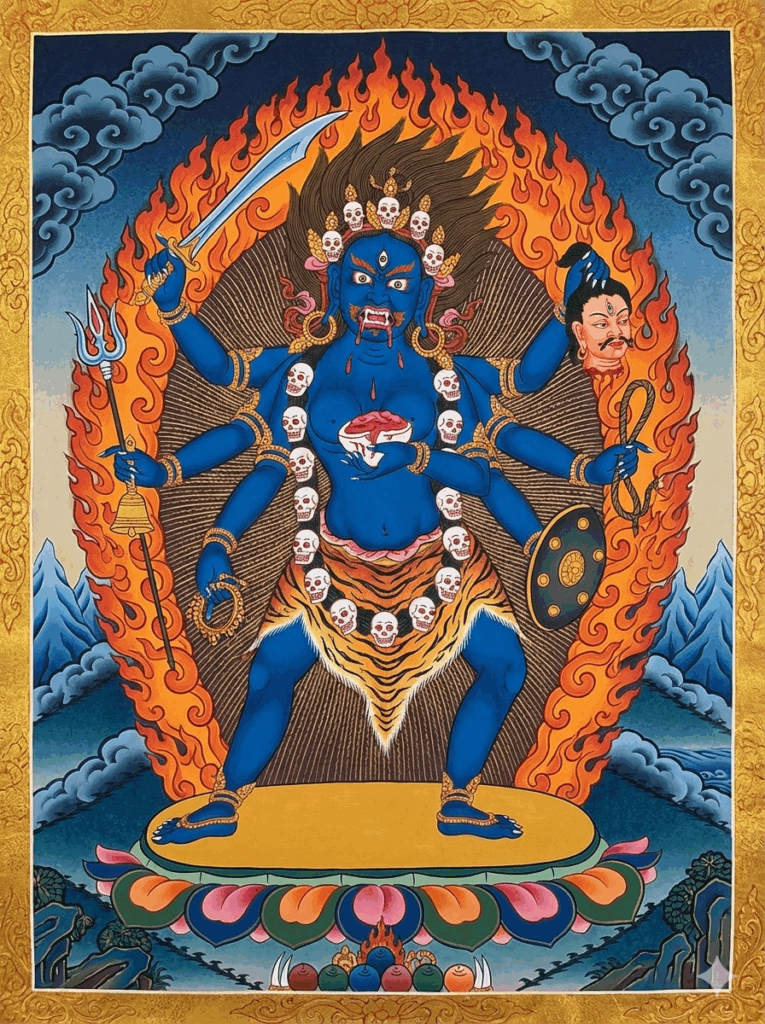
The sword represents Viveka (Discernment). The bija mantra is PHAT (फट्). It has the power to sever the cords of shame, aversion and hatred. These vrittis tie us to the past. How to use it: The mantra PHAT is known as the “Astra Mantra” (the weapon mantra). It is used to cut off negative energy immediately. If you are spiralling into self-hatred or shame, imagine a sword stroke cutting those mental threads with a sharp, explosive PHAT!
The Arrow of Kama
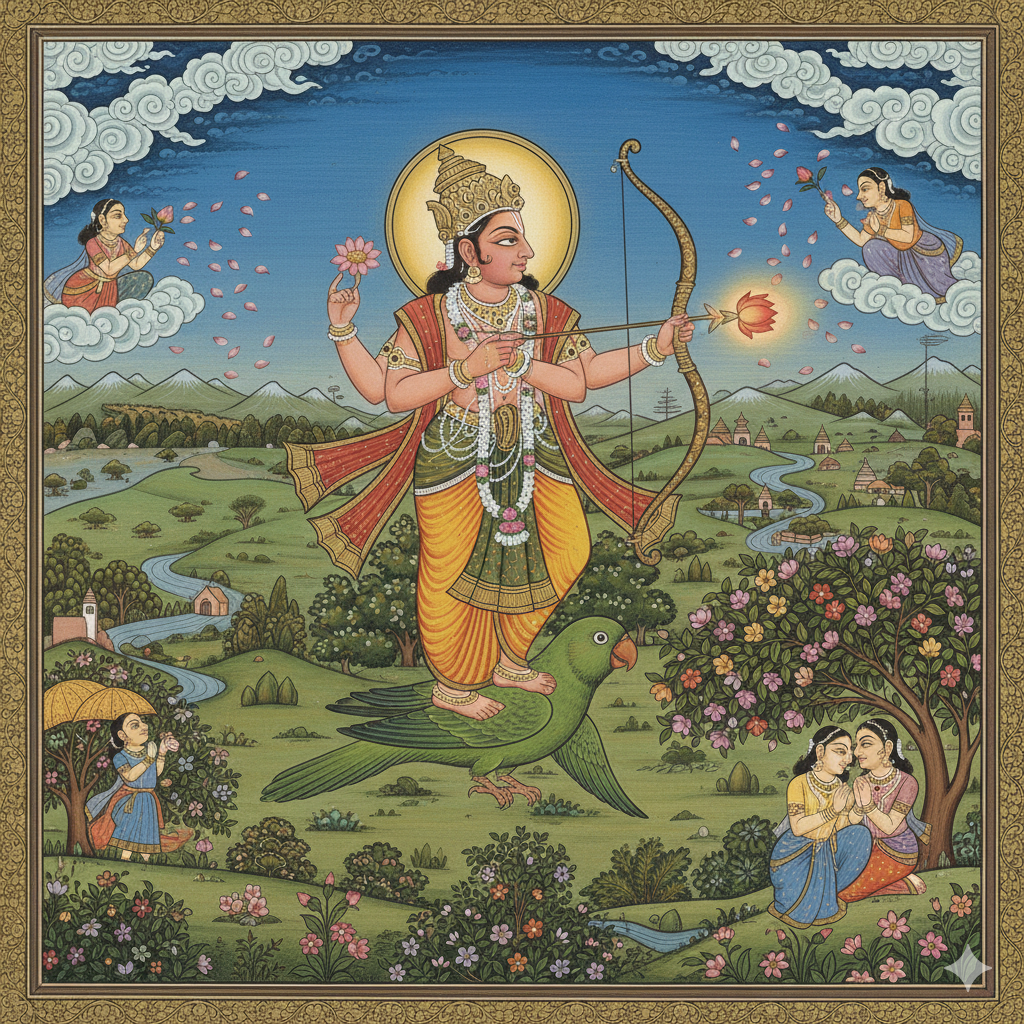
Kama is the God of Desire. Lakini holds his arrow, showing she has refined desire. She uses the “heat” of our cravings to propel us toward spiritual liberation rather than worldly attachment and craving (Trishna). The Bija mantra KLIṀ provides the attraction and aim. The Arrow represents the ability to hit your goal. It is the Siddhi of Intentionality. Instead of just having “energy” (fire), you now have “direction” (the arrow).
- “Ka” represents the manifest world or the creative principle.
- “La” represents the Earth (grounding your desires into reality).
- “I” represents the causal power (the “tip” of the arrow).
- “M” (the Bindu) is the point of focus.
Vijaya (Divine Bow):
celestial bow given to Indra to ensure victory over obstacles (specifically the demon Vritra).
The Rudraksha Mala (Prayer Beads)
In Rudra’s hands, the mala is a tool for rhythm and discipline. It is the antidote to backbiting and jealousy. By turning the beads, the aspirant pulls their energy back from outward comparisons and grounds it in internal repetition (Japa).
Abhaya and Varada Mudras: the gestures of Dispelling Fear and Granting Boons. This is the “weapon” of fearlessness. Both Agni and Rudra use this to neutralize fear and despair. It acts as a shield that reflects negative vibrations back before they can enter the solar plexus. They signify that once the practitioner purifies their intent, the “fierce” energy of the navel becomes a source of safety and abundance.
The Net of Illusions
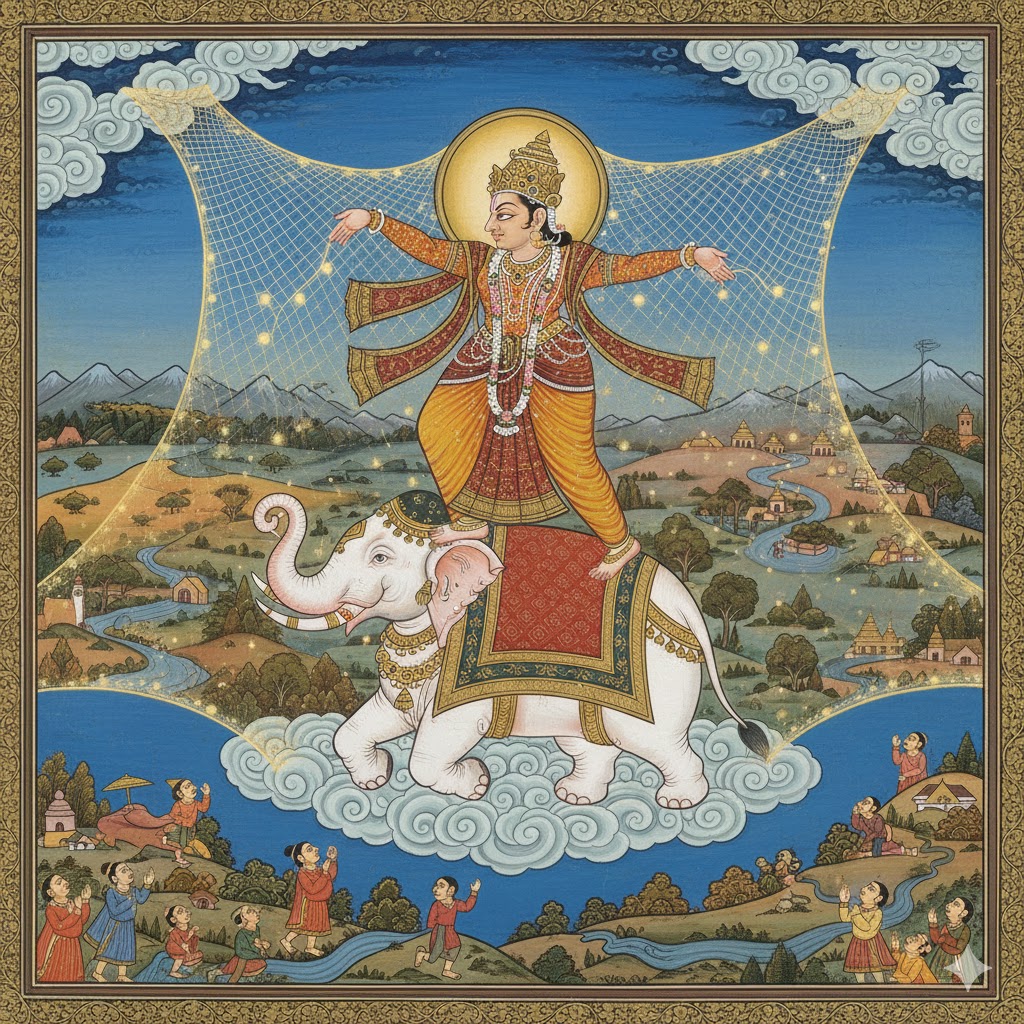
Carried by Indra, he casts the net to capture the whole of space and time. It symbolizes emptiness and the interconnectedness of all things. and at very knot where the net meets, there is a shining jewel. I used to see all the wonderful people I met on my travels as a knot in a net around the world. One thing affects all things and nothing can exist without everything else.
The Bija mantra is PRIM (प्रिम्)
Once I saw a spiderweb dripping with dew and within each droplet was a reflection of the full moon, like jewels hanging in the branch of the night.
The Pasha, noose
The Pashas (Noose)
The noose is often held by the deities to “rein in” the wild animals of the senses. The bija mantra is AM (आं) It controls the vrittis where our energy “leaks out” toward others, jealousy and gossiping. Imagine a golden lasso pulling your scattered energy back from the world into your navel centre while chanting a long, resonant AAAAMMM.
It is carried by a diverse range of deities across Hindu, Buddhist, and Jain traditions.
While it is a weapon, it is rarely used for harm. Instead, it is a tool of spiritual physics: it is used to bind the “animal” (pashu) nature of the soul to the “Master” (pati), or to catch and restrain the wild impulses of the ego.
It represents the triple bond that keeps us from our true selves:
- Ignorance: Not knowing our divine nature.
- Delusion: Being swept away by “Maya” or the illusions of the world.
- Attachment: Clinging to people, objects, or emotions that no longer serve us.
Here are the most prominent deities who wield the Pasha:
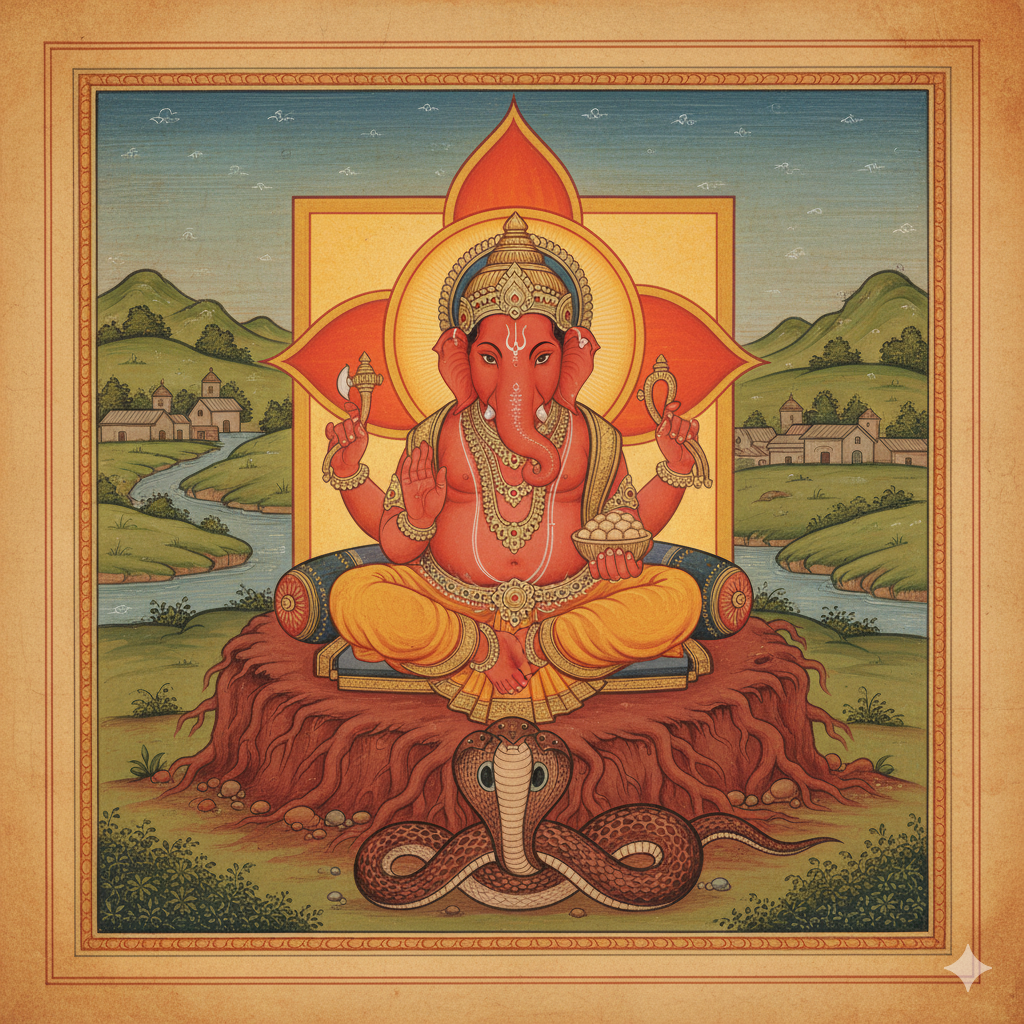
Lord Ganesha (The Remover of Obstacles)
Ganesha is almost always depicted with a Pasha in his left hand
Symbolism: He uses it to “lasso” his devotees, pulling them away from the distractions of the material world and back onto the path of righteousness. It also represents his power to bind obstacles so they cannot hinder your progress.
Yama (The God of Death and Dharma) is the most famous wielder of the noose.
The Symbolism: For Yama, the Pasha is the tool used to pull the soul out of the physical body at the moment of death. It represents the ultimate “binding” of karma—no one can escape the loop of their own actions.
3. Goddess Durga & Lalita Tripurasundari
Many forms of the Divine Mother carry the Pasha, often paired with an Ankusha (elephant goad).
- The Symbolism: The Pasha represents Desire (Iccha Shakti). Just as a lasso can catch something far away, our desires reach out into the world. The Goddess holds the Pasha to show she has mastered desire, using it as a creative force rather than being enslaved by it.
4. Amoghapasha (The Buddhist Bodhisattva)
In Vajrayana Buddhism, there is a specific form of Avalokiteshvara called Amoghapasha (“The One with the Unfailing Lasso”).
- The Symbolism: This is the “Lasso of Compassion.” It is said that his lasso never misses; he casts it into the ocean of suffering (Samsara) to catch sentient beings and pull them toward enlightenment.
The Lasso in the Sacral Chakra
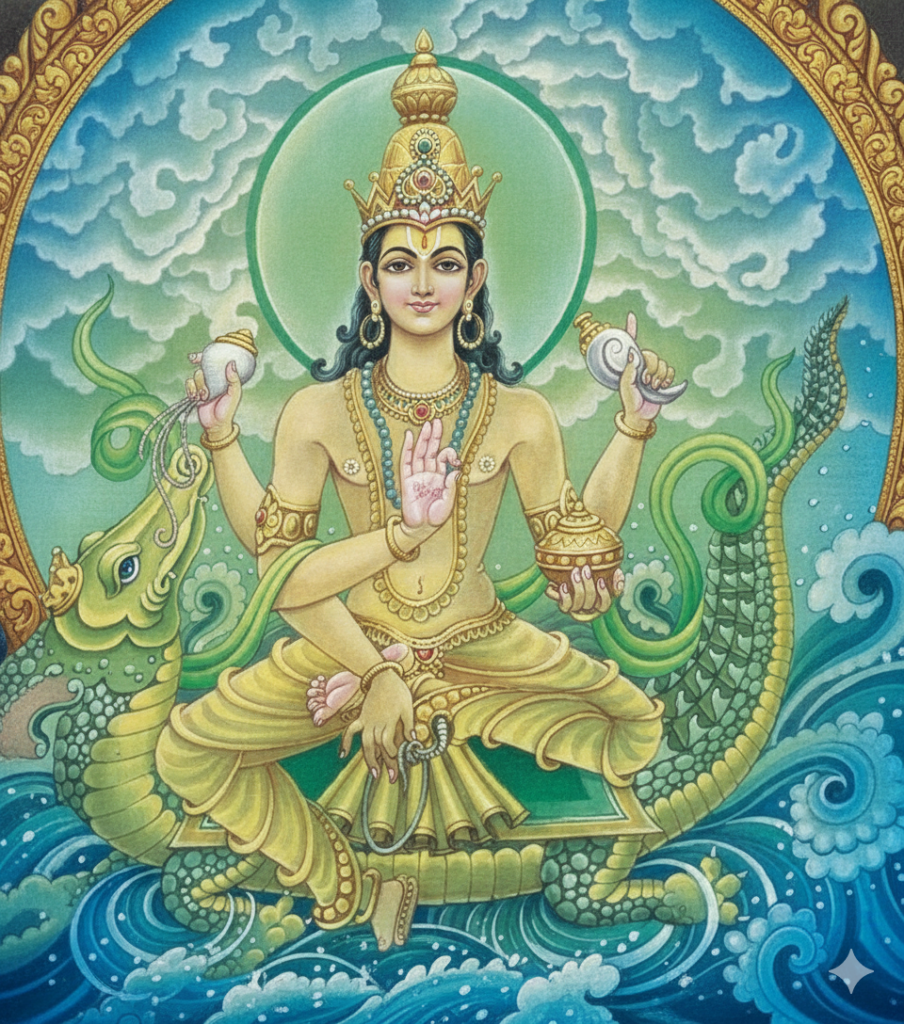
In the Svadhishthana (Sacral) Chakra, the Lasso is held by Varuna as he rides the Makara (the sea dragon).
- Taming the Subconscious: Just as a cowboy uses a lasso to catch a wild horse, Varuna uses the Pasha to “catch” our wild, runaway emotions—like jealousy, greed, and anger—before they pull us under the water.
- Drawing the Soul Near: The Lasso is also used to gently pull the seeker toward the spiritual path. It is the “tether” of love that connects us back to the Divine when we feel lost in the emotional tides.
🧭 Where to Next?
Return to the chakra journey you were exploring: