
2nd, Sacral Chakra
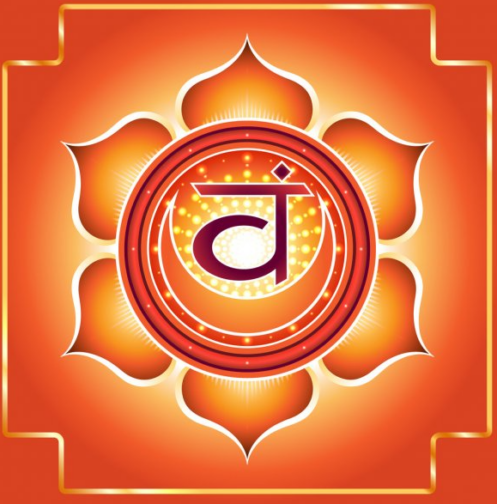
Svadishthana means “one’s own abode” or “dwelling place of the Self”.
Modern Svadishthana At a Glance
Flow with Intention
2nd Chakra Healing Tips:
Self-care. A primary cause of blockages here is the habit of prioritizing everyone else’s needs over our own, which quickly leads to burnout and crankiness. It is completely okay to say no so that you can focus on taking care of yourself. Make it a daily habit to do things that make you happy, and look after your own needs as well as the needs of others. You can’t take care of others unless you take care of yourself first.
Affirmations boost self-esteem and overall good feelings. Positive affirmations are a good place to start with healing a sacral imbalance. Some examples include “I am worthy of my own self-love” and “I am perfect just as I am.”
Balance isn’t just about acknowledging the positives within us; it’s about acknowledging the shadows—fear, envy, and doubt. Within the waters of the Sacral Chakra is the place to wash them clean. Here you will find modern tools to help you navigate your emotional tides with clarity and grace.
The Svadhisthana Chakra is primarily associated with:
- Svadhishthana is the seat of our desires, feelings and emotions.
- Emotions: particularly pleasure, joy, sorrow, fear, anger.
- Creativity: artistic expression, imagination, innovation.
- Sexuality and Sensuality: reproductive functions, desire, intimacy.
- Relationships: connection to others, care, emotional bonds.
- Flow and Change: adaptability, movement, dissolution.
- Feelings of guilt and shame: When we are working with Svadhisthana chakra we work with suppressed emotions and feelings of guilt and shame. We have to face and accept our flaws.
- It is concerned with flow and flexibility of body and mind
- Svadhisthana Chakra is about movement and change.
- The colour orange represents enthusiasm, fascination, happiness, creativity, attraction, success, encouragement, emotion, and stimulation. The sunrise and sunset.
The Petals of Svadhishthana

Modern New Age and Western yoga systems have reinterpreted the vrittis and their seed mantras to correspond to positive psychological qualities and virtues to be cultivated. Serenity, Detachment, Acceptance, Confidence, Direction, and Compassion are aspirational virtues that focus on personal development, self-actualisation, and psychological healing.
Sacral Chakra Healing Tips:
- Overactive Sacral Chakra symptoms: Emotional volatility, excessive attachment, or feeling “ruled” by your desires and moods
- Underactive Sacral Chakra symptoms: Lack of creativity, emotional numbness, fear of intimacy, or feeling “stuck” and resistant to change.
- Affirmations for Flow: Use affirmations that celebrate your right to feel and create. Examples include: “I flow with the tides of life,” “I allow myself to feel my emotions,” and “Creativity flows through me effortlessly.”
- Embrace Pleasure: One of the main reasons this chakra gets blocked is guilt. Focus on activities that bring you genuine joy and sensory pleasure—like a warm bath, listening to music, or creative hobbies—without feeling like you have to “earn” the right to enjoy them.
Saraswati: The Muse of the Inner Flow
While the ancient maps give us the structures of the soul, our modern journey requires a guide who speaks the language of inspiration and healing. Welcome to the domain of Goddess Saraswati.
In this space, we move beyond the mechanical and into the magical. Saraswati arrives at the Sacral center not just as a deity, but as the “Flowing One”—the divine frequency that transforms our raw, roiling emotions into the refined music of the soul. Saraswati is the radiant light reflecting off the surface of our emotional ocean, guiding us to turn our inner “poisons” into the vibrant plumage of a creative life.
Invite her in when you are ready to turn your life’s tides into art.
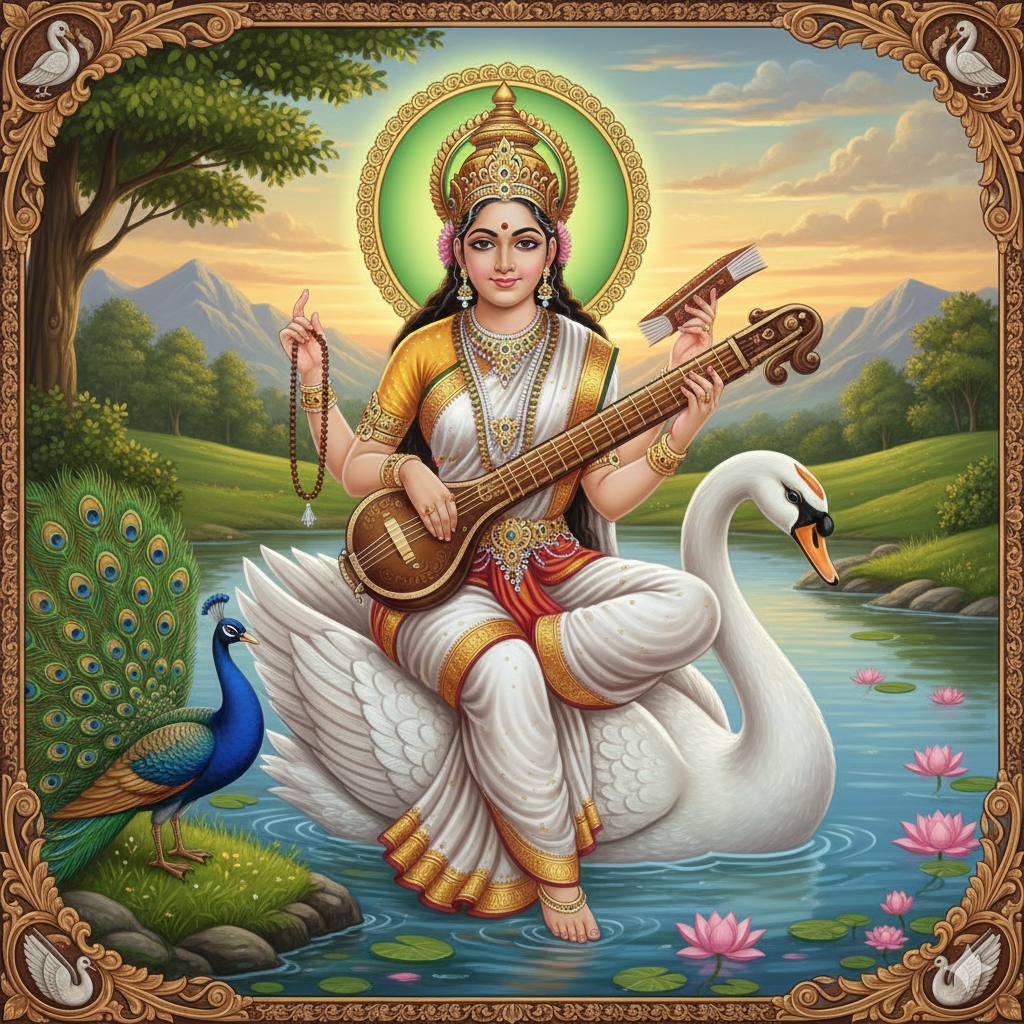
Saraswati inspires through knowledge, learning, wisdom, and fine arts. She is refined, intelligent and graceful, the goddess of poetry, music and science. She provides the energy to bring her companion, Brahma’s cosmic vision, into being. Her name means to flow. She is connected to the life force of water and reflects the ability to go with the flow of life with wisdom. She can also be called upon as a divine physician to heal body, mind and spirit. Symbols: She is depicted with four arms holding a lute (music), a book (knowledge), mala beads (meditation), and a pot of sacred water (purification).
Both Brahma and Saraswati ride Hamsa the swan, symbolizing calmness of mind, purity of the soul, truth, and wisdom. The peacock is her familiar. Its colourful feathers symbolize the beauty of dance, music, and the arts and also serve as a reminder not to become vain of one’s beauty and talents. A peacock is said to be able to devour snakes symbolizing the ability to take the poisons of negative emotions (like jealousy or anger) and transform them into the “radiant plumage of enlightenment”.
Ways of Working with Svadhishthana Chakra
Gemstones Pearl: Often considered a powerful stone for the sacral chakra, particularly a natural pearl, and is associated with the Moon, emotions, and creativity.
Carnelian: A type of agate that promotes creativity, courage, and individuality.
Sunstone: Believed to help balance emotional energies.
Tiger’s Eye: Used to encourage emotional depth and resilience.
Amber: Another orange stone associated with the sacral chakra.
Citrine: Associated with creativity and personal power.
Herbs and Spices: cinnamon, ginger, vanilla, and hibiscus, often used in teas or cooking to support creativity, pleasure, and emotional balance. Other beneficial herbs and spices are fennel, licorice, mint, carob, and damiana, as well as cardamom and chili powder.
Essential oils Uplifting & Creative: Sweet Orange, Bergamot, Tangerine Promotes joy, optimism, and encourages the flow of creative energy.
Sensual & Passionate: Ylang Ylang, Jasmine, Rose Enhances sensuality, passion, emotional release, and intimacy.
Grounding & Balancing: Sandalwood, Patchouli, Clary Sage Calms emotional intensity, provides grounding, and supports intuition and stability.
“Moon-piercing breath”
Left nostril breathing or Chandra Nadi balances the Svadhisthana chakra. It is best practiced before meditation or asana practice.

Moon-piercing breath is believed to activate the Ida Nadi, associated with the moon and cooling qualities, promoting calmness and relaxation.
Left nostril breathing stimulates the right brain which takes us beyond words and logic into intuition, higher emotion and creativity.
- Take 3 deep breaths in and out to prepare.
- Close the right nostril: Use your thumb to gently close the right nostril.
- Inhale through the left nostril: Inhaling slowly and deeply through the left nostril, allow your lungs to fill with air.
- Hold the breath for a few seconds, or as comfortably as you can.
- Exhale through the right nostril, closing the left nostril with your fingers, exhale slowly through the right nostril.
- Inhale through the left nostril, pause, exhale through the right nostril.
- Repeat about 10 times.
This is not nadi shodahna (alternate nostril breathing) as the inhalation is repeated through the left nostril and the exhale through the right nostril.
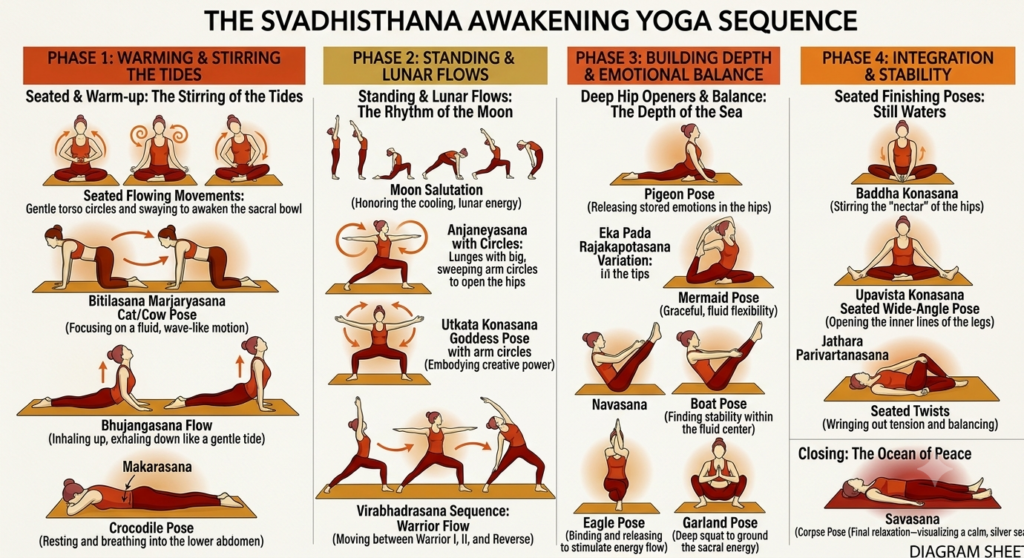
Svadhishthana: Flow Like Water Yoga Sequence
(Only attempt what is accessible and safe for your body today. Use blocks or blankets where needed.)
Begin with Anjali Mudra: This is a gesture of offering. It means we are honouring and celebrating this moment and the potential for an intention to progress toward our greatest spiritual awakening.
Seated & Warm-up: The Stirring of the Tides
- Seated Flowing Movements: Gentle torso circles and swaying to awaken the sacral bowl.
- Bitilasana Marjaryasana: Cat/Cow Pose (Focusing on a fluid, wave-like motion).
- Bhujangasana Flow: Flowing Cobra (Inhaling up, exhaling down like a gentle tide).
- Makarasana: Crocodile Pose (Resting and breathing into the lower abdomen).
Standing & Lunar Flows: The Rhythm of the Moon
- Chandra Namaskar: Moon Salutation (Honoring the cooling, lunar energy).
- Anjaneyasana with Circles: Lunges with big, sweeping arm circles to open the hips.
- Utkata Konasana: Goddess Pose with arm circles (Embodying creative power).
- Virabhadrasana Sequence: Warrior Flow (Moving between Warrior I, II, and Reverse).
- Garudasana: Eagle Pose (Binding and releasing to stimulate energy flow).
Deep Hip Openers & Balance: The Depth of the Sea
- Eka Pada Rajakapotasana: Pigeon Pose (Releasing stored emotions in the hips).
- Eka Pada Rajakapotasana Variation: Mermaid Pose (Graceful, fluid flexibility).
- Navasana: Boat Pose (Finding stability within the fluid center).
- Malasana: Garland Pose (Deep squat to ground the sacral energy).
Seated Finishing Poses: Still Waters
- Baddha Konasana: Butterfly Pose (Stirring the “nectar” of the hips).
- Upavista Konasana: Seated Wide-Angle Pose (Opening the inner lines of the legs).
- Jathara Parivartanasana: Seated Twists (Wringing out tension and balancing).
Closing: The Ocean of Peace
- Savasana: Corpse Pose (Final relaxation—visualizing a calm, silver sea).

🧡 Glossary of Sacred Terms
Key Sanskrit and traditional concepts referenced throughout the Svadhishthana (Sacral Chakra) journey.
- Svadhishthana: “One’s own abode” or “dwelling place of the Self”; the name of the second (sacral) chakra.
- Bija Mantra: A seed syllable or sound used in meditation (such as *Vam*).
- Vrittis: Psychological ripples, fluctuations, or key virtues and qualities associated with the mind and the petals of the chakras.
- Hamsa: The sacred swan, symbolizing calmness of mind, purity of the soul, truth, and wisdom.
- Pranayama: Breathwork or control of the life force.
- Chandra Bhedana: “Moon-piercing” breath or left-nostril breathing.
- Chandra Nadi: The cooling, lunar energy channel running through the left side of the subtle body (*Ida Nadi*).