
Sadashiva
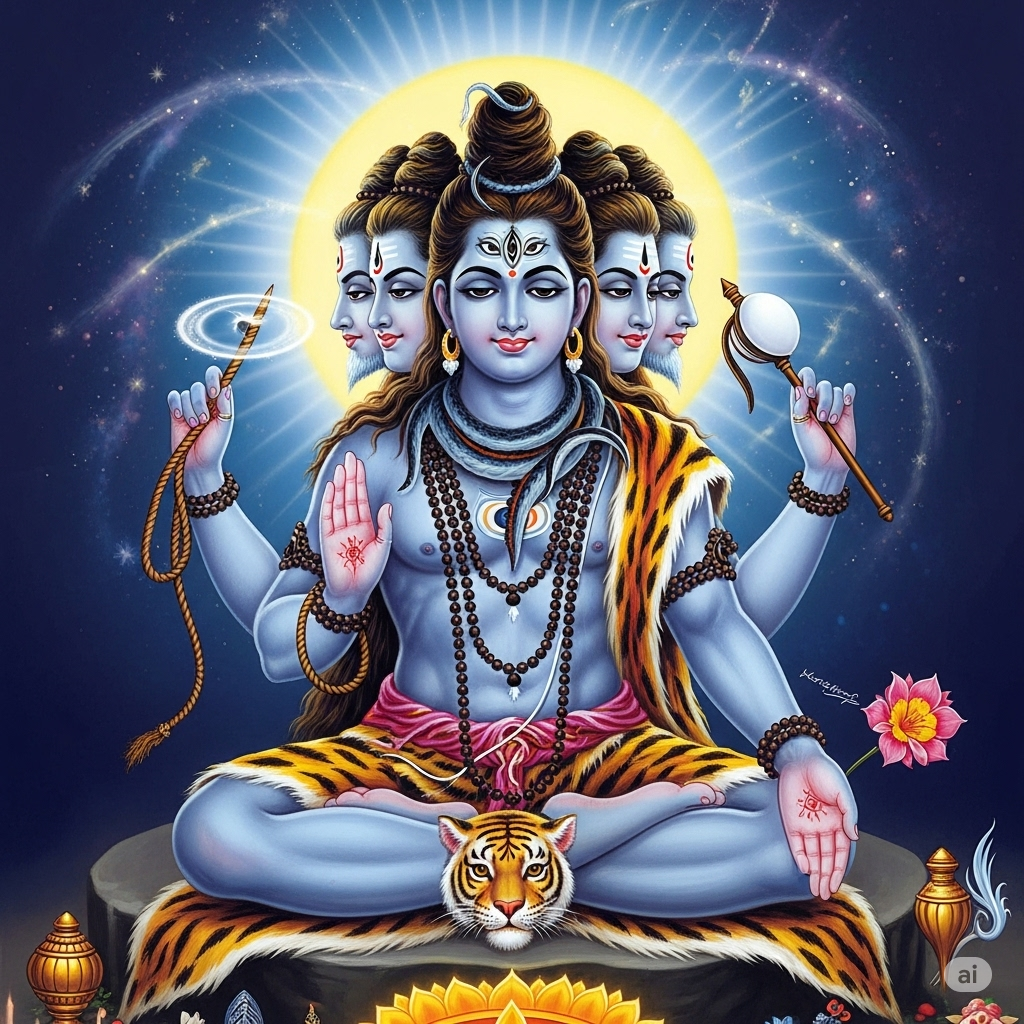
The deity associated with Vishuddha is Sadashiva. His five faces symbolize the five elements (earth, water, fire, air, and space) and the five powers of Shiva (creation, preservation, destruction, illusion, and grace). The three eyes in each face, suggest the ability to see past, present, and future, or profound insight.
He has four arms. He holds a noose, symbolizing control over the senses, and a goad, representing control over the mind. A goad is a long stick used to goad livestock to move in the desired direction, as we strive to direct our minds. His two other hands are in abhay mudra which dispels fear, and varada, the boon providing mudra.
His Mantra is the Bija Ham. The Bija (root) of a thing is that thing in essence.
Ardhanarishvara
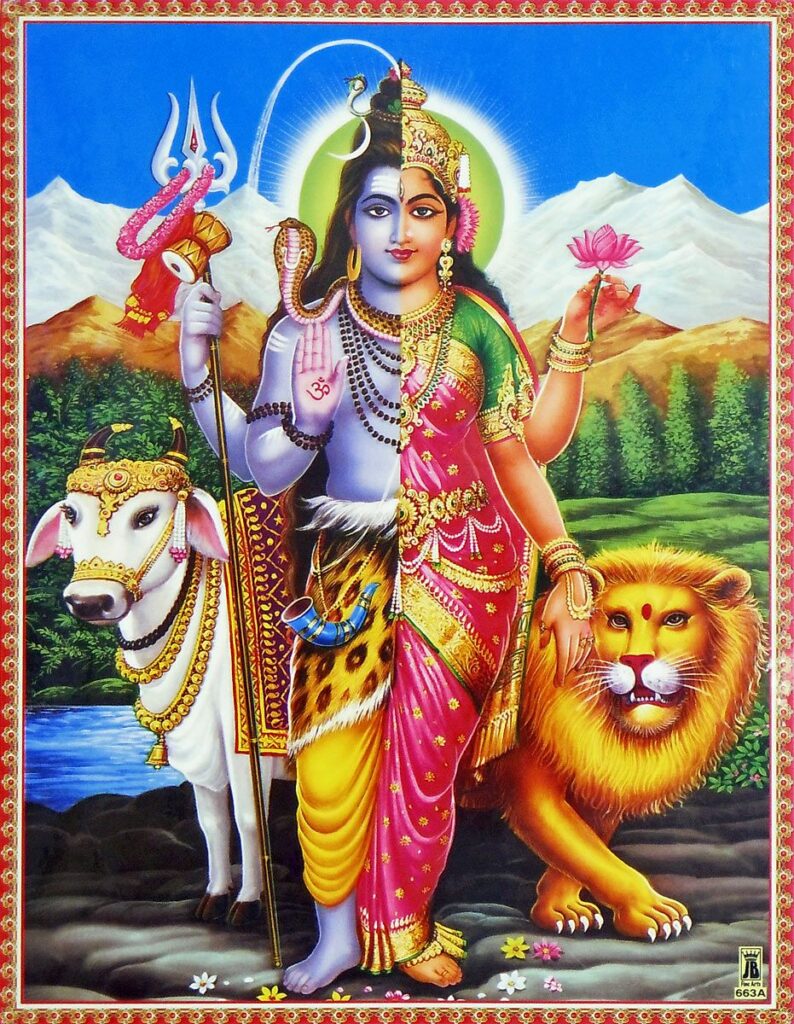
With Parvati in his heart, Sadashiva is often depicted in the androgenous form of Ardhanarishvara, symbolizing the inseparable union of masculine and feminine energies, to teach us the importance of balance, unity, and harmony in all aspects of life. Ardhanarishvara embodies the concept of Purusha (male principle) and Prakriti (female principle) being unified.
Of golden colour on the left, Shakti is seated on a half-lion and of snow-white colour on the right, Shiva sits upon a half-bull, wearing the skin of a tiger and adorned in a garland of snakes.
Five-faces with three eyes in each the god/goddess wears a tiger skin and has ten arms, holding a trident, battle-axe, sword, wajra, symbolizing the properties of a diamond (indestructibility) and a thunderbolt (irresistible force), fire, the great snake, a bell, a goad and a noose, and making the gesture of dispelling fear.
Shakini Shakti
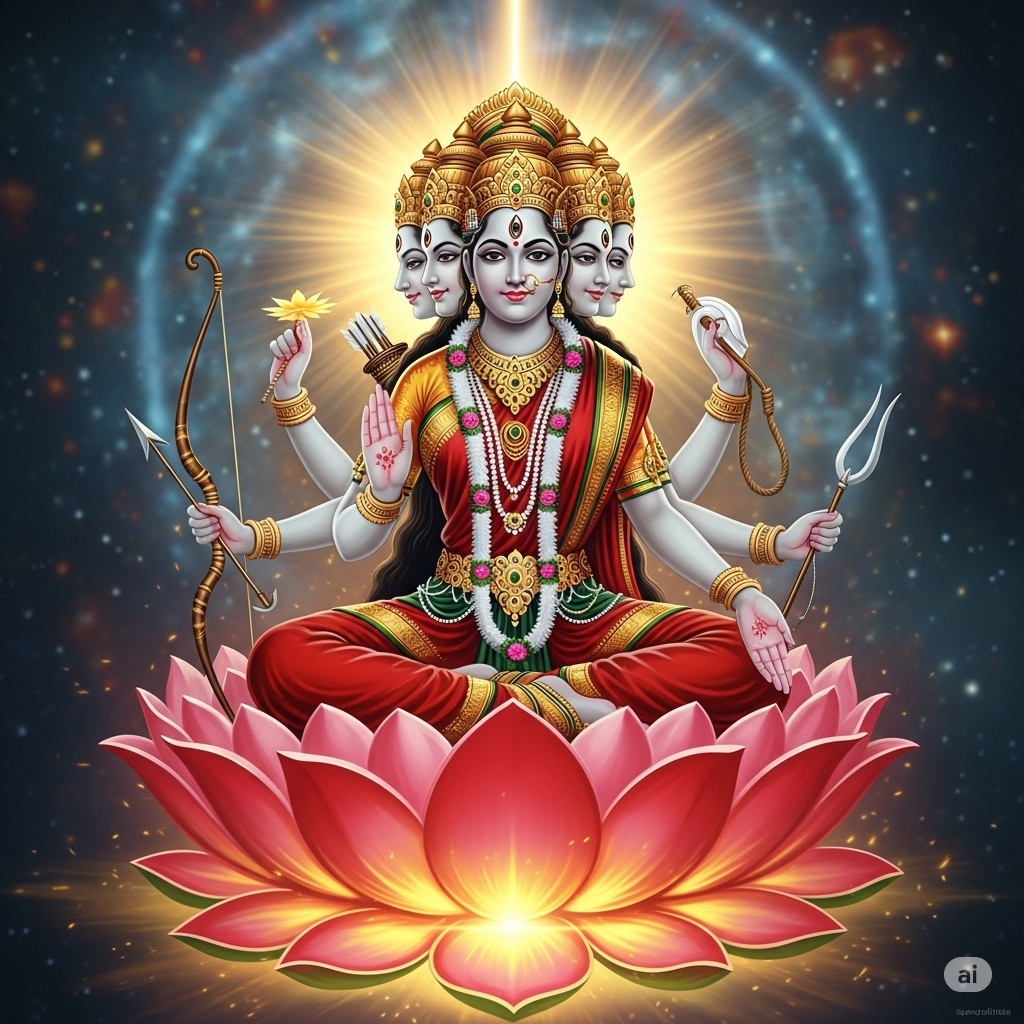
The shakti power of Vishuddha comes from Shakini, the activating energy of Sadashiva.
Shakini Shakti is purer white than the ocean of milk, luminous in the light of the full moon of the chakra. Wearing yellow and seated on a red lotus in Jnana mudra she has five faces each with three-eyes.
Holding a skull, as she is the goddess of our bones; an ankusha, a staff used to control an elephant; the scriptures, representing knowledge; and mala beads.
Shakini Shakti is the bestower of higher knowledge and siddhis (powers). She is the gate keeper to the door of liberation for a practitioner whose senses are pure and controlled.
She governs the power of speech, self-expression, and the ability to articulate one’s truth with authenticity and grace. Within this purification centre she separates truth from falsehood and transforms negative experiences into wisdom.
Goddess Matangi
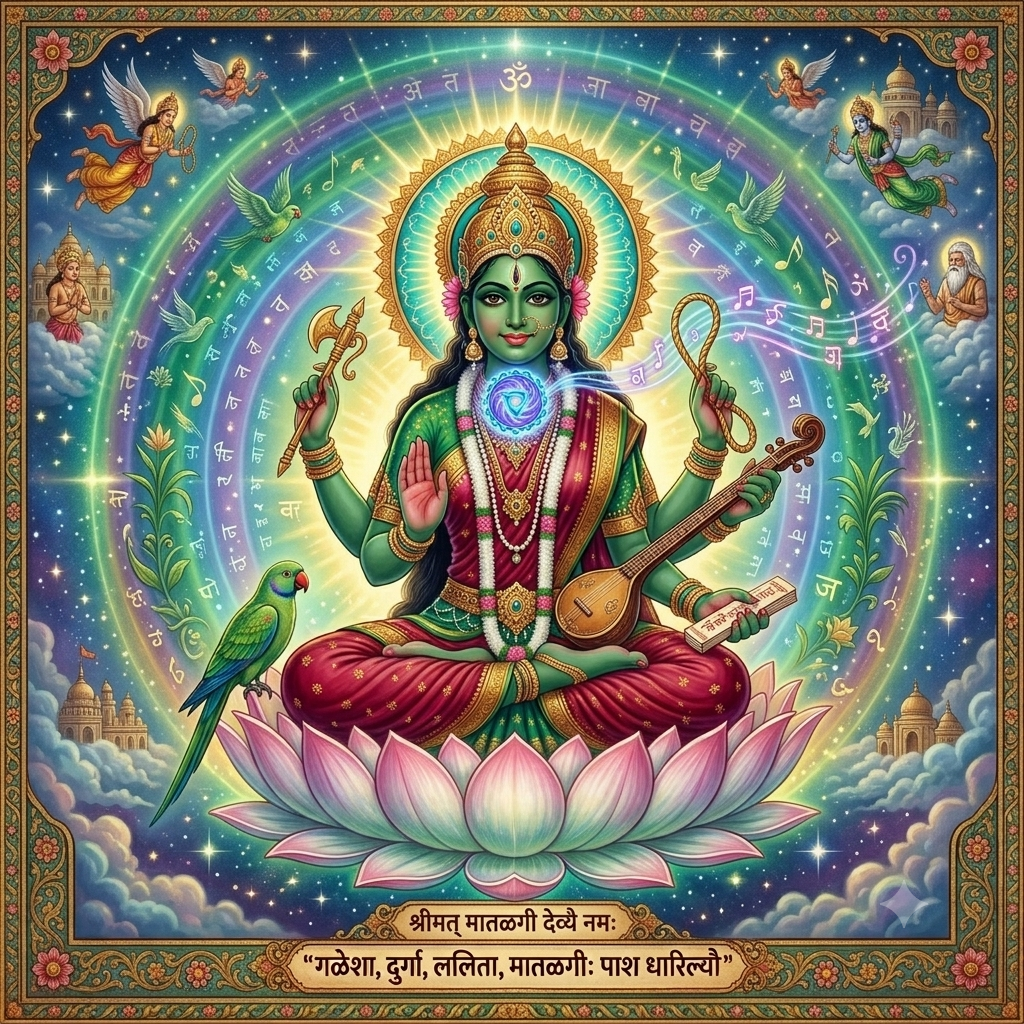
Known in ancient vernacular texts as Matalgi, Matangi is the emerald-green, esoteric counterpart to Saraswati. While Saraswati rules mainstream arts, Matangi governs Vak Siddhi—the raw, wild power of the spoken word, creative inspiration, and supreme knowledge that breaks through societal conventions. Her primary residence in the subtle body is the Throat Chakra (Vishuddha), where she rules over Nada (inner cosmic sound) to anchor authentic self-expression.
Unlike forces that pull consciousness inward, Matangi embodies how divine energy projects outward into your auric field, translating silent ideas into song, art, and speech. Because she thrives on the periphery, her energy extends to the very edges of your energetic boundary, capturing chaotic external frequencies and transforming them into raw creative fuel. By invoking her lasso (pasha) within the throat centre, you capture wandering thoughts and anchor them into alignment, ensuring your outward expression remains clear, potent, and true.