
4th Chakra, Heart Chakra
New Age Concepts
Modern Anahata At a Glance
Understanding The Heart Chakra
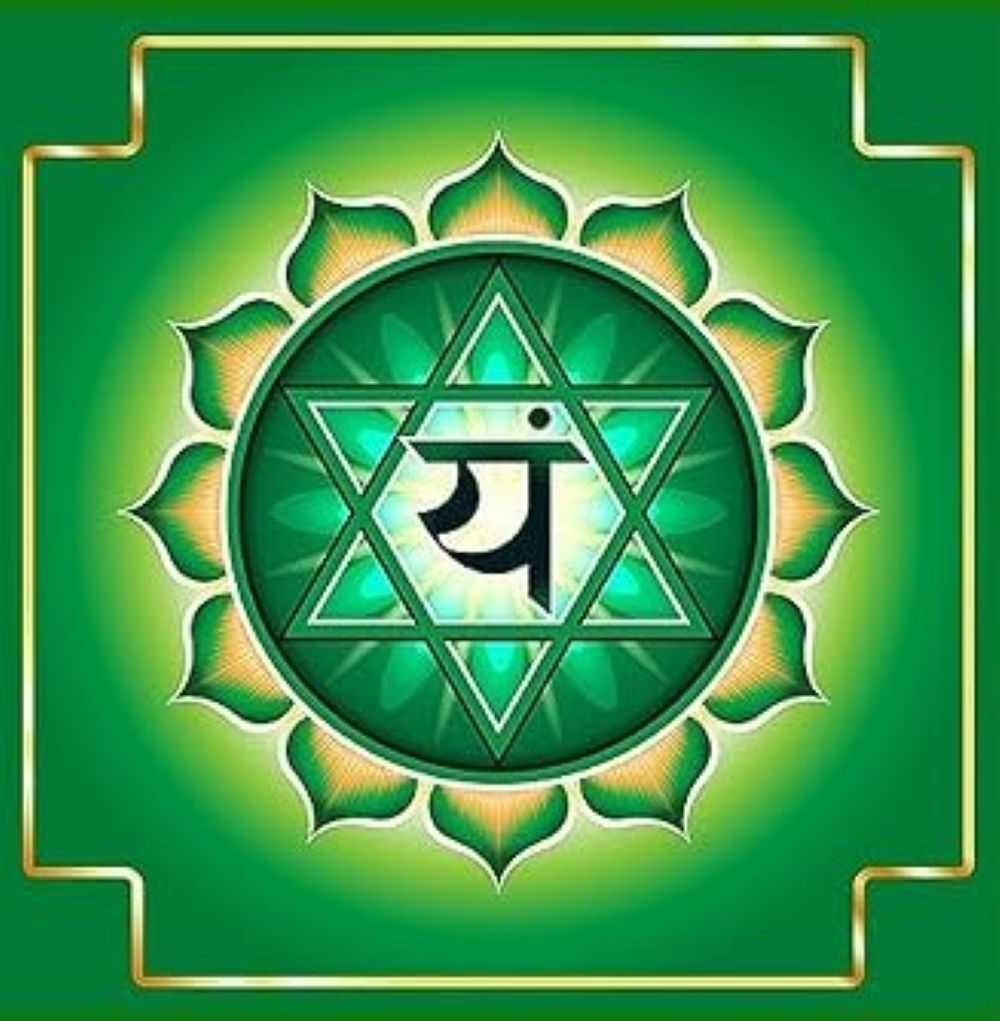
In the new age chakra system, Anahata – the Heart Chakra, petals represent the divine qualities of the heart:
Joy, Peace, Love, Compassion, Kindness, Forgiveness, Patience, Harmony, Understanding, Clarity, Purity & Bliss. It is the bridge between our physical existence and our spiritual expansion..
The green colour of the heart chakra reflects the green of nature, associated with renewal, balance, and the connection between the physical and spiritual realms.
New age practices focus on balancing or unblocking the chakras. When your heart chakra is balanced, positive energy will flow freely through your entire body, leading to improved emotional well-being, healthier relationships, and a deeper sense of empathy and self-love. You will be able to forgive and let go of negative emotions, and develop a genuine capacity for self-love.
Recognizing the Signs of Imbalance
When the heart chakra becomes constricted or blocked, it fundamentally changes how we interact with the world and ourselves. An imbalance often manifests in two distinct ways:
- The Closed Heart: You may experience deep feelings of loneliness, jealousy, or pervasive distrust. It becomes incredibly difficult to forgive or release past pain, causing you to become cold, distant, and unwilling to open up to others.
- The Boundless Heart: Conversely, an imbalance can look like a lack of boundaries. You might find yourself letting everyone in at the expense of your own well-being—constantly saying “yes” when your spirit is screaming “no,” leading to clingy relationships and a loss of your core sense of self.
Physical Signs: Energetic blockages in the Anahata space can often manifest physically as high blood pressure, respiratory issues, or a literal feeling of tightness and constriction across the chest.
 Physical Signs: Energetic blockages in the Anahata space can often manifest physically as high blood pressure, respiratory issues, or a literal feeling of tightness and constriction across the chest.
Anahata Chakra gives the gift of expressing our thoughts and feelings in touching words, pictures or melodies. When we are in the Anahata Chakra our perceptions become finer and artistic talents and creative abilities are awakened within us.
Heart Chakra Healing & Refinement
Balancing the Anahata Chakra is a deliberate journey of softening. To open your heart space full-force, try incorporating these foundational practices into your daily rhythm:
- Cultivate Daily Gratitude: Train your awareness by acknowledging three specific things you are deeply grateful for every single day.
- Awaken Your Creativity: Anahata gives us the unique gift of expressing our deepest thoughts through touching words, art, and melodies. Engaging in creative practices naturally awakens and refines our inner perceptions.
- Incorporate Nature’s Vibration: Surround yourself with the healing frequencies of the natural world. Use essential oils like rose, lavender, and bergamot to encourage heart-opening, and integrate green crystals—such as Rose Quartz, Green Aventurine, Jade, Malachite, and Amazonite—into your space.
Use positive affirmations like ‘I am open to love’ and ‘I forgive myself and others’.
The Path of Heart-Centering: Forgiveness as Self-Liberation
“Forgiveness—of yourself and of others—is the essential first step in unblocking the Anahata. If you feel tightness in your heart, there is almost certainly forgiveness work waiting for you.”
It is vital to remember: This is not a gift for the person who hurt you. In many modern healing circles, forgiveness is misunderstood as an act of charity toward the offender—which can feel impossible or even unfair. But true forgiveness is about reclaiming your own energy. You are not excusing their actions, nor are you required to welcome them back into your life.
🔑 The Key to Heart-Flow: > Forgiveness is the key that unlocks the “Armour” we built. We don’t turn the key to let the other person in; we turn it to let ourselves out of the cage of the past.
By releasing the stored energy of the hurt, you aren’t saying what happened was “okay.” You are simply choosing to stop carrying the weight of their choices. You are clearing the debris to make room for your own flow, ensuring that past pain no longer has the power to keep future love out of your life.
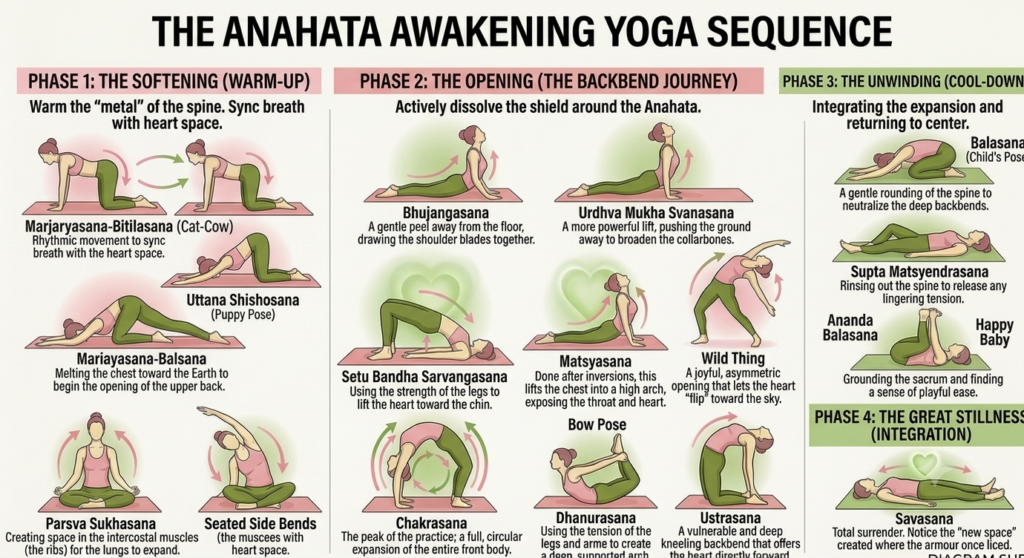
Yoga Sequence: Breaking the Heart’s Armour
“We build armour around our heart to shield us from pain and hurt. Backbends break open the armour, allowing the light of the Jivatma to shine through.” – Sahasra
I. The Softening (Warm-Up)
Before we break the armour, we must first warm the “metal” of the spine.
- Marjaryasana-Bitilasana (Cat-Cow): Rhythmic movement to sync breath with the heart space.
- Uttana Shishosana (Puppy Pose): Melting the chest toward the Earth to begin the opening of the upper back.
- Parsva Sukhasana (Seated Side Bends): Creating space in the intercostal muscles (the ribs) for the lungs to expand.
II. The Opening (The Backbend Journey)
These are the poses that actively dissolve the shield around the Anahata.
- Bhujangasana (Cobra Pose): A gentle peel away from the floor, drawing the shoulder blades together.
- Urdhva Mukha Svanasana (Upward-Facing Dog): A more powerful lift, pushing the ground away to broaden the collarbones.
- Setu Bandha Sarvangasana (Bridge Pose): Using the strength of the legs to lift the heart toward the chin.
- Chakrasana (Wheel Pose): The peak of the practice; a full, circular expansion of the entire front body.
- Matsyasana (Fish Pose): Often done after inversions, this lifts the chest into a high arch, exposing the throat and heart.
- Kamatkarasana (Wild Thing): A joyful, asymmetric opening that lets the heart “flip” toward the sky.
- Dhanurasana (Bow Pose): Using the tension of the legs and arms to create a deep, supported arch.
- Ustrasana (Camel Pose): A vulnerable and deep kneeling backbend that offers the heart directly forward.
III. The Unwinding (Cool-Down)
Integrating the expansion and returning to center.
- Balasana (Child’s Pose): A gentle rounding of the spine to neutralize the deep backbends.
- Supta Matsyendrasana (Supine Twist): Rinsing out the spine to release any lingering tension.
- Ananda Balasana (Happy Baby): Grounding the sacrum and finding a sense of playful ease.
IV. The Great Stillness (Integration)
- Savasana (Corpse Pose): Total surrender. Notice the “new space” created where the armour once lived.
🗣️ Rising from Heart to Throat
Once the heart is balanced, the energy rises to the Vishuddha for purification and true expression. Continue your journey upward.