
The Practice of the Silent Observer
To balance the chakras, we must learn to sit with our emotions without being swept away by the spinning vortex of the Vritti. Using the Chakra Maps below, locate the physical sensation of the emotion in your body—whether it is the heat of anger or the expansive glow of joy. If the feeling is heavy, simply withdraw from the “story” or the reason why you feel this way and watch the energy as a neutral observer; held in this steady gaze, the heavy energy naturally begins to thin out and evaporate like mist under the morning sun. However, if the emotion is positive, such as Love or Happiness, focus your full attention upon it; you will find that by observing these “high-vibration” states, they grow stronger and more radiant, eventually settling into the clear, blissful stillness of Samādhi.
Music is the expression of harmonies within the universe. It is interesting to consider that every vritti or emotion has a sound or vibration. Sound produces form and form produces colour.
In Hindu culture Brahman (the Absolute) is the background of all these changing feelings.
Each chakra has a specific set of vrittis traditionally assigned to it
- Vrittis are Mental Modifications: Vrittis are fundamental mental and emotional states that color our experience. They are not isolated to a single chakra but can manifest and be experienced through various energetic centers.
- Chakras as Processing Centers: Each chakra is a processing center. When a vritti is “assigned” to a chakra, it means that chakra is a primary energetic location where that particular mental/emotional tendency is expressed, purified, and transformed.
- Cross-Chakra Influence: An imbalance in one chakra can manifest vrittis associated with other chakras. For example, fear (Muladhara vritti) can certainly lead to anxiety (Cinta, a Lalana vritti).
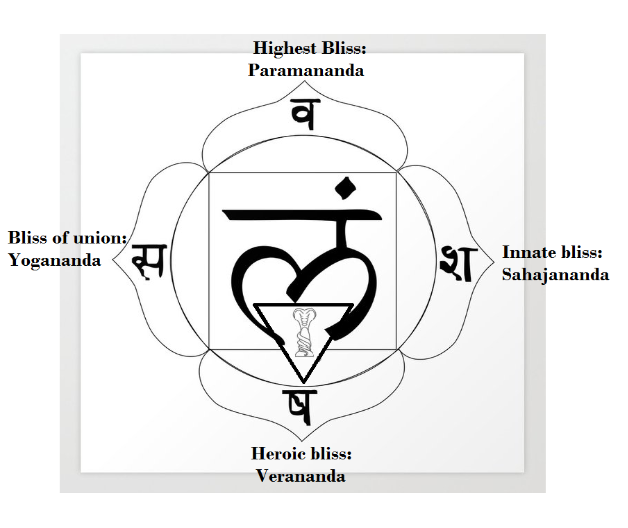
Muladhara – Root Chakra
- va , sha , sha , sa
- Earth (Privthi): symbolized by a yellow square
- cohesion
- sense of smell
It is the seat of our basic functions for life. Our desires and our ability to overcome personal challenges to rise above desire. This is expressed through three primary frameworks:
- The Four Basic Instincts. These are the animal urges we must master to find stability.
- The Four Aims of Human Life. How we direct our energy as we grow.
- The Four Functions of the Psyche.
The internal tools we use to process the world:
- Food: Sustenance and physical health.
- Sleep: Rest and the subconscious.
- Self-Preservation: The “fear of death” and the need for safety.
- Reproduction: The drive to create and continue life.
- Kāma: The desire for physical and sensory pleasure.
- Artha: The pursuit of worldly resources and intellectual security.
- Dharma: The alignment with duty, ethics, and spiritual longing.
- Mokṣa: The ultimate yearning for absolute liberation and freedom.
- Manas: The sensory, processing mind.
- Buddhi: The higher intellect and power of discrimination.
- Chitta: The storehouse of memories and consciousness.
- Ahaṃkāra: The ego or “I-maker” that gives us a sense of self.
Svadhishthana – Sacral Chakra
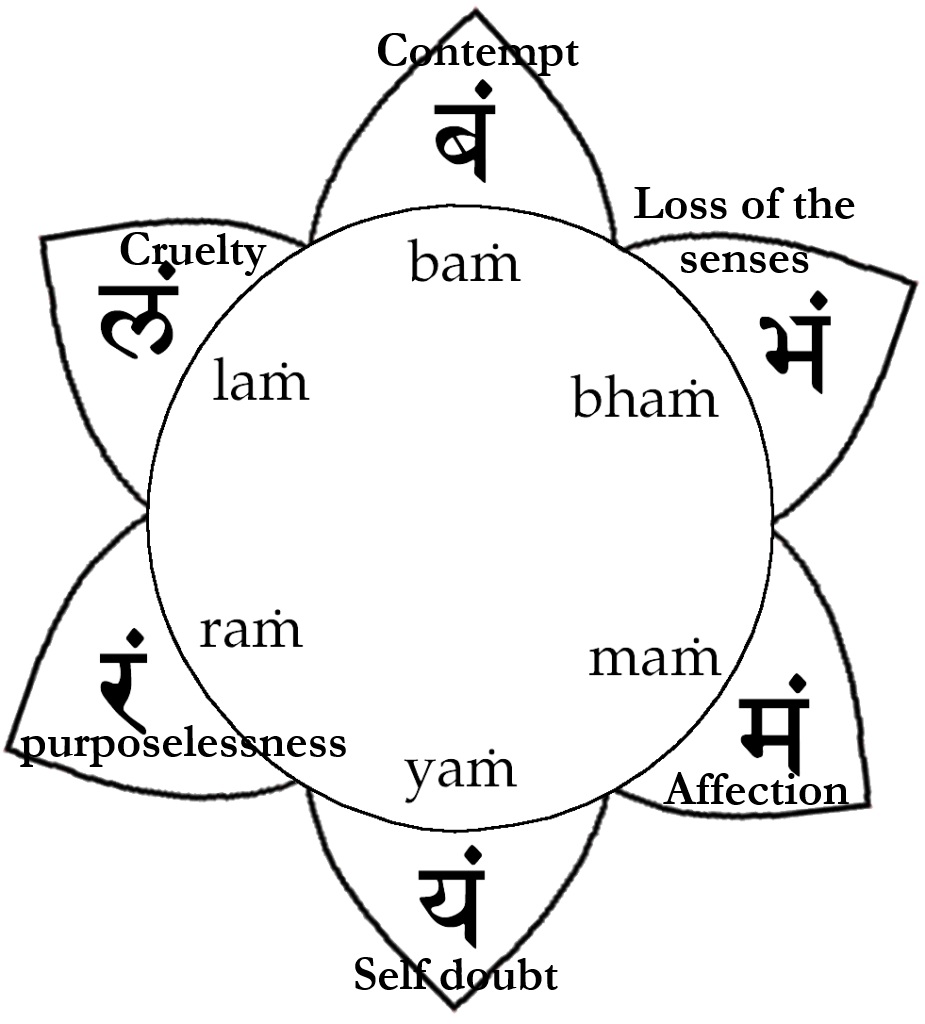
- ba , bha , ma , ya , ra, la
- Water (Apas tattva) – symbolized by a silver crescent
- contraction
- sense of taste
- murccha: fainting, swoon, stupor.
- prashraya: over-indulgence.
- avishvasa: distrust.
- sarvanasha: fear of annihilation.
- avajna: disdain.
- krurata: pitilessness, mercilessness.
Manipura – Naval Chakra
- da, dha, na, ta, tha, dd, dha, na, pa, pha,
- expansion producing heat
- Agni (Fire tattva) – symbolized by a red triangle.
- Stimulates the sight, sense of colour and form
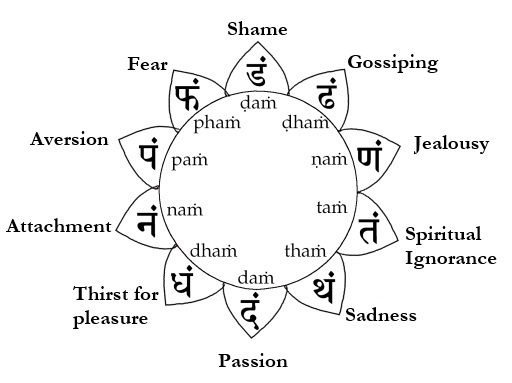
- lajja: shame, bashfulness.
- pishunata: backbiting, slandering.
- iirsya: jealousy, envy.
- susupti: laziness, lethargy.
- visada: sadness, melancholy.
- kasaya: passion.
- trsna: thirst.
- moha: attachment to objects.
- ghrna: hatred, aversion.
- bhaya: fear.
As we move from the Anāhata (12 emotions) to the Viśuddha (16 sounds) and finally to the Ājñā (2 petals), we are moving closer to that “Stillness” (Nirodha)
Anahata – Heart Chakra
- ka, kha, ga, gha,na, ca, cha, ja, jha, na, ta, tha,
- Air (Vayu tattva) – symbolized by a blue circle.
- movement
- sense of touch
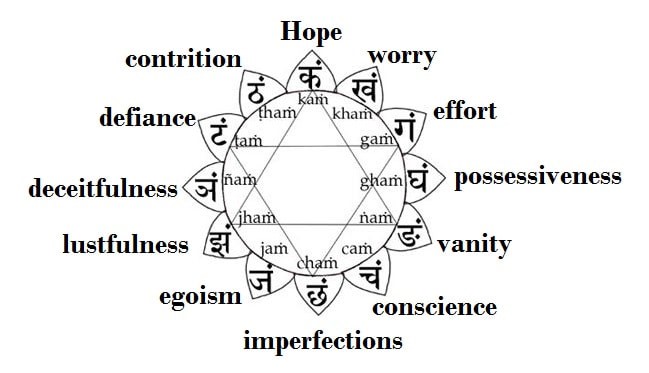
- asha: hope
- cinta: thoughtfulness, anxiety*
- cesta: effort
- mamta: possessiveness, fondness
- dhamba: arrogance, vanity
- viveka: discrimination
- vikalata: Languor
- ahamkara: conceit, egoism, pride
- lolata: covetousness, avarice
- kapatata: duplicity, hypocrisy
- vitarka: indecision, argumentativeness.
- anutapa: regret, burning misery**
* anxiety often “leaks” from the heart up into the Lalana, the secret chakra above the heart **this is the burning misery of the past, which is why we use the Observer to let it evaporate.
Vishuddha – Throat Chakra
- A, Ā, I, Ī, U, Ū, Ṛ, ṝ, Ḷ, ḹ, E, Ai, O, Au, Aṃ, Aḥ.
- Space (Akasha tattva) – symbolized by a black egg.
- Sense of Hearing
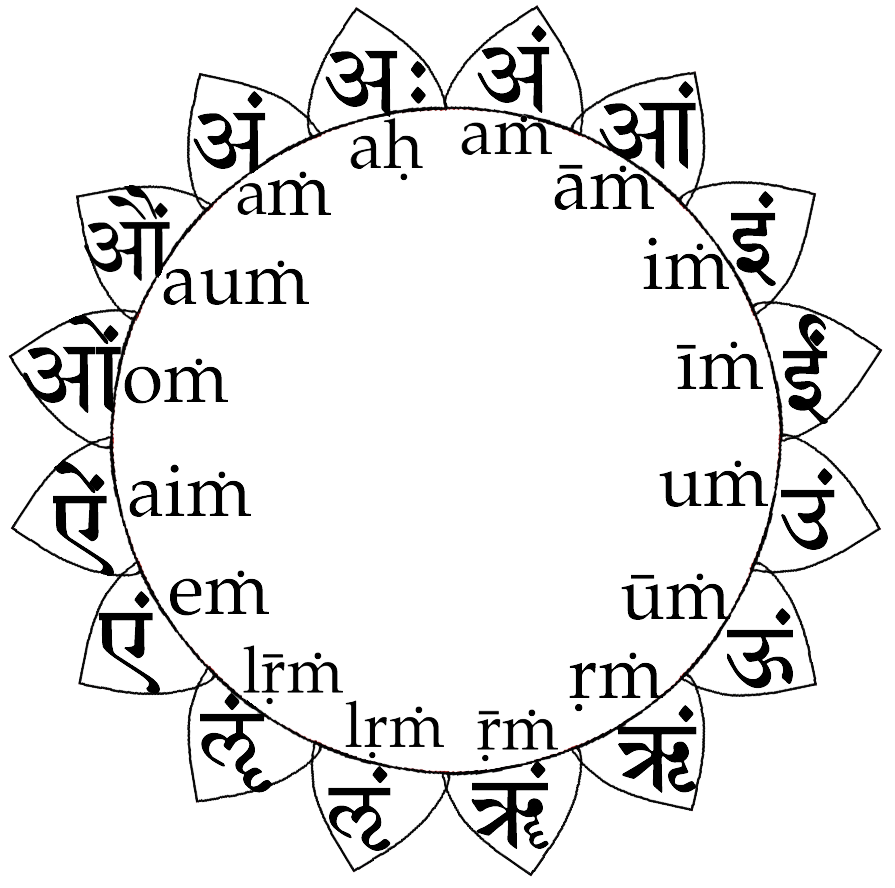
- A (अ) – Represents the beginning of sound, purity.
- Ā (आ) – Extension of sound, clear expression.
- I (इ) – Inner awareness, receptivity.
- Ī (ई) – Deep inner wisdom, clarity of thought.
- U (उ) – Upward movement of energy, creation.
- Ū (ऊ) – Fullness of expression, expansion.
- Ṛ (ऋ) – Rhythm, order, balance.
- Ṝ (ॠ) – Deep rhythm, cosmic order.
- L̥ (ऌ) – Lightness, subtlety.
- L̥̄ (ॡ) – Deep subtlety.
- E (ए) – Union, merging of sounds.
- Ai (ऐ) – Wisdom, knowledge, insight.
- O (ओ) – Wholeness, completeness.
- Au (औ) – Cosmic sound, universal vibration.
- Aṃ (अं) – Nasal sound, resonance, connection to the subtle.
- Aḥ (अः) – Aspiration, exhalation, release.
These are not just letters; they are considered the 16 phases or potential abilities of the human being.
Ajina – third eye chakra
ham, kasham
Ajna is the screen of the mind where all sensory information and thoughts are witnessed by the Silent Observer.
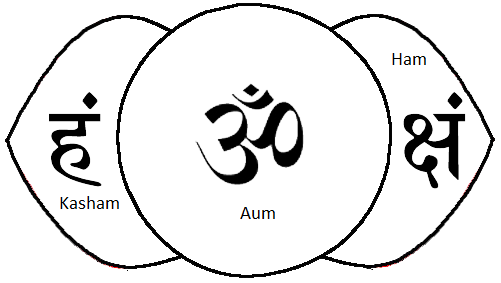
- apara: secular knowledge, directing the lower vrittis towards mundane enjoyments. This is on the right side and is associated with the pingala nadi. When the right nostril is dominant so is this vritti.
- para: spiritual knowledge, elevating the lower vrittis towards spiritual enjoyments. This is on the left side and is associated with the ida nadi. When the left nostril is dominant so is this vritti and the mind is in a more elevated state.
The Alchemy of Emotional Digestion
While in the stillness of meditation, turn your internal gaze toward the raw vibration of the emotion you are experiencing. Acceptance is the first flame; by simply sitting with the feeling and allowing yourself to fully inhabit it, you begin the process of integration. Though the sensation may feel intense or uncomfortable, remain anchored in the knowledge that you are safe and that a purely emotional response possesses no power to physically harm you. By consciously releasing the “story” or the mental narrative that created the feeling, you allow the energy to be fully processed and digested by your awareness. When the internal work is complete and the energy has been fully met, the emotion will naturally lose its form and evaporate into peace.
The Cosmic Formula of the 1,000 Petals
To truly understand the Vrittis, we have to look at them not just as random emotional waves, but as a precise, mathematical spiritual science. This brilliant framework—famously systematized by the modern Tantric master Shrii Shrii Anandamurti—maps out the exact geometry of human consciousness:
50 Vrittis × 2 Expressions (Internal / External) × 10 Directions = 1,000 Vibrations
1. The 50 Sanskrit Acoustic Roots (The Petals)
The human body is a sacred musical instrument vibrating with cosmic sound. In traditional Tantra, there are exactly 50 foundational letters (phonemes) in the Sanskrit alphabet.
If you count the lotus petals of the first six chakras—from the base of the spine up to the third eye—they add up to exactly 50:
- Mūlādhāra (Root): 4 petals
- Svādhiṣṭhāna (Sacral): 6 petals
- Maṇipūra (Solar Plexus): 10 petals
- Anāhata (Heart): 12 petals
- Viśuddha (Throat): 16 petals
- Ājñā (Third Eye): 2 petals
Every single petal is inscribed with a specific Sanskrit letter representing an acoustic root—the pure cosmic vibration of that energy point. When human consciousness flows through these petals, it creates a Vritti (a thought-wave). When unhindered, it is a pure cosmic sound; when distorted by our Samskaras (subconscious imprints), it manifests as a heavy human emotion like fear, pride, or jealousy.
2. The 10 Indriyas (The Channels of Experience)
Your mind never experiences a Vritti in a vacuum. Every one of the 50 foundational emotional tendencies is processed, filtered, and acted out through your 10 Indriyas—the ten mental/physical faculties of the human instrument.
The 5 Jñānendriyas (Sensory Faculties – Taking the world in): You experience the Vritti purely within your private thoughts, memory, and inner psyche.
- Hearing (Ears)
- Touching (Skin)
- Seeing (Eyes)
- Tasting (Tongue)
- Smelling (Nose)
The 5 Karmendriyas (Motor Faculties – Expressing the mind out): You project that Vritti outward, physically acting it out through your body in the material world.
- 6. Speaking (Vocal cords)
- 7. Grasping (Hands)
- 8. Walking (Feet)
- 9. Expressing/Reproducing (Generative organs)
- 10. Eliminating (Excretory organs)
- The 2 Expressions (× 2): Every single one of these 50 tendencies can manifest in two ways—either externally toward the outer world, or internally within your own psyche. This expands the 50 expressions into 100 modes of consciousness.
- The 10 Directions (× 10): Energy moves through 10 distinct cosmic directions (North, South, East, West, the 4 intermediate corners, plus Upward and Downward).
When those 100 internal and external expressions of the mind radiate outward in all 10 directions of the universe, they create the 1,000 unique pathways of light—the 1,000 petals of the Sahasrara.
This is the divine secret behind the Sahasrāra Chakra at the crown of the head—the “Thousand-Petaled Lotus.” It is the grand matrix where all 1,000 fragmented worldly expressions are gathered back up, purified, and dissolved back into the pure light of Consciousness.
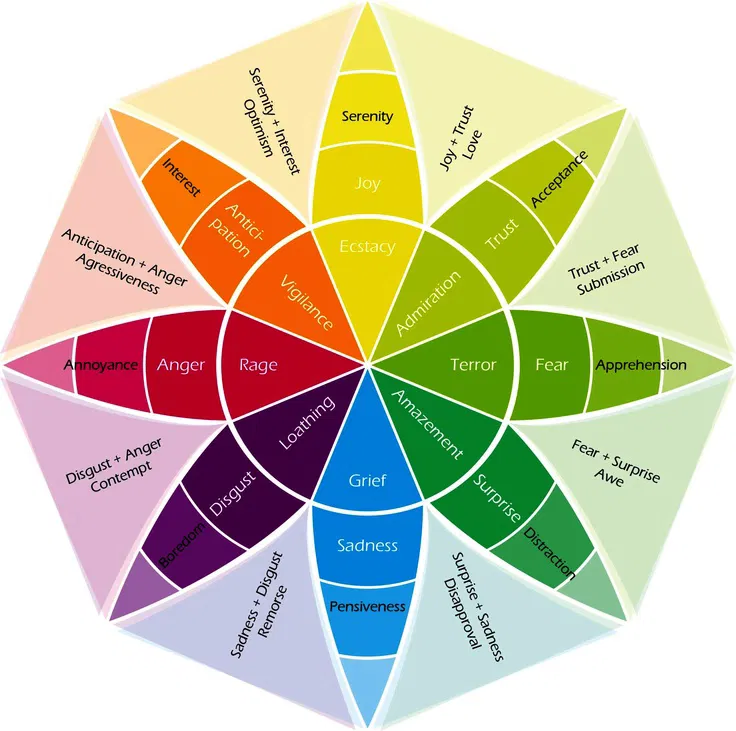
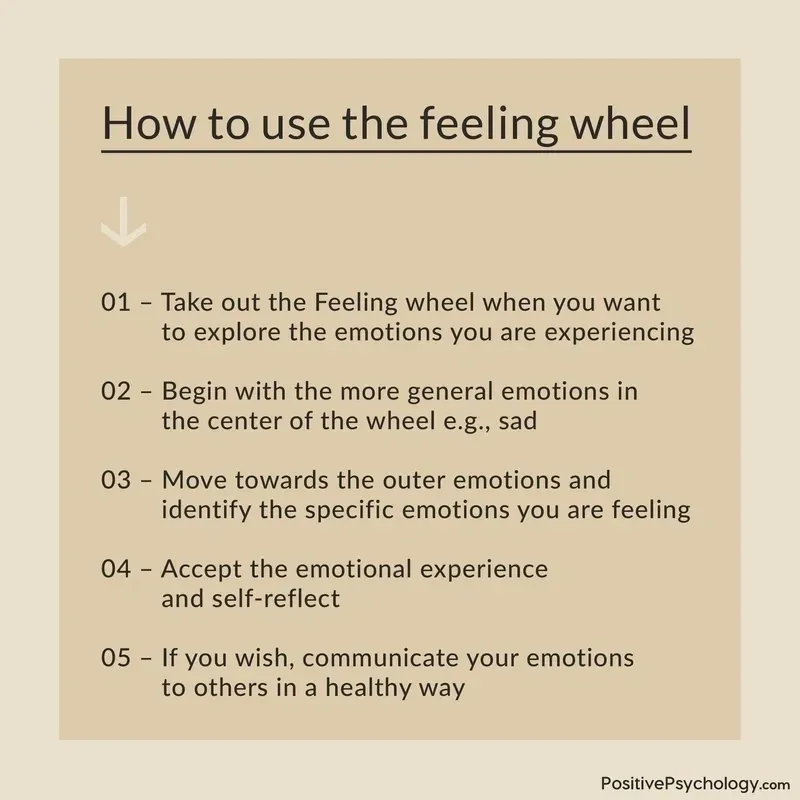
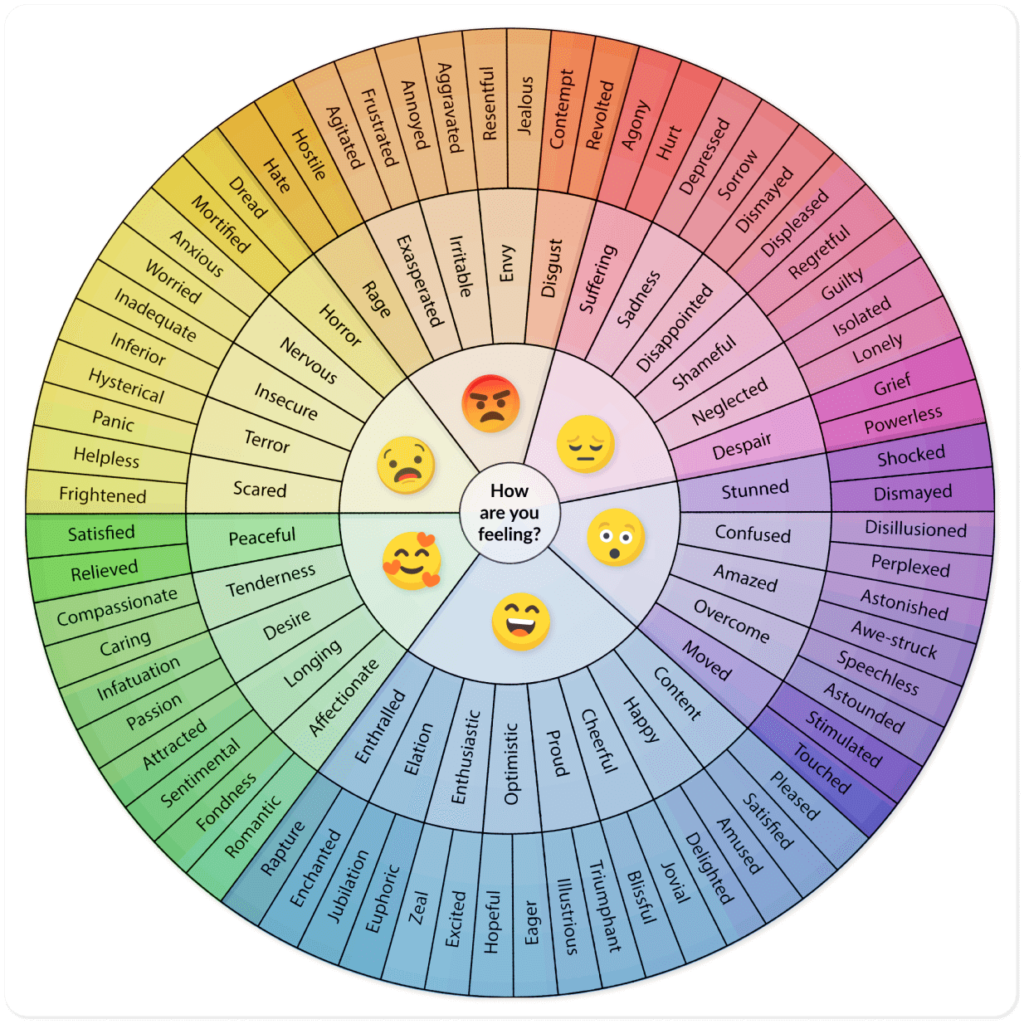
Plutchick’s Modern Wheel of Emotions 1980
Modern psychology, such as Robert Plutchik’s Wheel of Emotions, provides a contemporary map for the very same ‘mental whirlpools’ described by the ancient Tantric masters thousands of years ago.
The Choice: Healing vs. Identity
| The Silent Observer (Healing) | The Trauma Identity (Stuck) |
|---|---|
| Views emotion as a temporary Vritti (whirlpool) that can be stilled. | Views the trauma as a permanent, defining personality trait. |
| Focuses on the physical sensation in the body to “digest” the energy. | Focuses on the story and the mental narrative to justify the feeling. |
| Allows the energy to evaporate into the peace of Samādhi. | Refuels the energy by constantly reliving and retelling the drama. |
The Deep Dive Index
Select a Chakra below to explore the specific Vrittis and healing practices for that energy center.
“By knowing the whirlpool, we find the center.”