
Deities of Hrit Chakra

Guardians of the Eight Directions – The Ashta-Dikpalas
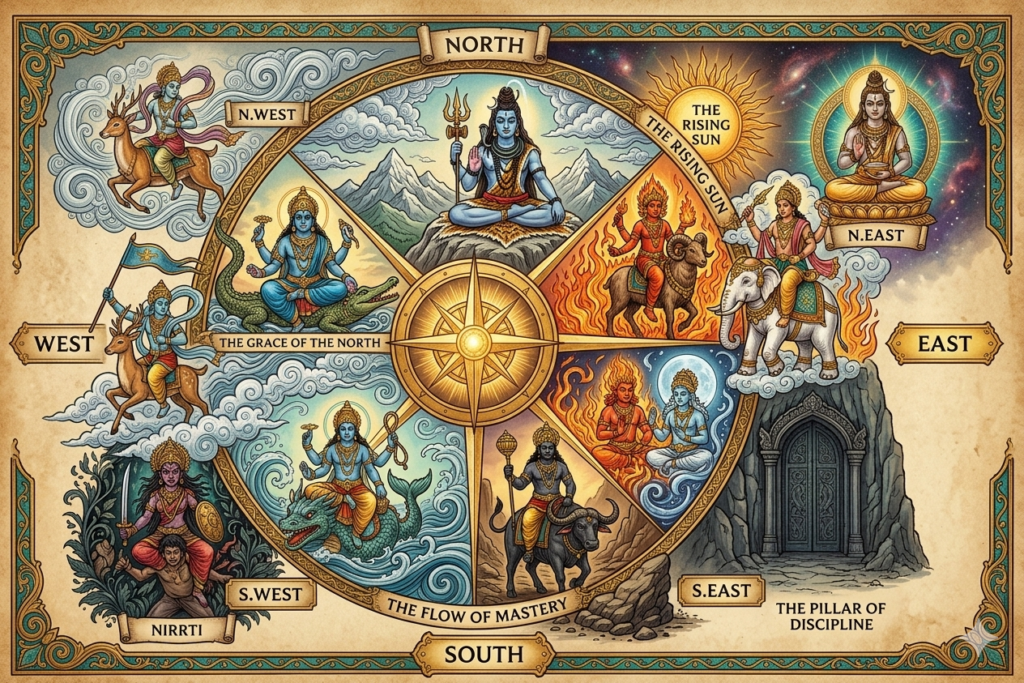
An intricate, classical-style circular chart mapping the traditional directional guardians (Dikpalas) and elements around a central golden compass rose. The chart is divided into sectors corresponding to the compass points: North features Lord Shiva on a mountain peak; Northeast shows a meditating deity on a lotus; East displays an enthroned deity riding a white elephant; Southeast presents figures amidst raging fire; South depicts a dark-skinned deity riding a water buffalo; Southwest features the goddess Nirrti with a sword over a figure; West shows a blue deity riding a deer; and Northwest displays a deity riding a stag through storm clouds. A stone gateway labeled 'The Pillar of Discipline' stands to the right.
An integrated visual matrix of the eight directions, tracking the specific traditional deities, elemental attributes, and psychological gateways like the Flow of Mastery and the Pillar of Discipline.

The vrittis of Hrit Chakra aren’t really emotions or feelings, but a place with eight different directional winds, or aspects of our nature. Our mind walks around these eight petals. When you feel heavy or slothful, you have stepped onto the South-East petal (Agni’s realm). When you are focused and clear, you are on the North-East petal (Ishana). Each direction is governed by a deity and represents a specific “gate” of experience. These entities are the keepers of the boundaries. They make sure you only get to the Wishing Tree in the center when your mind is balanced across all directions.
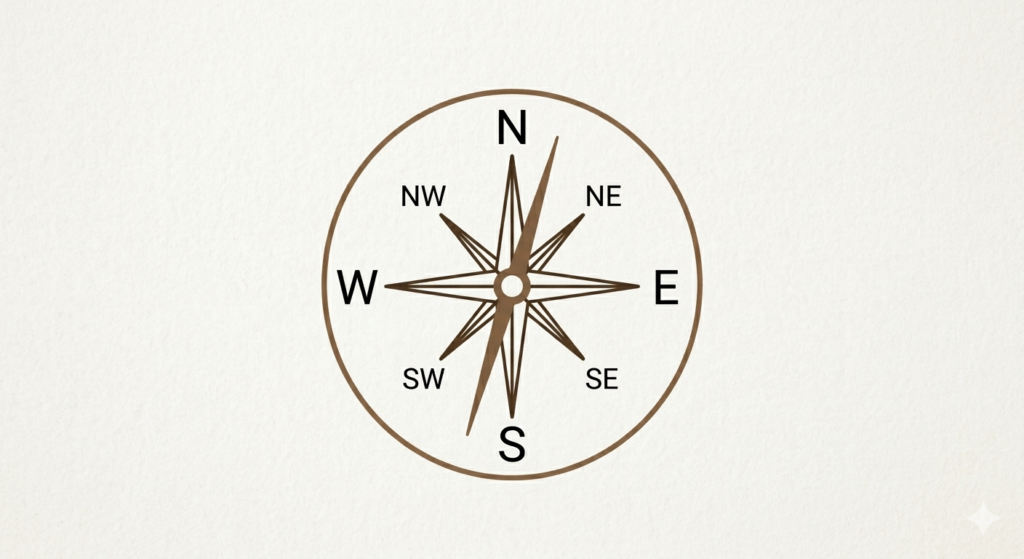
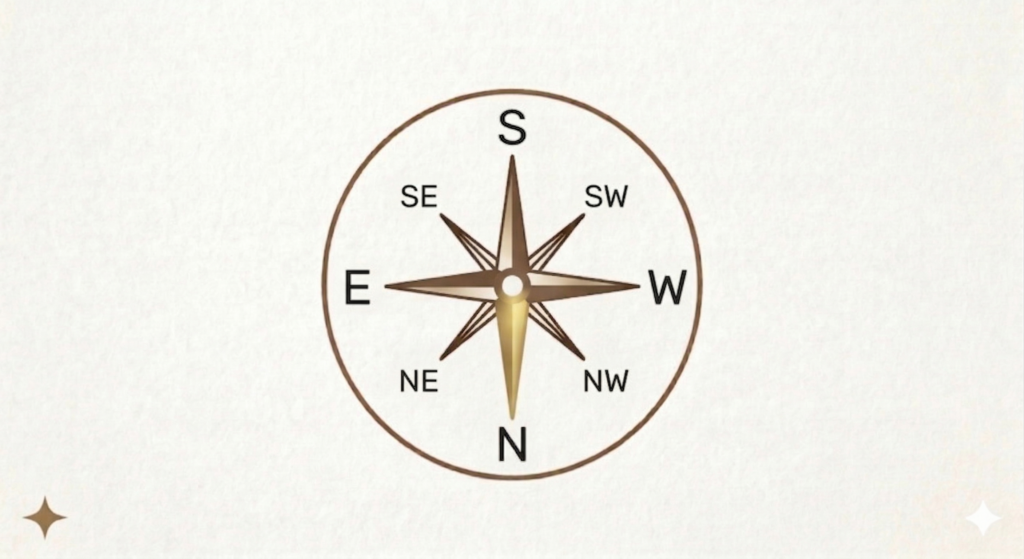
A clean, minimalist digital illustration of a traditional compass rose centered on a light, textured off-white background. The design features a circular outer border enclosing an eight-pointed star that marks the cardinal directions—North, South, East, and West—along with the intercardinal directions—Northeast, Northwest, Southeast, and Southwest—labeled in a simple, dark brown sans-serif font. A stylized, vintage-inspired magnetic needle with a gold hue cuts vertically through the centre, pointing slightly east of north.
A compass serves as a visual anchor for orientation, historical cartography, and navigation.
A minimalist digital illustration of an unconventional, upside-down compass rose centered on a light, textured off-white background. The circular brown border encloses an eight-pointed star displaying inverted cardinal and intercardinal points: South (S) is positioned at the top, North (N) is at the bottom, East (E) is on the left, and West (W) is on the right. The corresponding diagonal directions follow this flipped layout with Southeast (SE) and Southwest (SW) near the top, and Northeast (NE) and Northwest (NW) near the bottom. The main points feature a metallic gold-and-brown gradient shading.
From where we sit in the the southern hemisphere, the points of the compass are different. South is downwards, West is inland, North is upward and East is where the sun rises.

Guardians of the Eight Directions — The Ashta-Dikpalas

Direction Guardian Deity Primary Vritti / State Psychological Gateway & Attribute
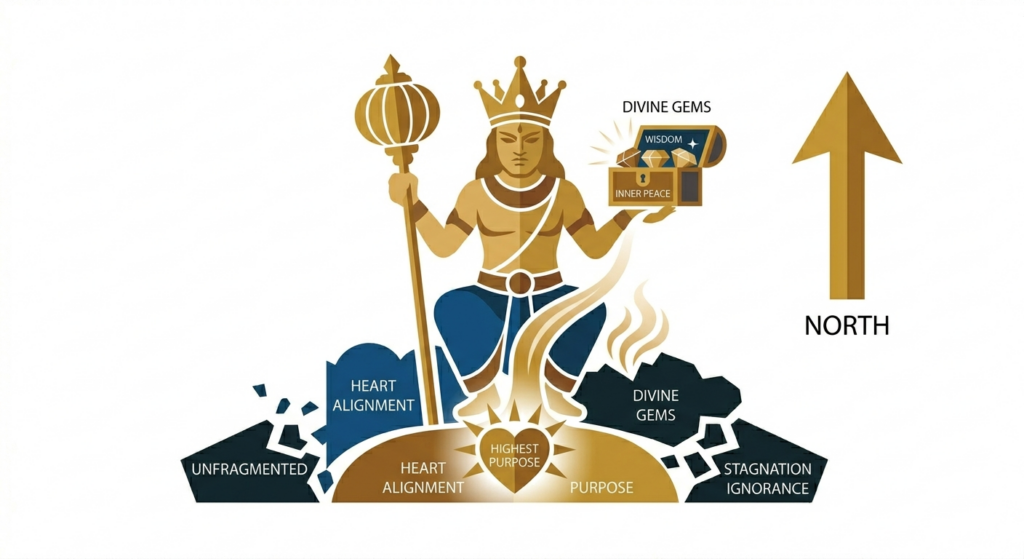
North (N) Kubera Shanta (Peace & Contentment) Spiritual Wealth: The abundance of the soul. Guards the treasures of divine wisdom, inner peace, and highest purpose.
Northeast (NE) Ishana Knowledge / Wisdom The Highest Gate: Pure grace and the direct, luminous connection to the highest Shiva-consciousness.
East (E) Indra Virtue / Good Deeds The Rising Sun: King of the Gods who wields the Vajra (thunderbolt), striking down clouds of ignorance so wisdom can rise.
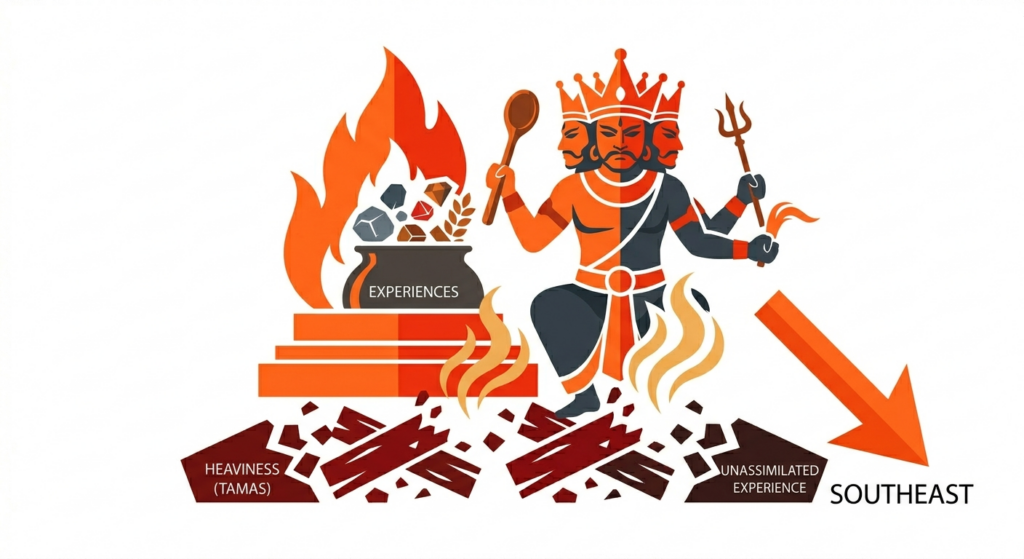
Southeast (SE) Agni Nidra (Sleep / Sloth / Heaviness) Kitchen of the Soul: Transformative fire ensuring experiences are digested properly before turning into Tamas.
South (S) Yama Krodha (Anger / Cruelty / Harshness) Pillar of Discipline: Uses the Pasha (noose) to catch the ego, tempering over-indulgence and determining right action.
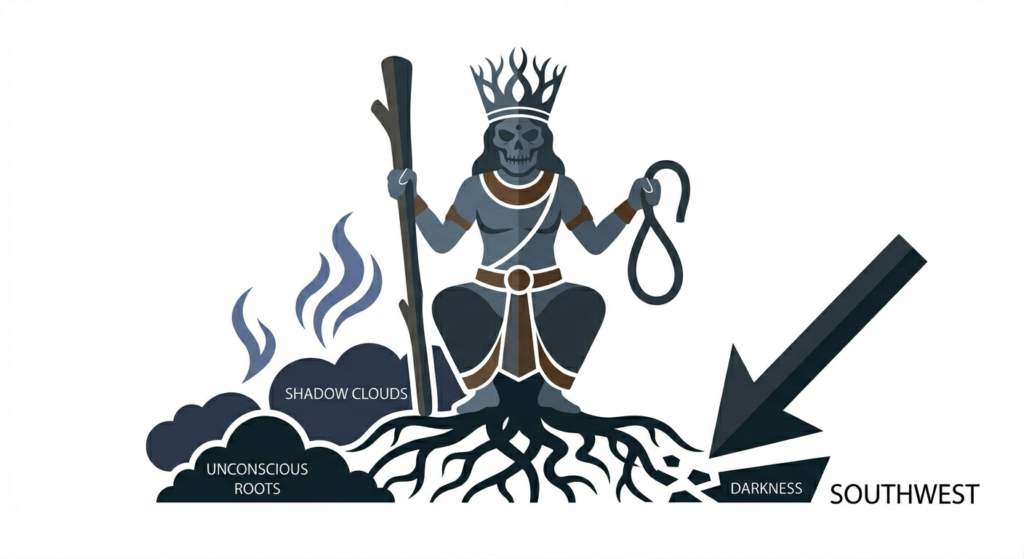
Southwest (SW) Nirriti Sin / Malice / Wrongdoing Shadow Gate: Facing the deep roots of the unconscious with the raw courage to acknowledge and clear inner darkness.
West (W) Varuna Desires / Interests / Attachment Flow of Mastery: Governs the deep waters and emotional integration, keeping the tides of the heart fluid yet balanced.
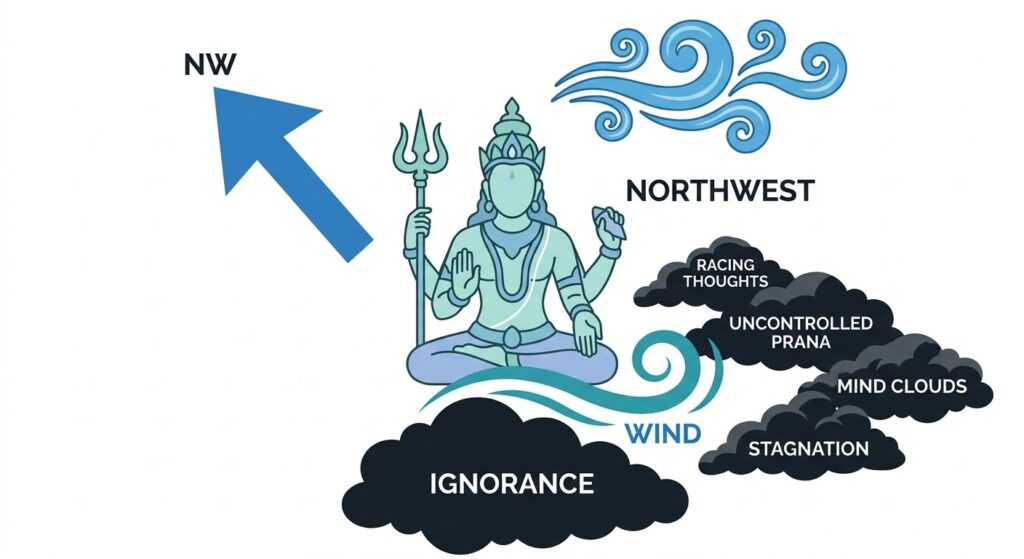
Northwest (NW) Vayu Chanchala (Movement / Unsteadiness) Wind & Prana: Regulates the speed of thoughts, blowing away scattering mental clouds to restore Right Mindfulness.

The Eight States of Mind

Think of these eight petals as the different directions your mind pulls you when you are under pressure. Depending on where you stand, your “Pure Joy” can feel miles away:

  • When you feel heavy or slothful: You are on the petal of the South-East (Nidra).
  • When you feel harsh or reactive: You have moved to the South (Krodha).
  • When you feel fickle and scattered: You are spinning in the North-West (Chanchala).
  • When you feel Peace and Contentment: You have finally found your way to the North (Shanta).

The Rising Sun (East & Southeast)
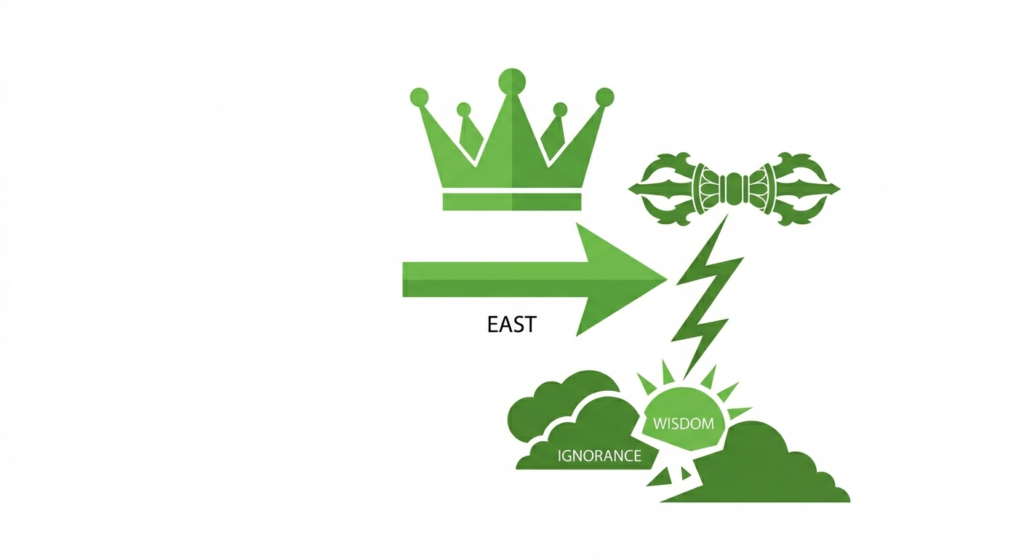
Green arrow pointin the direction of East, the direction of Wisdom over ignorance
East (Indra): This is where you find virtue. Indra is the King of the Gods who wields the Vajra, striking down the clouds of ignorance so wisdom can rise.
flames and ashes of Agni guarding the southeast direction of the digestion of experiences so we don't feel heavy
Southeast (Agni): This is the “Kitchen of the Soul.” Before wisdom can be used, it must be purified. Agni, god of fire ensures that your experiences are digested properly so they don’t turn into heaviness (Tamas)
The Pillar of Discipline (South & Southwest)
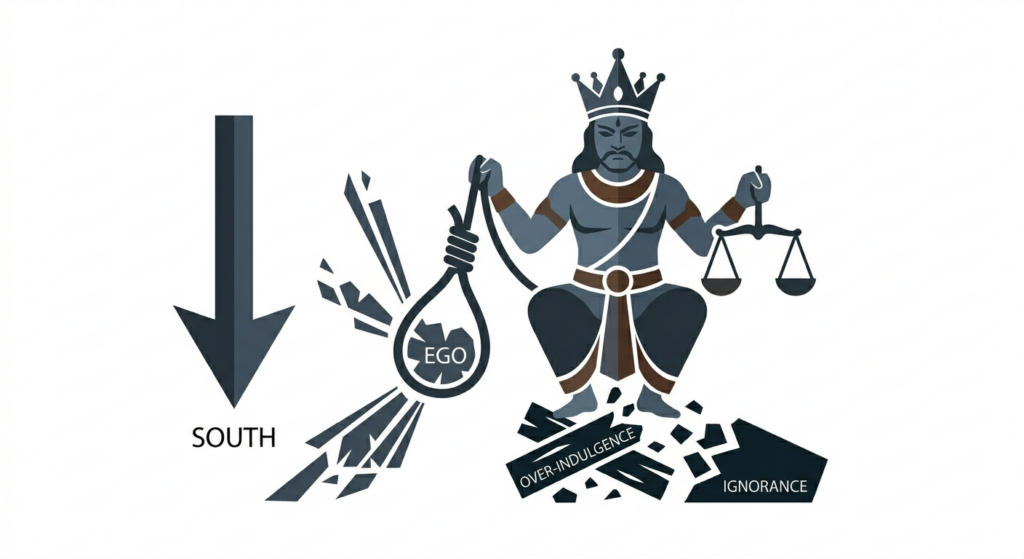
grey god guarding the south holding a noose to reign in our thoughts and scales to act as good judgement
South (Yama): This is where the discipline for spiritual study lives. Yama uses the Pasha (Noose) to catch the ego. If you feel yourself drifting toward Prashraya (over-indulgence), it is Yama who pulls you back to Right Resolve. Yama is a judge who determines the next step of the soul based on its actions.
grey god, Nritti guarding the roots of our unconscious, our shadow self and darkness holding a noose and staff Transmutation, Nirriti, Ignorance, Shadow work.
Southwest (Nirriti): This is the most difficult gate. Nritti faces the roots of the unconscious with the courage to look at the shadow. Honor Nirriti’s role by acknowledging the darkness so it can be cleared.
The Flow of Mastery (West & Northwest)
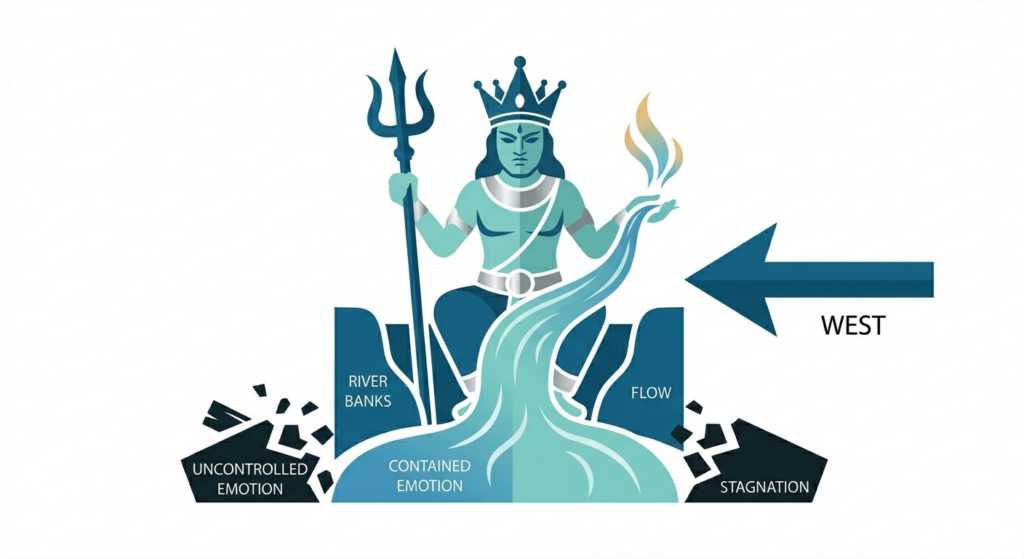
flowing blue and green water to represent flowing emotions gurdin the west by Varuna
West (Varuna): Varuna governs the Waters and Emotional Mastery. He helps you keep the waters of your heart fluid but contained like the banks of a river.
Diagram of the Northwest petal of the Hrit Chakra showing Vayu, wind elements, and obstacles like mind clouds and stagnation.
Northwest (Vayu): Vayu is the Wind and the movement of prana. This relates to the speed of your thoughts. When your mind is racing, call on Vayu to blow the clouds away and restore Right Mindfulness.
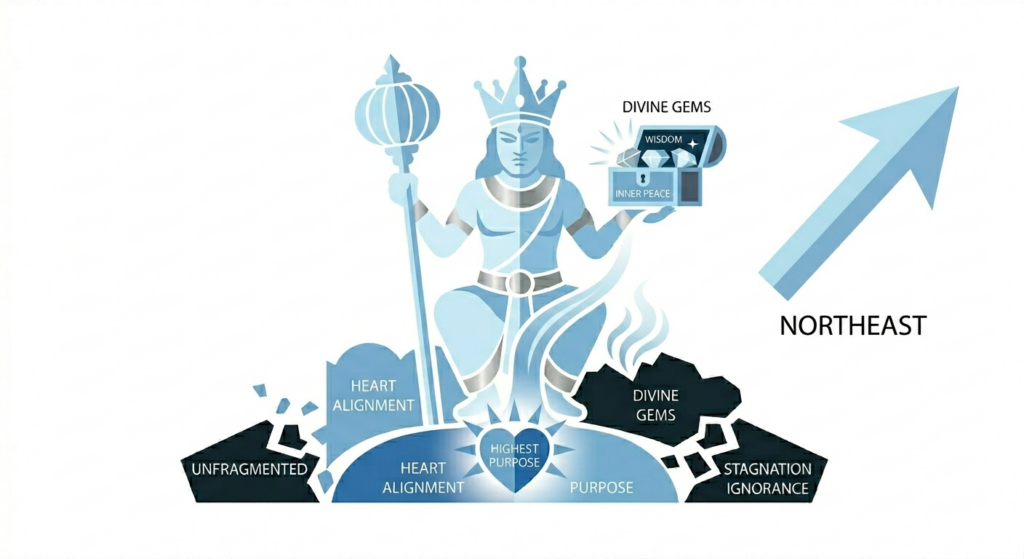
Kubera guarding our thoughts leading toward our highest purpose
North guarded by Kubers – Spiritual Wealth, the abundance of the soul. He guards the treasures of divine wisdom and inner peace, reminding you that true prosperity is found when your heart is aligned with its highest purpose.”
Blue figure of Ishana pointing to the northeast aligning our heat with our true purpose to grant us the highest divine gems, wisdom and inner peace
Northeast (Ishana): Pure grace and the connection to the highest Shiva-consciousness. This is the Highest Gate, where grace enters.

Notice how these guardians have shifted from the physical in Muladhara to the spiritual in Hrit Chakra.

Deepen Your Journey into the Hrit Chakra

Explore the alchemical maps, personal origins, and directional shifts of the Sacred Heart.