
As you have moved through this journey of the chakras, you have seen that they are divided into the different lineages of Tantra and New Age. The wonderful ancient concept of Antahkarana is the perfect example of how we may look through two distinct lenses that mirror and complement each other perfectly—traditional Tantric psychology and modern energetic symbology. On this journey of self-discovery, we often encounter a beautiful paradox: truth is both an ancient, structured science and a vibrant, evolving tapestry of modern experience. By understanding both, we bridge the logical and the intuitive, the structure and the flow, creating a complete road-map for healing and higher consciousness.
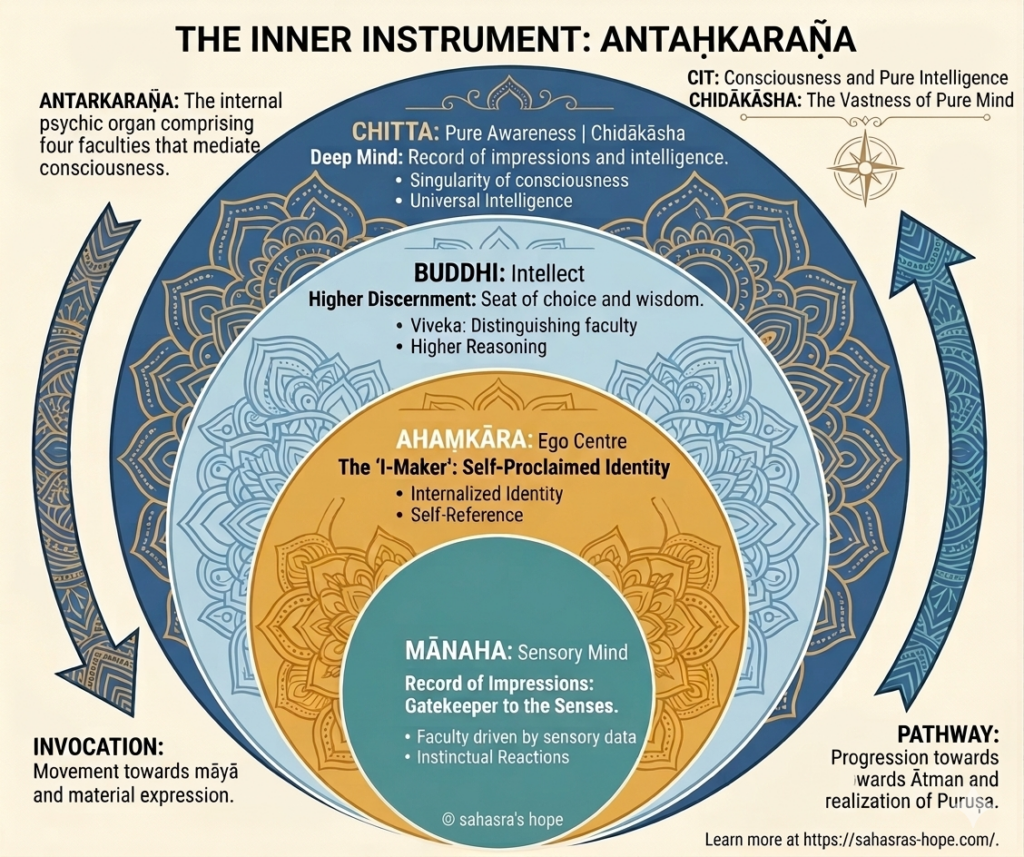
In classical Vedantic and Tantric philosophy, Antahkarana translates literally to your inner instrument, referring to the internal psychological assembly line that processes every single one of your human experiences.
The Inner Psyche (Antahkarana)
Antahkarana is a bridge that must be crossed when travelling upon the inner path. It is also known as the inner psyche—the bridge that connects the lower mind with the higher mind, the mind of the soul. This rainbow bridge, which realizes the soul’s profound love and wisdom, already exists naturally within the human psyche, but it has been covered over by the noise of the world. Because it does not open automatically, this rainbow bridge must be uncovered and revealed once again through dedicated practice. Every Vritti, emotion or thought, is simply a wave that arises in this inner landscape, temporarily obscuring the path.

Antahkarana: The Four Instruments of Consciousness
- The Sensory Mind is the gatekeeper closest to your outer senses. It constantly records raw data from the outside world (sights, sounds, sensations) purely through the lens of attraction and aversion—filtering your immediate reality through basic likes and dislikes.
- The Ego Centre: The “I-Maker.” The ego centre takes the raw data from the senses and immediately claims ownership of it, attaching your personal identity and history to the experience. It transforms a generic event into a deeply personal narrative: “This is happening to me; this is my preference.”
- The Subconscious Memory Bank: A vast, quiet reservoir holding the deep, still waters of your psyche. This is the storehouse where every single memory, experience, and past impression—known as Samskaras — are saved beneath the surface. These Samskaras are the hidden emotional blueprints of your past. When a new impression enters through your senses, memory instantly stirs, searching its depths for a matching Samskara. It then activates that old imprint, firing up your habitual emotional reaction in response.
- The Intellect & Higher Discernment: The seat of wisdom, choice, judgment, and higher intuition is your inner compass, possessing the capacity for clear, unclouded vision. It stands above the automatic reactivity of your memory, stepping in to break old subconscious cycles so you can guide your responses consciously and mindfully.
Part 2: The Modern Symbol of Healing (The Energy)
As spiritual consciousness expanded into the modern era, the word Antahkarana took on a second, equally beautiful expression in the West—manifesting as a sacred geometric symbol. Frequently utilized in Reiki and modern multidimensional healing modalities, this symbol is depicted as a cube-like structure containing three sevens.
Rather than opposing the traditional psychology, this modern symbol serves as a perfect energetic mirror to it:
- A Visual Focus: While the sensory mind is often chaotic and easily distracted, meditating on this sacred geometric emblem gives the mind a stable, harmonious focal point.
- Bypassing the Ego: Because the geometry interacts directly with the subtle energy body, it bypasses the analytical ego-mind and its self-limiting stories.
- Stirring The Intellect & Awakening Higher Discernment: The multi-dimensional nature of the symbol acts as a key to help unlock and clear dense, stagnant Samskaras held in the subconscious mind, paving a clear pathway for higher intuition to shine through.
The Antahkarana Symbol: Tool for Deep Subconscious Clearing
The Female Antahkarana Symbol
The Essence of the Symbol
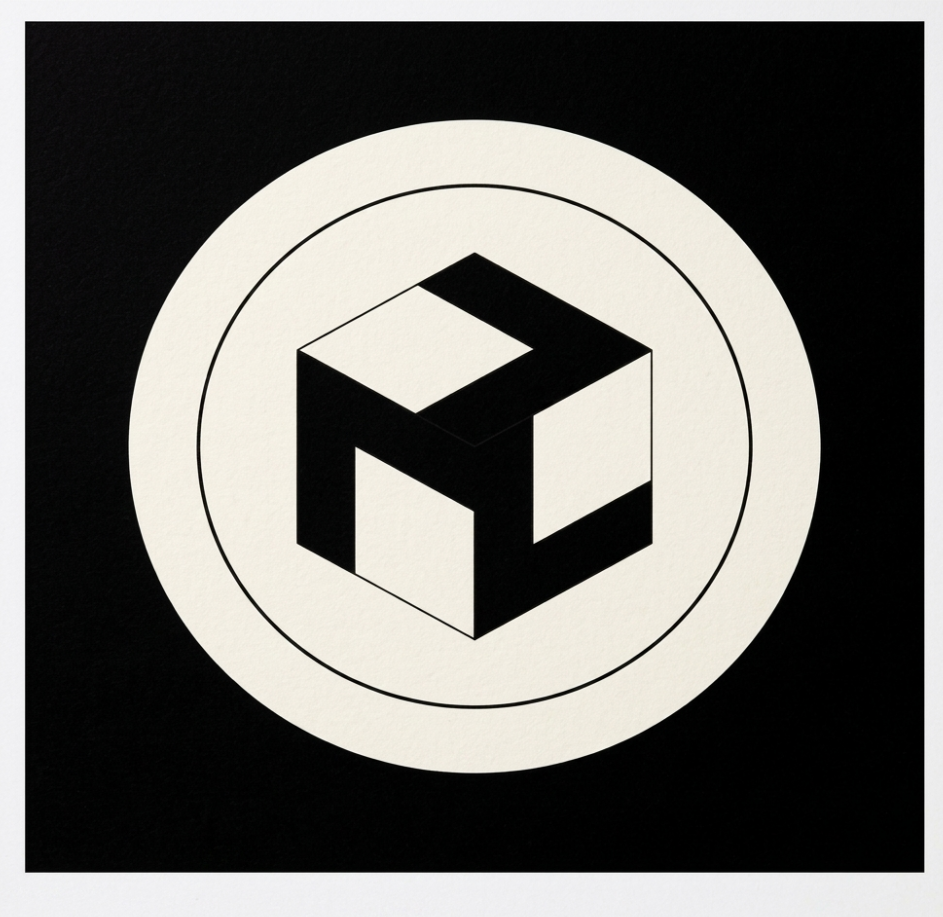
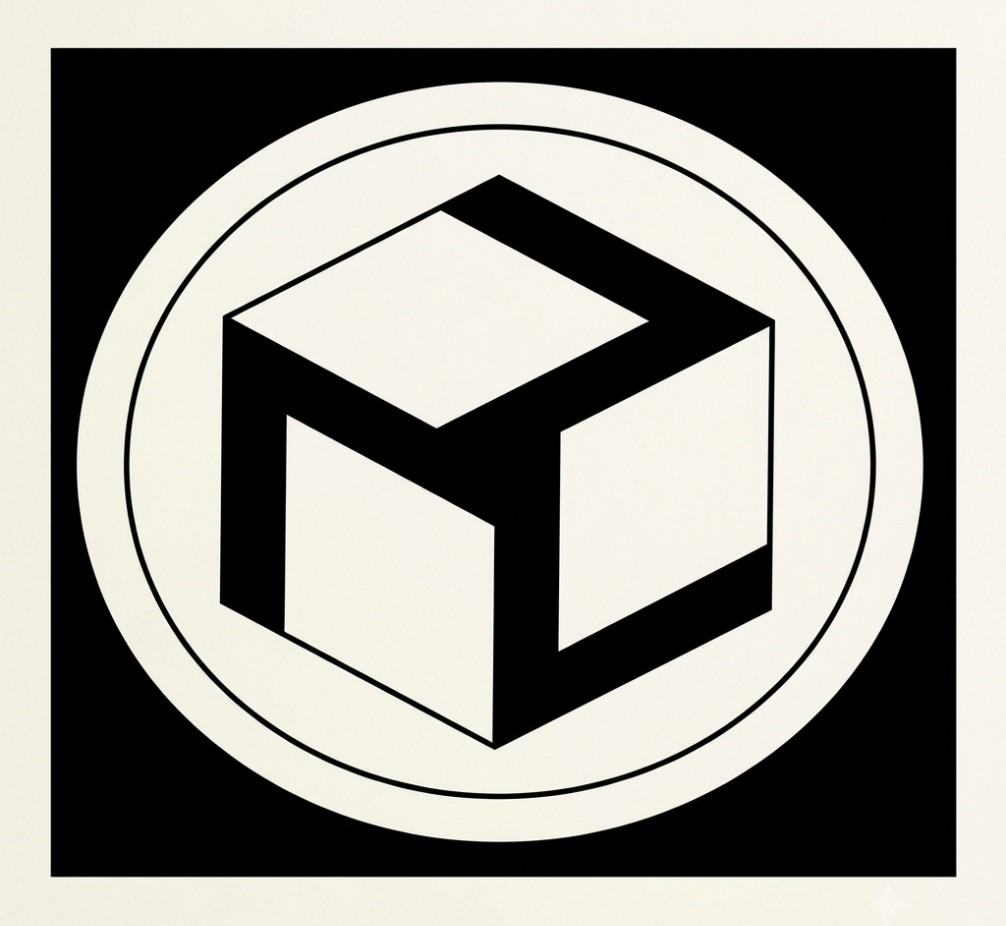
This specific geometric configuration is the Female Antahkarana Symbol. In traditional energetics, the feminine force represents Shakti—the dynamic, kinetic, and fiercely creative power of cosmic transformation. With its bold, expansive lines, this visual frequency acts as a powerful energetic catalyst. It is designed to penetrate deep into the subconscious mind, helping to dissolve long-standing trauma, break up dense karmic knots, and clear the veils of the past. It represents the spiritual process of shedding an old skin, clearing away psychological fog, and presenting a radiant, fresh consciousness to the absolute reality of the present moment.
Application
- The Visual Matrix: The black geometric lines are thick and pronounced, making the inner symbol look large, weighted, and expansive. The geometry pushes right up against the inner border of the surrounding white circle, creating a sense of immense pressure and containment.
- The Sacred Frequency: This configuration mirrors the dynamic, transformative aspect of consciousness, representing the spiritual process of shedding old mental habits and clearing away psychological fog.
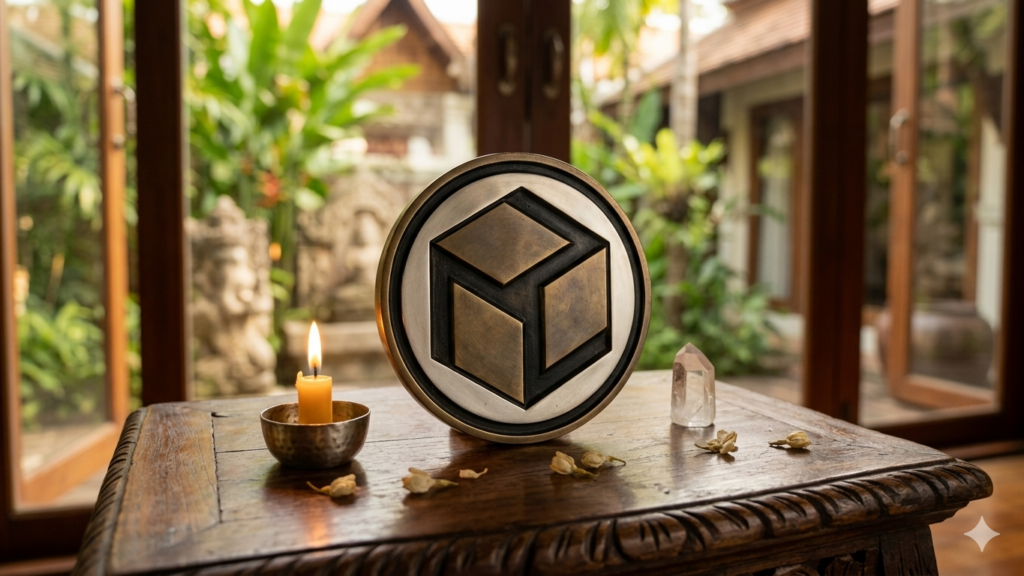
- A Focus for Reflection: Staring at the center of this expansive geometry offers a powerful focal point for quiet contemplation, helping the analytical mind temporarily pause its internal chatter.
- Spatial Presence: This beautiful symbol is perfectly suited for dedicated quiet spaces, yoga studios, or personal meditation corners to inspire a feeling of deep, internal renewal.
Male Antahkarana Symbol
1. The Essence of the Symbol
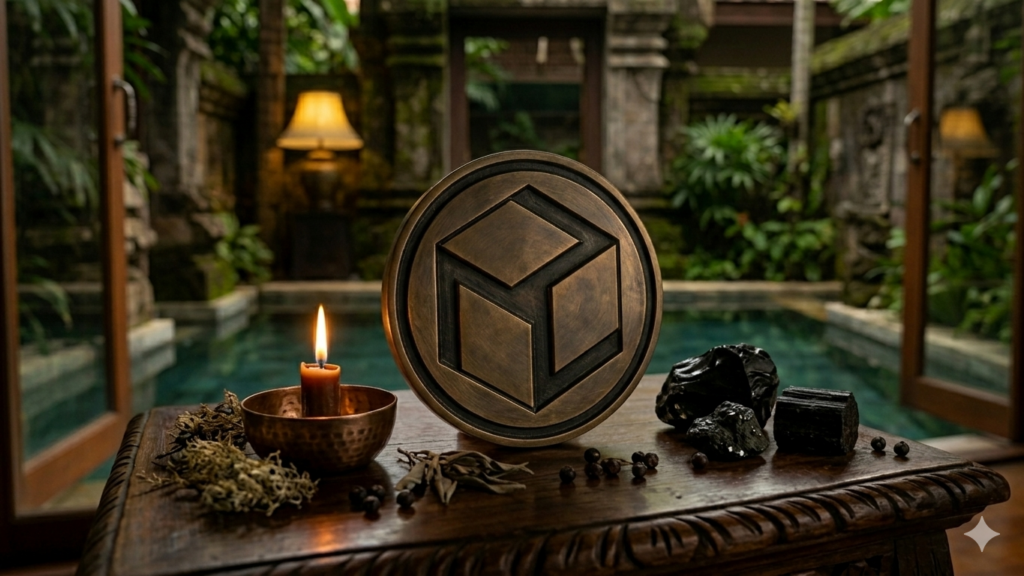
This specific geometric configuration is the Male Antahkarana Symbol. In traditional energetics, the masculine force represents Shiva—the unmoving, silent, and steady consciousness that holds the structural foundation of the universe. With its fine, precise lines, this visual frequency acts as a focused energetic beam. Rather than a broad wave, it emits a sharp, piercing stream of light designed to slice through specific, stubborn energetic knots and anchor wandering thoughts. It represents the spiritual state of absolute stillness, razor-sharp clarity, and unwavering presence in the center of all things.
Application
- The Visual Matrix: The black geometric lines are noticeably thinner and more delicate than its feminine counterpart. This structural choice leaves abundant open white space around the inner emblem, making it appear smaller, highly concentrated, and perfectly centered within the protective ring.
- The Steady Frequency: This precise geometric configuration mirrors unmoving, silent awareness, representing a state of absolute stillness and unwavering presence.
- An Anchor for Stillness: The balance of clean geometry and expansive white space provides an ideal anchor for single-pointed focus, pulling scattered thoughts back into a single, quiet nucleus.
- Ambient Alignment: Highly harmonious and protective, this design is ideal for the main walls of a room, study spaces, or general living areas where you want to maintain a steady, calm, and structured atmosphere.
The Mirror Concept: Structure Meets Frequency
Both ancient Vedantic philosophy and modern energetic modalities target the exact same inner instrument (Antahkarana). Where ancient tradition provides the map, modern geometry provides the resonance.
| Dimension | The Traditional Blueprint (Ancient Wisdom) | The Modern Catalyst (Energetic Modalities) |
| Core Role | The Map: Outlines the structure and functions of the inner psyche (Manas, Buddhi, Ahamkara, Chitta). | The Vessel: Offers visual geometry and frequency to clear and shift that psyche. |
| Cognitive Axis | Left-Brain / Analytical: Rooted in discernment, logic, and self-study (Svadhyaya). | Right-Brain / Intuitive: Rooted in direct experiential sensing, symmetry, and subtle energy. |
| Primary Focus | Deconstructs the internal mechanics of how thoughts and habits form. | Builds a vibrational bridge between the daily personality and the Higher Self. |
| Method of Practice | Self-observation, inquiry, and intellectual clarity. | Visual meditation, sacred geometry, chakra balancing, and aura clearing. |
| Ultimate Outcome | Mindful Mastery: Understanding why we feel and react the way we do. | Harmonic Alignment: Tuning the subtle field to release dense, stored blockages. |
A Reflection
True spiritual integration isn’t about discarding the new to save the old, or ignoring the ancient to follow the modern. It is about recognizing that the same cosmic truth speaks in many languages. Whether you are analyzing the four functions of your mind to break an old habit, or meditating on sacred geometry to clear your aura, you are tuning the exact same inner instrument.
Trataka – Candle Gazing
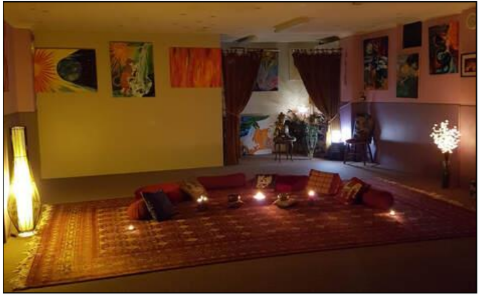
A yogic and tantric form of meditation.
Tratkata improves the memory, and
increases awareness, attention, focus and
concentration. It calms the mind and
improves the eyes. It activates Ajna, the
third eye, stimulating the pineal gland and
develops psychic abilities.
- Place a candle at arm’s length and eye height and close your eyes to quieten the mind, relax
the body. Open the eyes and gaze into the middle of the flame of a candle, ideally at the red
wick, which is still and doesn’t waver in a drought. Avoid looking at the top of the flame as the
flame may flicker and you will lose concentration. Look either at the bright red spot just
above the wick or the red dot at the top of the wick itself. That is more likely to be steady
than the rest of the flame. - Gaze for as long as possible without blinking or straining the eyes. When they begin to water or tire, close your eyes, focus on the after-image in your “Mind’s eye”, it will still be bright and alter in colour. When the image fades, open the eyes to gaze into the flame again. Continue for 5 to 10 minutes.
- As you practice, you will see that you will be aware of only the flame; everything else, including the body, will dissolve. You will lose body consciousness and will feel that you are one with the flame.
- This is a wonderful practice to begin the day with, it ‘washes the eyes’ so you will see clearly all day. It is done with the eyes open, and with the eyes closed to train both the concentration and visualization powers of the mind.
Glossary of Sanskrit Terms
- Antahkarana: The Inner Instrument—the complete internal psyche that processes human experience.
- Mānaha (Manas): The Sensory Mind—the gatekeeper that filters raw data through basic likes and dislikes.
- Ahaṁkāra: The Ego Center—the “I-maker” that attaches personal identity and stories to experiences.
- Chitta: The Subconscious Memory Bank—the reservoir where all past impressions are stored.
- Samskara: A subconscious impression left by past events that acts as a hidden emotional blueprint.
- Vritti: A wave of thought or emotional ripple that arises on the surface of the mind.
- Buddhi: The Intellect & Higher Discernment—the seat of inner wisdom, choice, and intuition.
- Viveka: The capacity for clear spiritual discernment and unclouded vision.
- Shakti: The dynamic, creative power of cosmic transformation and energy.
- Shiva: The unmoving, steady reality of pure consciousness.
- Trataka: A concentrated gazing meditation used to quiet mental chatter and anchor focus.
Now that you understand the internal instruments of consciousness and the sacred geometric forces that stabilize them, you are ready to observe how these faculties ripple outward into your emotional body.