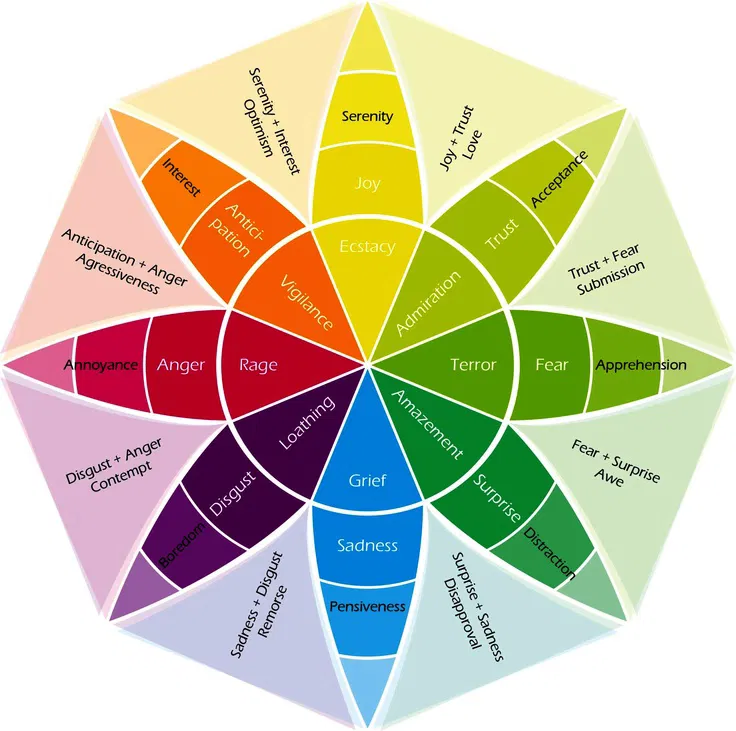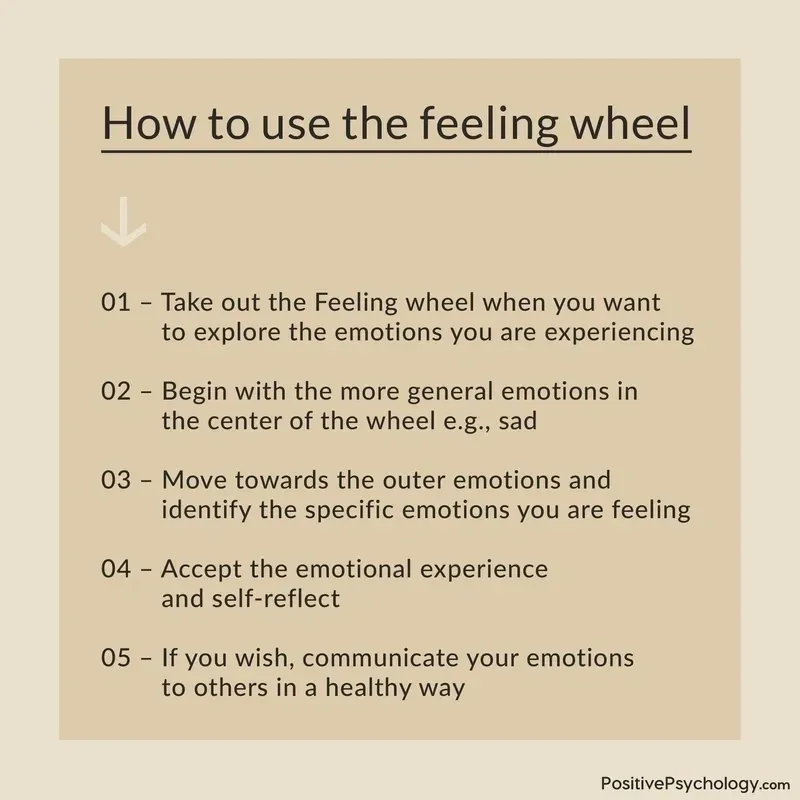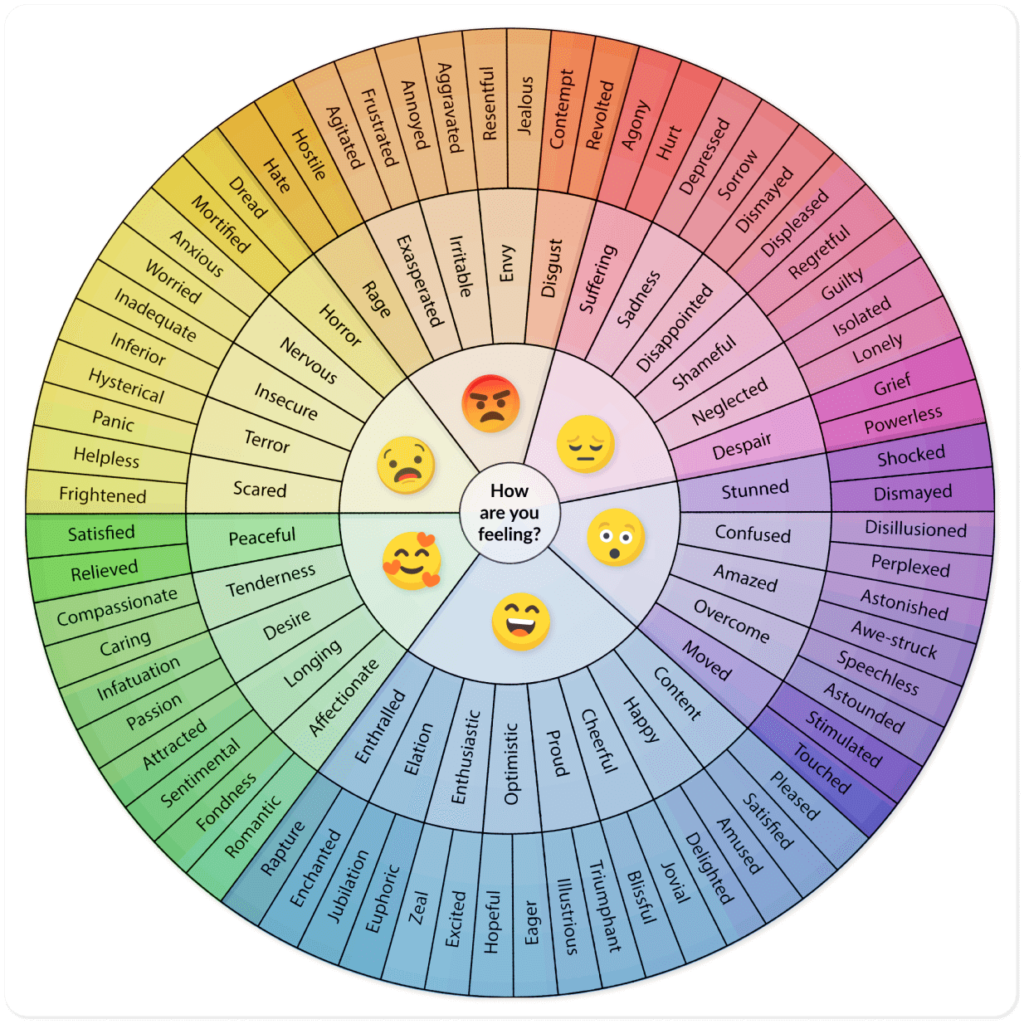

The chakras are the source of energy that travels through the nadis or channels. If you feel an emotion arise, look up which chakra it stems from. Focus your attention on that chakra and the emotion in meditation. Don’t follow the story of where the emotion came from. Just be aware of the emotion, what it feels like within the chakra. Act as an observer. Then either release it or watch it transform it into a positive thought or emotion.
Music is the expression of harmonies within the universe. It is interesting to consider that every vritti or emotion has a sound or vibration.
Muladhara – Root Chakra
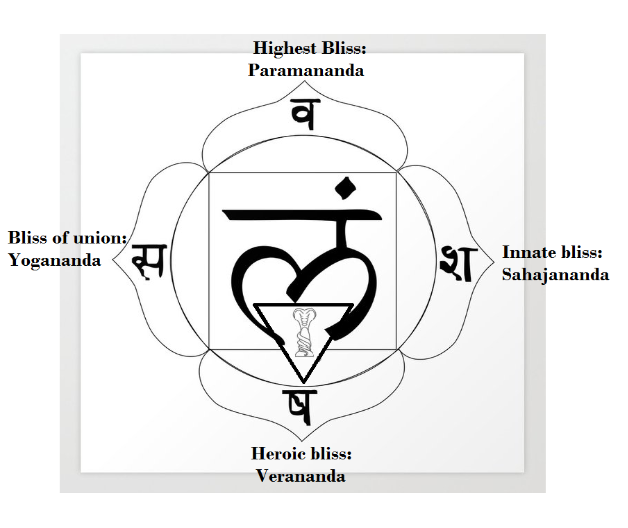
- kama: desire for physical pleasure. four basic physical desires, or instincts: life or fear of death, reproduction, food, and sleep. These give rise to attachment and emotions.
- artha: desire for intellectual pleasure.
- dharma: desire for God, spiritual longing.
- moksa: pure spiritual yearning, desire for absolute liberation.
Svadhishthana – Sacral Chakra
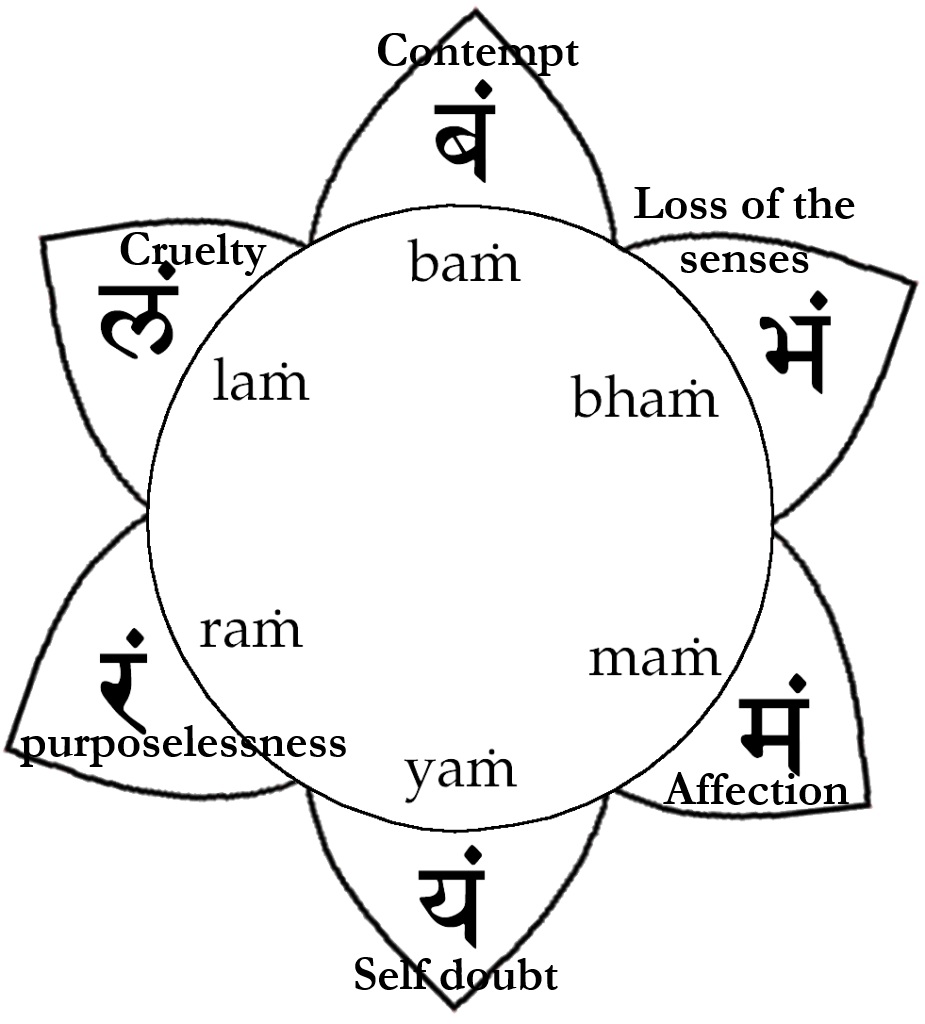
- baṁ बं Avajina: Indifference.When one neglects something which may have some value, it is called avajina.
- bhaṁ भं Múrcchá: loss of consciousness. Murccha means to lose one’s common sense under the hypnotic spell of a particular ripu or mind weakness. There are 6 ripu: Kama (lust), krodha (anger), lobha (greed), mada (arrogance), moha (delusion), and matsarya (jealousy).
- maṁ मं Prashraya: Love, affection, respect, courtesy, civility, politeness, humility.
- yaṁ यं Avishvása: Lack of confidence, self-doubt. Aviśvāsa refers to distrusting someone or not inspiring confidence.
- raṁ रं Sarvanásha: Thought of sure annihilation, fear, defeatism, purposelessness.
- laṁ लं Kruratá: cruelty, pitilessness or merciless.
Manipura – Naval Chakra
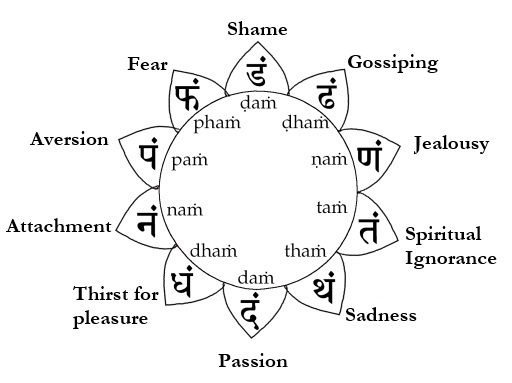
- pishunata: backbiting, slandering.
- iirsya: jealousy, envy.
- susupti: laziness, lethargy.
- visada: sadness, melancholy.
- kasaya: cruelty.
- trsna: thirst.
- moha: attachment to objects.
- ghrna: hatred, aversion.
- bhhaya: fear.
- lajja: shame, bashfulness.
Anahata – Heart Chakra
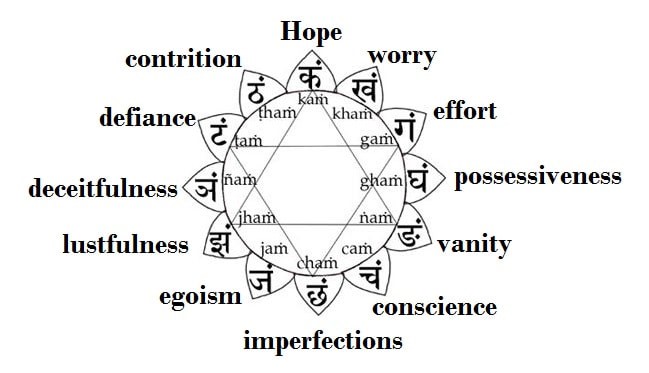
- asha: hope.
- cinta: thoughtfulness, anxiety.
- cesta: effort.
- mamta: possessiveness, fondness.
- dhamba: arrogance, vanity.
- viveka: discrimination.
- vikalata: Languor.
- ahamkara: conceit, egoism, pride.
- lolata: covetousness, avarice.
- kapatata: duplicity, hypocrisy.
- vitarka: indecision, argumentativeness.
- anutapa: regret, burning misery.
Vishuddha – Throat Chakra
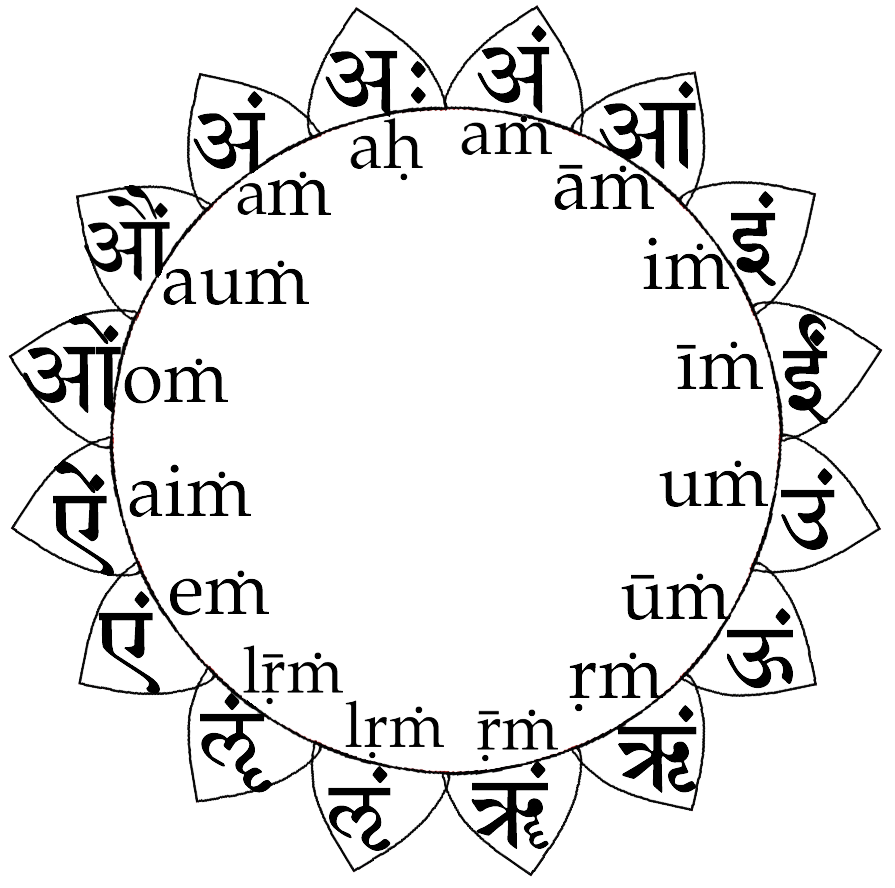
The Vishuddha Chakra, which has 16 petals, is traditionally associated with the 16 Sanskrit Vowels (Varnamala). These typically are:
- अं (Aṁ)
- आं (Āṁ)
- इं (Iṁ)
- ईं (Īṁ)
- उं (Uṁ)
- ऊं (Ūṁ)
- ऋं (Ṛṁ)
- ॠं (Ṝṁ)
- लृं (Ḷṁ)
- लॄं (Ḹṁ)
- एं (Eṁ)
- ऐं (Aiṁ)
- ओं (Oṁ)
- औं (Auṁ)
- अः (Aḥ)
- अं (Aṁ) – or sometimes the 16th varies slightly
Ajina – third eye chakra
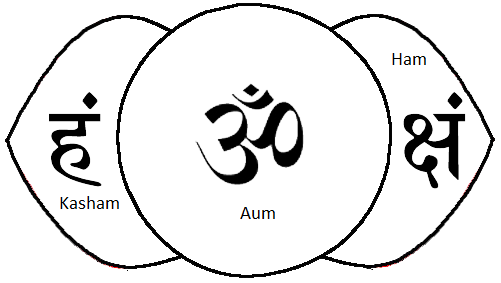
- apara: secular knowledge, directing the lower vrittis towards mundane enjoyments. This is on the right side and is associated with the pingala nadi. When the right nostril is dominant so is this vritti.
- para: spiritual knowledge, elevating the lower vrittis towards spiritual enjoyments. This is on the left side and is associated with the ida nadi. When the left nostril is dominant so is this vritti and the mind is in a more elevated state.
Plutchick’s Modern Wheel of Emotions 1980
While you are meditating, look at the emotion you are feeling, accept the emotional experience, sit with the emotion, allowing yourself to feel it. It may be uncomfortable, but remember you are safe, sitting in meditation. Emotional responses can’t physically hurt you. Do not think about the story that created the emotion. Allow yourself to feel and digest the emotion. When the time is right, and the emotion has been digested it will evaporate.