

The Sacral Chakra

Introduction to Svadhishthana
Svadhishthana At a Glance
“After emerging from the Earth element, our life force is watered in Svadhishthana.”
Seat of Emotions
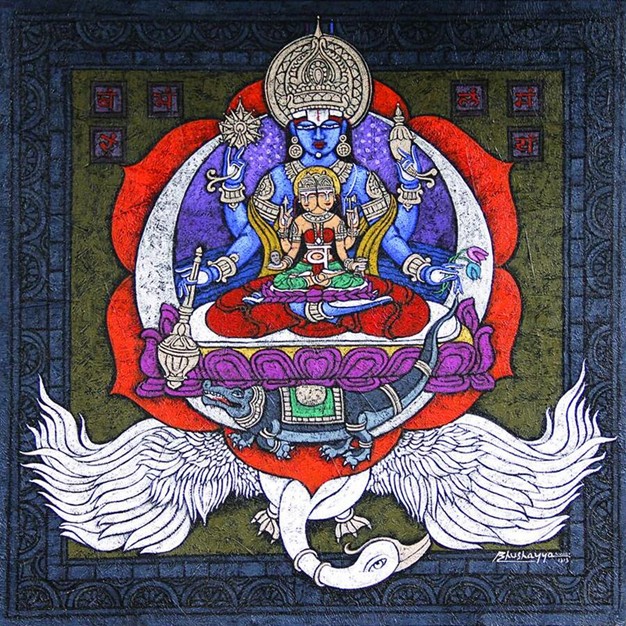
Svadhishthana is the sacred space where we meet our emotions, creativity, and inner purity. When this center is balanced, it grants us the joy and faith needed to “go with the flow” of life’s inevitable changes.
However, the Sacral Chakra is also where we store our most challenging experiences. Meditating on Svadhishthana provides a safe container to face difficult emotions, past traumas, and heavy memories. Rather than being overwhelmed by these “emotional storms,” the practice allows us to:
- Observe: Look directly at painful thoughts and experiences with awareness.
- Transform: Use the fluid energy of the chakra to shift the weight of trauma into spiritual insight.
- Release: Gently let go of negative imprints, clearing the path for greater wisdom and self-control.
By working with this crucial energy point, we don’t just manage our feelings—we actively transform our past to water our spiritual journey.
Location
Its location is in the lower abdomen, approximately halfway between the pubic bone and the navel (aligned with the sacrum). Because it is the center of “flow,” it encompasses the entire pelvic bowl, the sacral nerves that radiate to the legs, the kidneys, bladder and urinary system, circulatory system, and reproductive organs. Svadhishthana is the center of the body’s fluids.
If the water in Svadhishthana is balanced, the body remains flexible and fluid. If you feel emotionally stagnant or physically “dry,” visualize a deep orange light or a silver crescent moon in the pelvic bowl, and imagine it purifying the blood and lymph.
Vibration and Sense
- The Bija Mantra (Vam): The subtle sound (Bija Mantra) for this chakra is Vam (वं) (pronounced VANG). Its element, water, governs the body’s liquids and the subconscious mind, where our past experiences (samskaras and karma – habits and desires) are stored. “VAM” is associated with the preservation of life and the ability to adapt. Just as water takes the shape of its container, this mantra helps the practitioner become fluid and receptive to the mysteries of existence.
- The sense of taste is associated with Svadhishthana. Taste requires moisture (saliva) to function. This chakra relates to how we get a taste for life, how we seek pleasure, sweetness, and nourishment in our experiences.
- The motor faculty is procreation (the genitals). While Muladhara is about staying alive (survival), Svadhishthana is about creating life and expressing the creative impulse through art, intimacy, and movement.
The Symbolism of the Makara
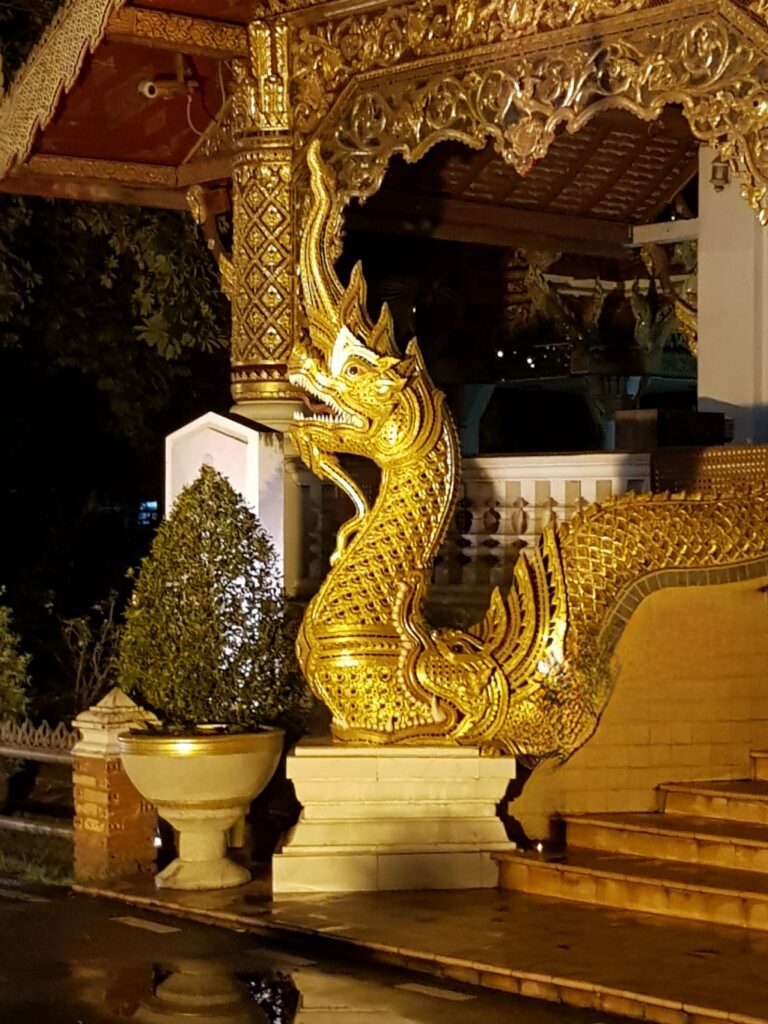
The animal symbol is the Makara, a mythical sea creature (often depicted as a crocodile with a fish tail). The Makara represents the unconscious desires and the vast, swirling power of the emotions. Like a seamonster lurking beneath the surface, our hidden desires can pull us under unless we learn to navigate the waters of this chakra with awareness.
A Makara as a Sea Dragon guards the Temples of Thailand. It is a celestial guardian of our inner abode, and sacred space where emotions and sexuality are a temple, not something to be ashamed of. It symbolizes the fierce protection of our creative life force and the sacred boundaries required to keep our ‘Abode of the Self’ pure.
The Meaning of the Lotus
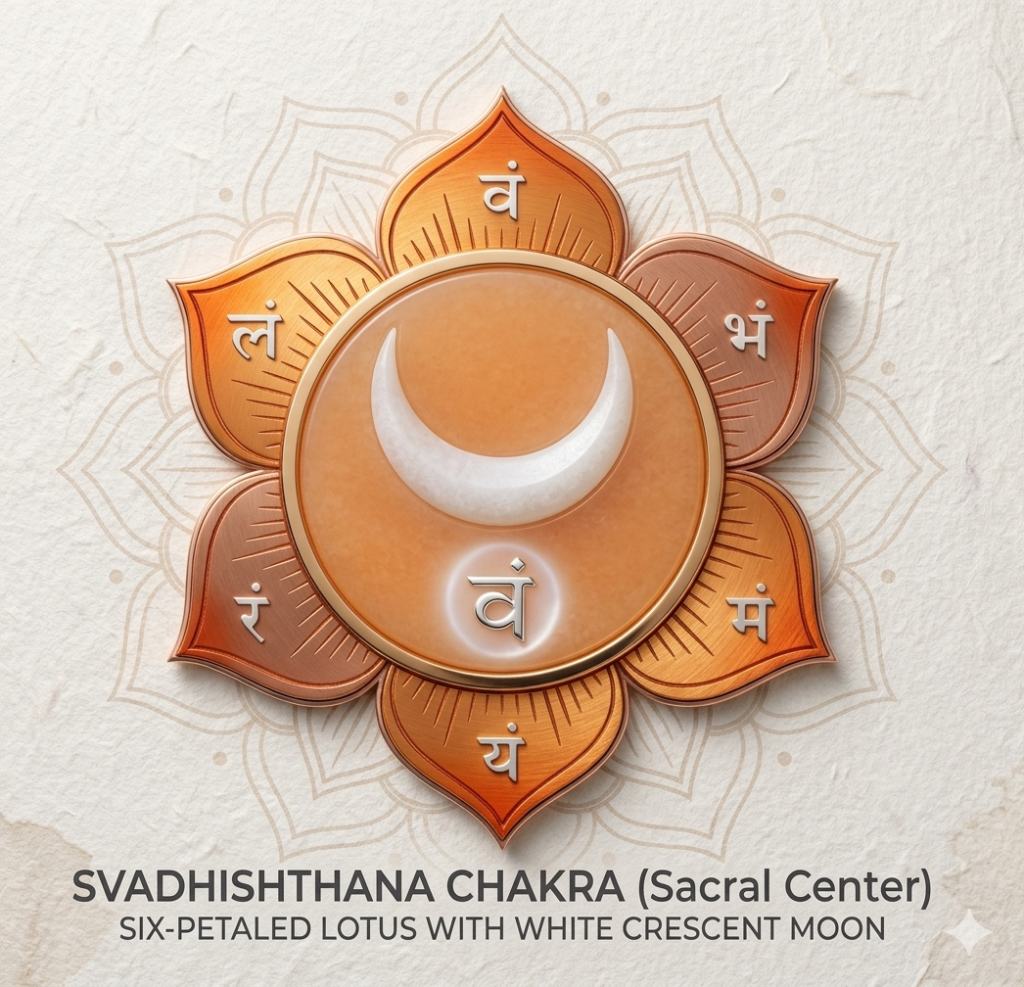
The 6-Petaled Lotus:
The Svadhishthana is represented by a vermilion lotus. At its centre lies a white crescent moon, which symbolizes:
The Lunar Cycle: Our internal tides, rhythms, and emotional shifts.
The Dual Mind: The connection between our conscious and unconscious thoughts.
“Failure to go beyond this chakra leads to a life defined by sensory indulgence and addiction. One becomes a slave to the senses, constantly seeking the next “high” or pleasure, and becomes easily swept away by emotional storms or unstable relationships.”
The Power of Emotional Clarity
When your Sacral energy is in harmony, you gain the “Wisdom of the Water”:
- Transparency: You act with honesty because you no longer feel the need to hide your emotions.
- Flow: You handle life’s injustices with grace, moving around obstacles like a river rather than crashing against them in anger.
- Fluid Justice: You treat yourself and others with the same compassion and fairness that Varuna provides to the world through his life-giving rain.
“To master the waters is to master the self. When the Sacral Chakra is clear, every choice becomes an act of integrity.”
There are two jewels hidden within the Svadhishthana Chakra that can be utilized for personal growth ICCHĀ SHAKTI (willpower) and KRĪYA SHAKTI (vigour/drive).
The Vayu: Apana Vayu
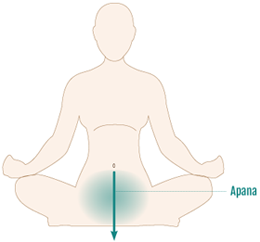
As with Muladhara, the vayu or vital breath of Svadhishthana is Apana.
Uddiyana Bandha: The Upward Flying Lock
While Mula Bandha (the Root Lock) provides the foundation, Uddiyana Bandha is the key to moving energy upward from the sacral waters into the fire of the solar plexus. The name comes from the Sanskrit word uddiya, which means to “fly up” or “rise up.”
Uddiyana Bandha is the key to transforming and moving energy. It acts as the bridge that connects the fluid emotional energy of the Svadhishthana (Sacral) chakra to the dynamic power of the Manipura (Solar Plexus) chakra.
In this practice, the abdominal organs are pulled in and up under the ribcage, creating a deep vacuum. This action encourages the Apana Vayu (downward energy) to reverse its flow and merge with Prana Vayu, fueling our internal transformation and spiritual ascent.
Physical and Spiritual Benefits
- Emotional Flow: It helps move stagnant emotional energy out of the Svadhishthana chakra.
- Digestive Fire: It stimulates the Agni (fire) of the Manipura chakra, aiding digestion and metabolism.
- Core Strength: It tones the diaphragm and the deep abdominal muscles.
- Vitality: It massages the heart and the adrenal glands, helping to reduce stress and increase clarity.
How to Practice (The Basic Engagement)
Note: This should always be practiced on an empty stomach.
- Exhale Completely: Stand with your knees slightly bent and hands resting on your thighs. Breathe out every last bit of air through your mouth.
- The Mock Inhale: Without actually taking in any air, expand your ribcage as if you were breathing in. This action creates a suction that pulls the belly in and up under the ribs.
- Hold and Lock: Hold the breath out (Bahya Kumbhaka) for a few seconds, feeling the lift in the pelvic bowl.
- Release: Soften the belly first, then slowly inhale.
As you master this “Upward Lock,” visualize the energy of the Sacral chakra rising like steam, turning your raw emotions into the refined power of your will.