

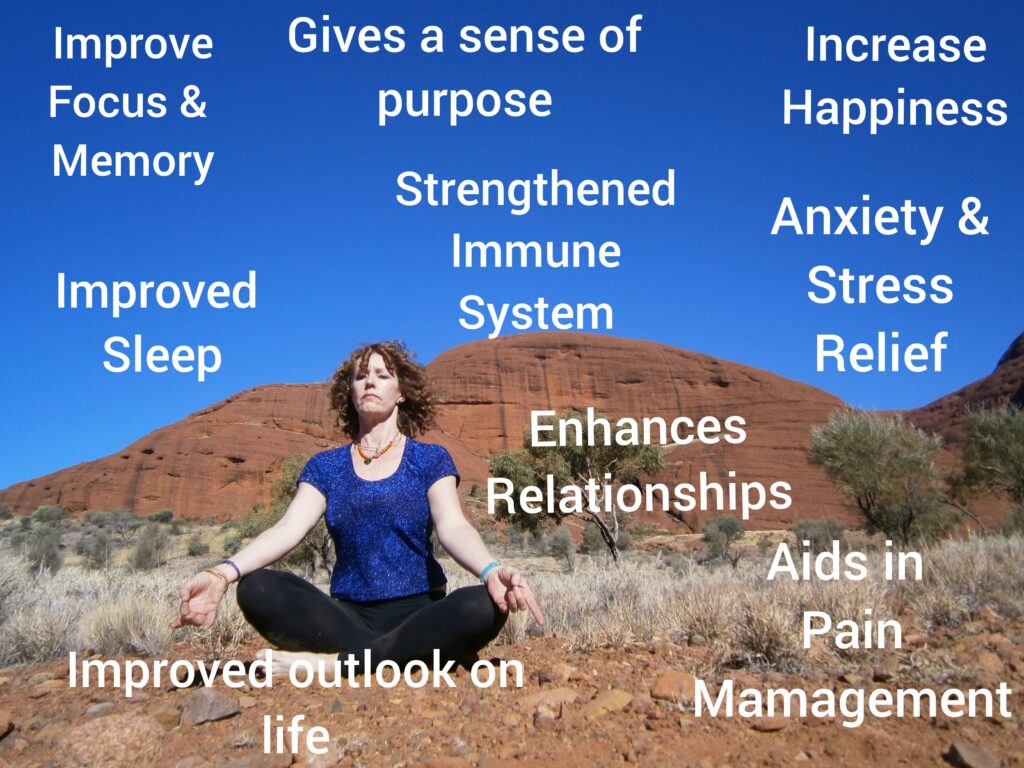
What is the Purpose of Meditation?
Meditation is a means to train the mind and become familiar with how it works. Through regular practice, it offers profound benefits for everyday life:
- It gives us the tools to cope better with life’s difficulties and transform suffering into happiness.
- It helps us get to know and accept ourselves fully, just as we are.
- It teaches us to become the observer of our thoughts and emotions, so we can respond to them rather than letting them dictate our actions.
- It builds concentration, allowing us to organize our thoughts and focus on a task without becoming distracted.
- It teaches us how to embrace our feelings without becoming overwhelmed.
- It settles the mind so we can connect with our true self, our intuition, and our spirit.
Working with Your Thoughts
Meditation does not require you to sit with an empty head or hold your mind so tightly that no thoughts can enter. Quite the opposite—it allows for the mindful flow of thoughts, helping you to become aware of what is going on in your mind and to train it to focus on the thoughts that are constructive, while letting go of thoughts that are not helpful.
When thoughts are racing through your mind, they can drive you crazy, constantly telling you what to do. When you don’t like what they are saying, your instinct is to fight them and tell them to shut up. Instead, we make friends with our mind by giving it a job. When you focus on meditation, the “monkey mind” is happy because it has the job of organizing those thoughts. Over time, the chatter quiets, and your thoughts become calm, ordered, and pliable.
Think of your mind like a musical instrument when you practice: you want to hold it neither too tightly nor too loosely. If you hold it too tight, the strings will break; if your mind is lazy, like a loose string, it will not play. Meditation takes discipline and dedication, which is why it is called a practice.
You don’t need to stop your thoughts — you simply learn not to get lost in them. Rather than getting caught up in the constant inner commentary your mind adds to every task, you bring your awareness back to where you are and what you are doing in the present moment. Every thought is separate; it has a beginning and an end. The secret of meditation is finding the space where one thought ends before the next begins, and resting your mind in that gap. With practice, that gap extends and your mind becomes more peaceful.
Uncovering Your True Nature
Self-Acceptance & Forgiveness
Meditation is a way of getting to know ourselves fully and accepting ourselves just as we are. Learning to forgive yourself is a great step forward in accepting yourself, releasing old weight so you can meet the present moment with an open heart.
The Blue Sky Behind the Clouds
All of the everyday benefits of practice are wonderful, yet the ultimate purpose of meditation is to awaken awareness, gain enlightenment, and connect with your true nature.
The premise of yoga is that we are all born divine, and practice helps us remember. Similarly, Buddhism teaches that we are all born with a pure “Buddha nature”—a good heart—that simply gets obscured over time, much like storm clouds covering a blue sky. The blue sky is always there behind the clouds.
Inner Contentment & Radiating Joy
When we calm the mind, the clouds part, and our true nature is revealed once again. True happiness is not gained from owning possessions; it comes from within. When you discover that you are perfect inside yourself—and that you always have been—you realise that you are loved and valued just the way you are.
A great sense of contentment, peace, and joy will fill you, radiating outward to make the world around you glow and the people you meet feel happy. You find faith in yourself and discover that you are capable of achieving anything you can dream of in this life.
Practical Anchors
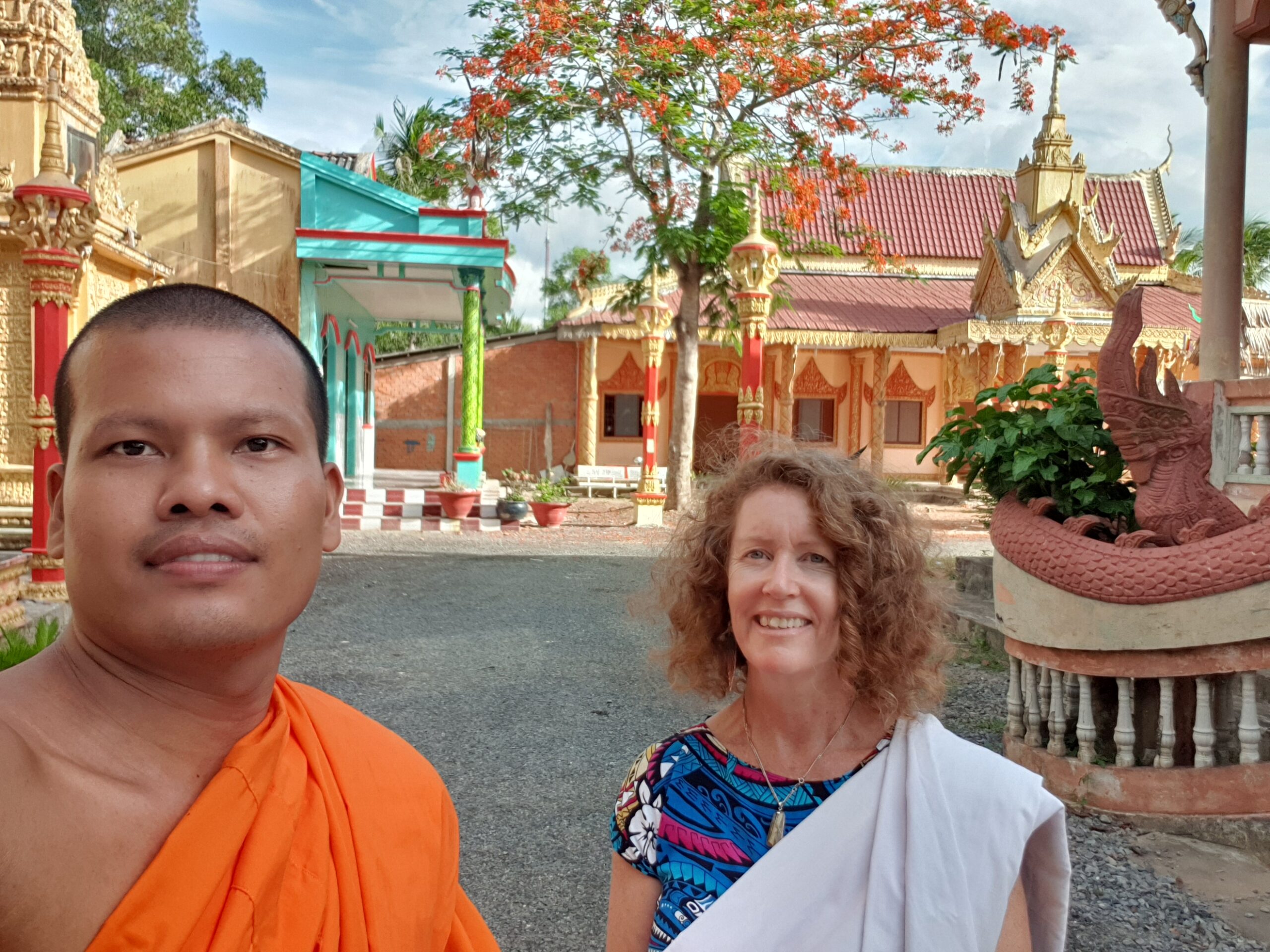
I learnt walking meditation when I was in a monastery in Vietnam.
We walked in single file in two lines, women and men in different lines.
Slowly and mindfully walked forward with our hands folded on our belly.
- For walking meditation, the words are:
- 1 – standing, standing, standing
- 2 – Intending to walk (said 3 times)
- 3 – right go touch (right foot lifts, moves forward and comes back to the ground)
- 4 – left go touch (left foot lifts, moves forward and comes back to the ground)
- 5 – when you reach the end of your walk, stop, stand and say the word ‘turning’ on the right side,
slowly, slowly, slowly - Repeat coming back the other way.