
The Heart Chakra
Introduction
Traditional Anahata At a Glance
Within the area of the chest region, there are two energy centres, Anahata Chakra and just below it, Hrit Chakra
Anahata Chakra has 12 Petals representing 12 emotional states that are dynamic and constantly moving. Anahata is the stormy sky where we have to weather the experiences of life, the emotional ups and downs, relationships and artistic creativity.
The Primordial Sound: What is Unstruck?
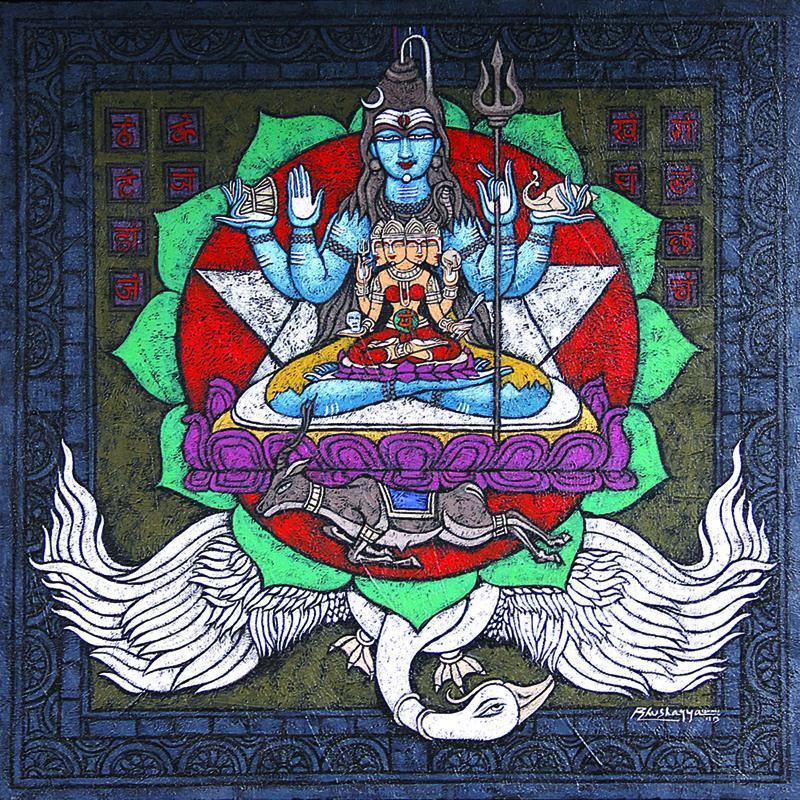
“Anahata” literally means unstruck. It refers to the primordial sound that emerged from the void before matter existed—the sound of Aum. While physical sound occurs when two objects strike each other, Aum is the vibration of creation itself.
In the same way, your spirit is pure, radiant, and invulnerable. It exists within you before experiences, thoughts, and emotions. Your heart is a spiritual place of freedom and wonder, where love, compassion, joy, and gratitude arise without conditions.
The Power of the Air Element
The energy of the Anahata Chakra is governed by Air (Vayu). Air represents freedom, expansion, freshness, and the simplicity of the breath. It is the invisible force that connects everything. But like the wind, this energy has a dual, unpredictable nature. Anahata is a windswept space of emotional currents; it is a realm of constant movement. It is the place where we learn to navigate the gales of human feelings without being blown away.
- The Breeze: When calm and balanced, the airy power of Anahata expresses itself as unconditional love, compassion, and a lightness of being through which we can achieve miracles.
- The Storm: Conversely, just as a cyclone can uproot trees, the tempestuous whirling of shifting human emotions—like sudden anger, fury, or grief—can buffet our inner world and devastate the peace we have built.
The Path of Touch: Joy vs. Pleasure
The sense of touch and our motor skills (hand dexterity) are fundamentally linked to Anahata. As the body’s largest organ, our skin constantly absorbs what we feel. This sensory faculty has a dual nature: Anahata is the ultimate meeting place of body and spirit. Here, we choose between the pull of physical desires and the expansion of the spiritual path.
- The Path of Pleasure: Getting lost in the seductive world of physical desire, perpetually striving for more without finding true contentment.
- The Path of Joy: Harmonizing these desires to experience the spiritual joining of the self with the universe, coming to rest in lasting happiness.
The Middle Way: Tuning the String
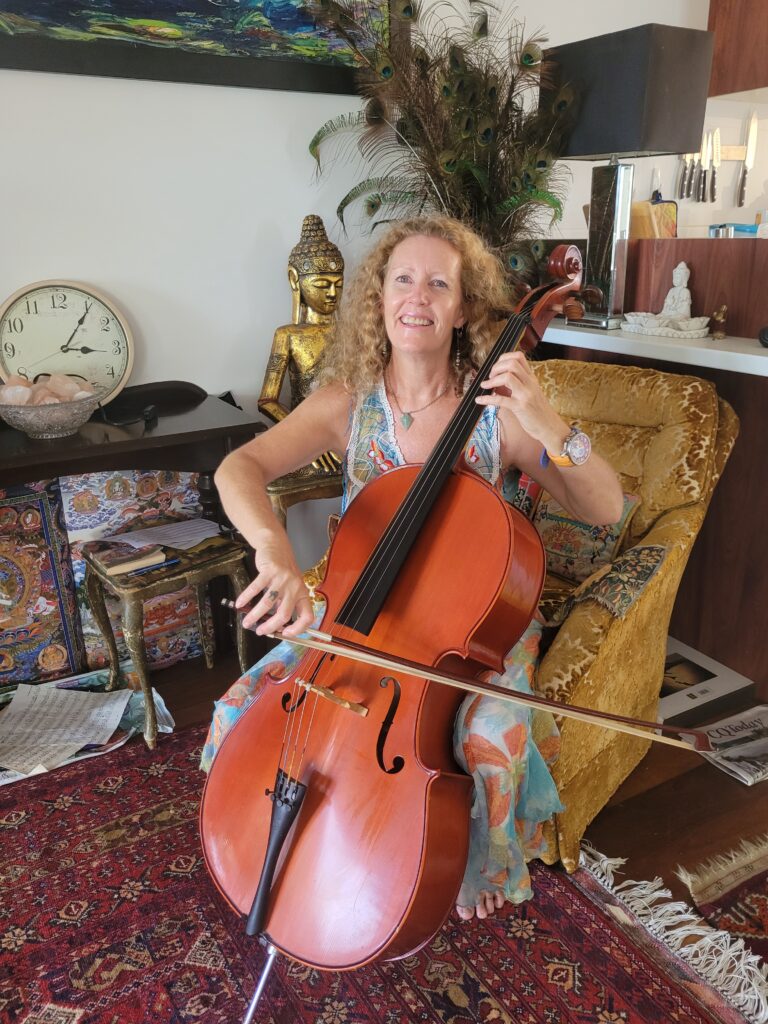
Just as cello strings must be perfectly tuned to create a resonant note, our hearts require a delicate balance. When a string is wound too tight, it snaps; when it is too loose, it won’t play. A string in tune is harmonious. The heart is where we learn to play in tune.
This a balance between sensual indulgence and ascetic denial founded in non-attachment. People often think that meditation requires gripping the mind tightly to suppress thoughts. But meditation is simply observing our thoughts as they flow through our minds without following them.
In the heart, this means learning not to hold tightly to objects, people, or past pain. When facing suffering, we always have a choice: hold on or let go. Releasing pain opens the heart to new connections and compassion, while clinging to it only cultivates negativity.
Healing and the Choice to Release
It is necessary to process past trauma, whether through chakra work or professional support. When you have worked through it you can transform the pain and let it go. Ruminating on old pain holds the mind in a state of perceived threat.
Your past does not have to define you. Instead of identifying as a victim, choose to be a winner. Clinging to pain is a tactic of the ego. Your spirit longs to be free.
Releasing pain is a conscious decision. When you live from your Heart Chakra, you embrace forgiveness—not necessarily for the benefit of others, but for your own peace. Remember that those who inflict pain often operate from fear or ignorance; forgiving them frees your heart to fill with joy.
Giving and receiving love is fundamental to our nature.
- Practice self-love: Shed negative self-talk and unrealistic expectations.
- Cultivate gratitude: Release the ego and simply be love.
By accepting life as it is, you allow yourself to feel the joy you deserve.
The Symbol – The Sacred Shatkona
The sacred Shiva Lingam, enveloped by the awakening cobra of Kundalini energy, is centred within the geometric balance of the interlocking Shatkona star. In Muladhara, Kundalini exists as a raw, tempestuous energy, but as she moves up into the heart chakra, her nature becomes calm and loving. At Anahata, her presence awakens compassion and unconditional love, bridging the grounded earth energies below with the transcendent spiritual realms above. In the higher chakra, Ajna, it becomes two spinning tetrahedrons (three-sided pyramids) with the upward pyramid rising through the centre of the downward-pointing one.
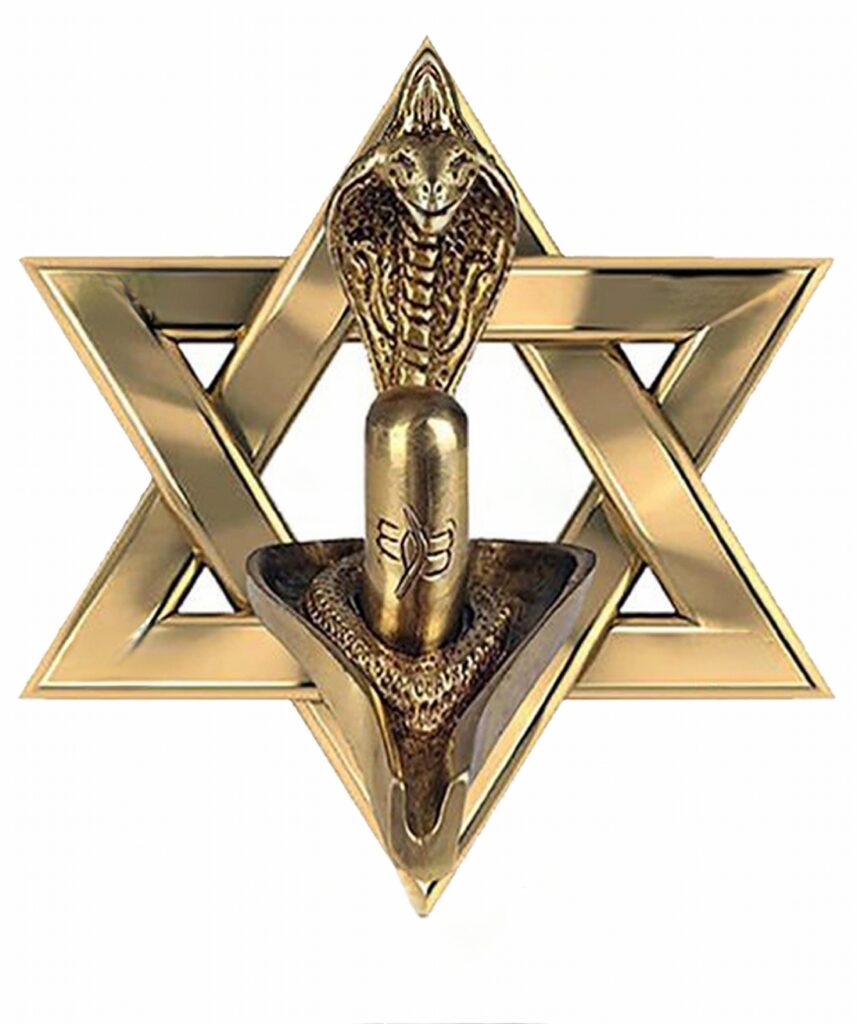
The Shatkona itself is an ancient, six-pointed star formed by two interwoven triangles representing fundamental opposites that cannot exist without each other:
- The Upward Triangle: Pointing toward the heavens, it resonates with the vibration of Om — symbolizing fire, Shiva, and the supreme masculine aspect.
- The Downward Triangle: Pointing toward the earth, it resonates with the vibration of Hreem — symbolizing water, Mother Nature, and the feminine aspect, Shakti.
When you meditate on the star in the heart chakra, you discover the union of stillness and action, experiencing love and compassion. In pure consciousness, we rest in complete emptiness within the stillness, yet as the dynamic energy of our world meets the heart, it stirs our emotions.
The six points of the star represent the six heads of Kartikeya, the divine offspring of the masculine and feminine energy within the heart. As a mighty warrior deity, Kartikeya fights the demons of negative tendencies — his six faces gaze out toward the six points of the star to see problems coming from all directions and combat the six internal enemies: lust, anger, greed, arrogance, delusion, and jealousy.
When energy moves down toward lower consciousness, it is expressed as connection with the body and the material world. The upward-pointing triangle represents the material world rising to meet the spirit. When one’s energy moves upward, the heart chakra can express unconditional love and guide us toward spiritual liberation.
Art, music, and poetry created under the influence of Kakini, the heart’s female deity, bring calmness to the mind and peace to the ego and intellect. This creativity can become so absorbing that the sense of I – consciousness dissolves away.