

What is the Purpose of Meditation?
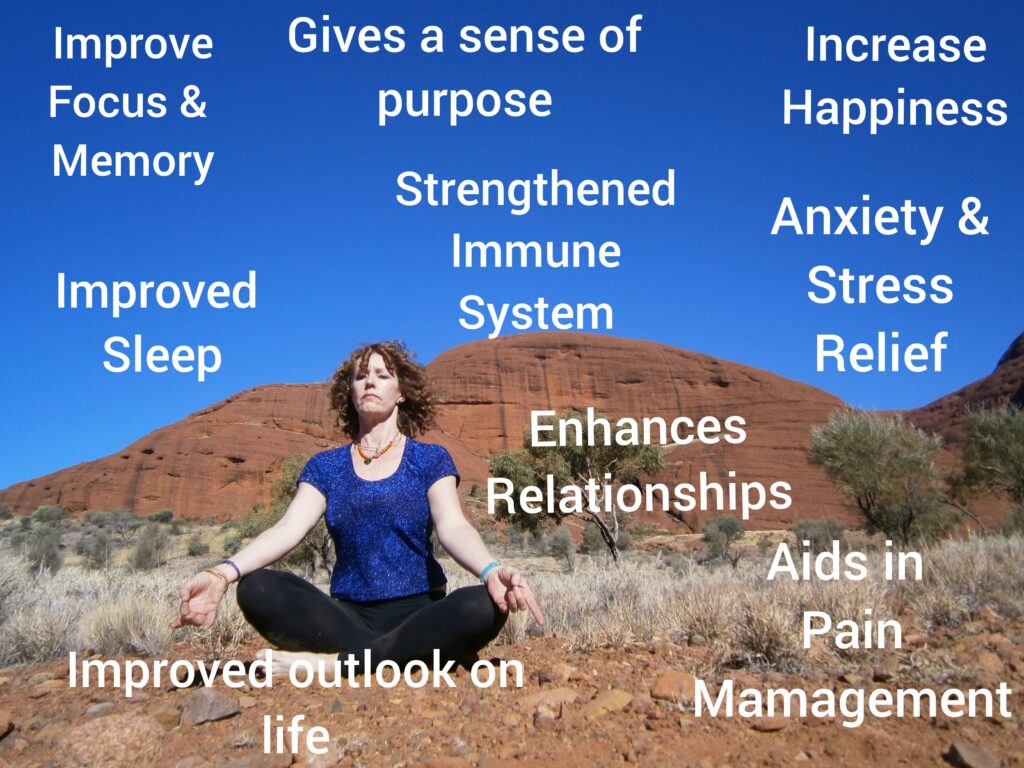
Meditation is a means to train the mind and become familiar with how it works. Through regular practice, it offers profound benefits for everyday life:
- It gives us the tools to cope better with life’s difficulties and transform suffering into happiness.
- It helps us get to know and accept ourselves fully, just as we are.
- It teaches us to become the observer of our thoughts and emotions, so we can respond to them rather than letting them dictate our actions.
- It builds concentration, allowing us to organize our thoughts and focus on a task without becoming distracted.
- It teaches us how to embrace our feelings without becoming overwhelmed.
- It settles the mind so we can connect with our true self, our intuition, and our spirit.
Working with Your Thoughts
Meditation does not require you to sit with an empty head or hold your mind so tightly that no thoughts can enter. Quite the opposite—it allows for the mindful flow of thoughts, helping you to become aware of what is going on in your mind and to train it to focus on the thoughts that are constructive, while letting go of thoughts that are not helpful.
When thoughts are racing through your mind, they can drive you crazy, constantly telling you what to do. When you don’t like what they are saying, your instinct is to fight them and tell them to shut up. Instead, we aim to make friends with our mind by giving it a job. When you focus on meditation, the “monkey mind” is happy because it has the job of organizing thoughts. Over time, the chatter quiets, and your thoughts become calm, ordered, and pliable.
Think of your mind like a musical instrument when you practice: you want to hold it neither too tightly nor too loosely. If you hold it too tight, the strings will break; if your mind is lazy, like a loose string, it will not play. Meditation takes discipline and dedication, which is why it is called a practice.
You don’t need to stop your thoughts — you simply learn not to get lost in them. Rather than getting caught up in the constant inner commentary your mind adds to every task, you bring your awareness back to where you are and what you are doing in the present moment. Every thought is separate; it has a beginning and an end. The secret of meditation is finding the space where one thought ends before the next begins, and resting your mind in that gap. With practice, that gap extends and your mind becomes more peaceful.
PRACTICAL ANCHOR – to feel the natural rhythm and pauses of the mind and the breath
Guided Breathing Meditation
Let’s experience that stillness right now with a simple breathing meditation.
Gently close your eyes, and simply notice your breath moving in and your breath moving out. Don’t try to force or change it—just watch it. Any little thoughts that drift in are just rippling waves on the surface of a calm mind; let them pass without chasing them.
After a few rounds of breathing, begin to notice the brief pause at the very end of your inhale, right before you begin to breathe out. Then, notice the quiet moment at the end of your exhale, right before you begin to breathe in.
Rest your awareness in those spaces between your breaths, just as you rest in the spaces between your thoughts. With practice, that quiet stillness will gradually expand.
(Pause for a few breaths) Whenever you are ready, gently open your eyes.
Uncovering Your True Nature
Self-Acceptance & Forgiveness
Meditation is a way of getting to know ourselves fully and accepting ourselves just as we are. Learning to forgive yourself is a great step forward in accepting yourself, releasing old weight so you can meet the present moment with an open heart.
The Blue Sky Behind the Clouds
All of the everyday benefits of practice are wonderful, yet the ultimate purpose of meditation is to awaken awareness, gain enlightenment, and connect with your true nature.
The premise of yoga is that we are all born divine, and practice helps us remember. Similarly, Buddhism teaches that we are all born with a pure “Buddha nature”—a good heart—that simply gets obscured over time, much like storm clouds covering a blue sky. The blue sky is always there behind the clouds.
Inner Contentment & Radiating Joy
When we calm the mind, the clouds part, and our true nature is revealed once again. True happiness is not gained from owning possessions; it comes from within. When you discover that you are perfect inside yourself—and that you always have been—you realise that you are loved and valued just the way you are.
A great sense of contentment, peace, and joy will fill you, radiating outward to make the world around you glow and the people you meet feel happy. You find faith in yourself and discover that you are capable of achieving anything you can dream of in this life.

PRACTICAL ANCHOR – to give a wandering mind a gentle counting anchor
Focus on the Breath
Notice your breath: feel the movement of air through your nostrils — the cool air as you breathe in, and the warm air as you breathe out. Feel the slight movement of air on your upper lip. Feel the air moving down your throat into your lungs. Feel the gentle rise and fall of your chest as you breathe.
To give your mind something to do, we are going to count down the breath starting from 27 down to zero:
- Breathe in 27: breathe out 27.
- Breathe in 26: breathe out 26, and continue counting down in time with the natural rhythm of your breath without altering your breath.
- If you lose count or miss a number, don’t dwell on it—don’t even think about losing count. Simply return to 27 and start counting down again.
- When you reach zero, go back to 27 and count down once more.
If you notice your mind wandering away into thought, don’t worry. Gently come back to focusing on your breath and start counting down again. The key word here is gently. Be kind to your mind — don’t get upset with yourself or think you are doing it wrong. Just gently bring your focus back to your breath and continue counting. - Carry on in your own time now for about 10 minutes.
- Letting go of the counting now, and just letting your breath move on its own in its own easy rhythm.
- Take a moment to feel the weight of your body supported where you’re sitting, and notice any calm or quietness, don’t hold onto or force anything.
- When you feel ready, take a slightly deeper breath in, let it go softly, and gently bring your awareness back into the room — noticing the space around you and gently opening your eyes.
When you are practicing at home, it doesn’t have to be 27, that is my favorite number. You could start from your favorite number!
Start by sitting for 5 or 10 minutes to begin, and gradually increase your time.
This is also a good technique that may help you fall asleep, though you might need to start at a higher number, counting down from 100, breathing in and breathing out.
Thank you for sitting together today, and for giving yourselves this time. Carry whatever stillness feels helpful into the rest of your evening.