
5th, Throat Chakra
New Age Concepts
Introduction
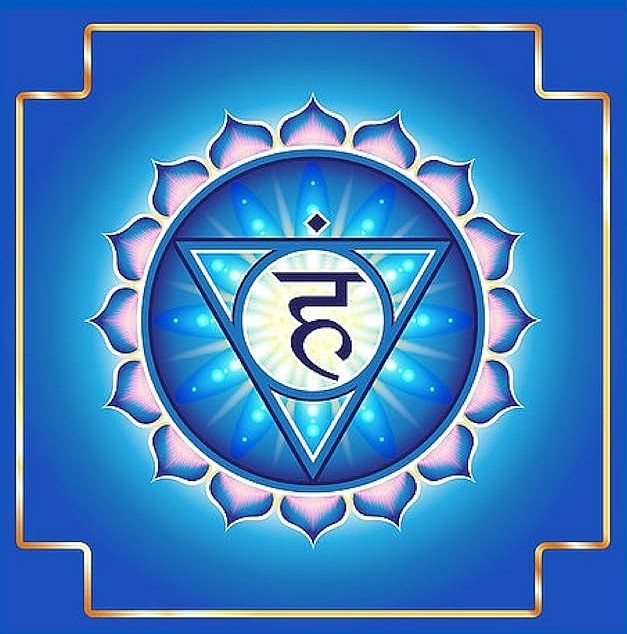
VISHUDDHA AT A GLANCE
New Age traditions view Vishuddha as the energetic centre of sound, communication, and truth, tied to the senses of hearing and self-expression.
It is associated with the qualities of:
- trust,
- loyalty,
- wisdom,
- confidence,
- intelligence,
- faith, and the
- expanse of higher consciousness.

The Throat Chakra is not only about communicating to others, it is also about how you communicate who you are to others. It’s the power of speaking your truth, staying honest, not lying and learning to say “no” to protect your well-being and energy. When your energy is running low, and others demand your time or push you to overextend yourself, being able to set firm boundaries is essential. Vishuddha gives you the voice to stand your ground.
Truth in expression goes both ways. It also includes how you talk to yourself. Replacing negative self-talk with kinder, more positive words helps build real confidence and lifts your spirits. And just as importantly, a balanced throat chakra means mastering the art of being a truly good listener.
The Biological Powerhouse of the Throat Chakra
In New Age traditions, the thyroid, parathyroid, and salivary glands are governed by the Throat Chakra as they are physically located in the throat region. The thyroid produces hormones that travel through the bloodstream and influence virtually every single cell, tissue, and organ in the body. It regulates the body’s metabolism and organ function, affects heart rate, body temperature, weight, energy use, muscle strength, skin health, menstrual regularity, memory, and many more. From a modern mind-body perspective, aligning this biological powerhouse with Vishuddha — the centre governing expression, processing, and output — makes perfect structural sense, as it literally controls how your body processes energy and communicates internally.
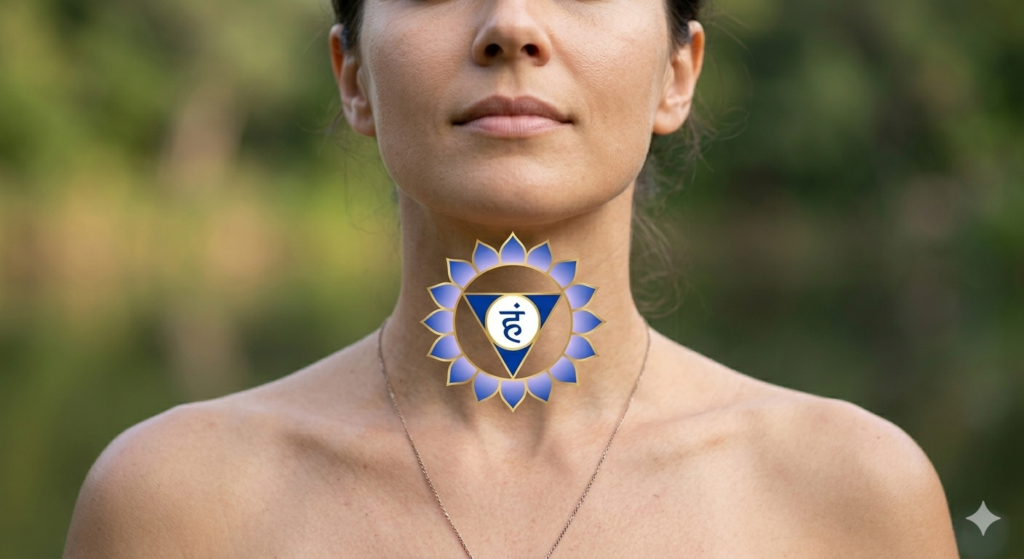
The Throat Chakra records everything that happens, thoughts and images. Concepts are held here as part of their journey from the level we know as the body – solid, the earthly reality to the higher realms of spirit.
Open and flowing Throat chakra
- When the fifth chakra is healthy and balanced, we can express ourselves with honesty and integrity guided by the wisdom of love from the heart below and intuitive knowing from the third eye above.
- As the centre for the energetic flow of our creative abilities, the throat chakra is the gateway for singing, making music, writing, dancing, and all forms of creative expression. When it is open, all areas of creative expression are more fluid, easy, and harmonious. It gives us a greater sense of confidence in our ability to express how we feel.
A blocked throat chakra
- Signs of a blocked throat chakra can be: Dominating conversations, gossiping, interrupting, or speaking without listening.
- Fear, self-judgment, shame, and shyness all serve to decrease the flow of energy in this energy centre.
- Experiencing a creative block, harsh communication, verbal abuse, dishonesty, and manipulative tactics are all indicators of blocked energy or an imbalance in this chakra.
- Physical symptoms of a blocked throat chakra may be thyroid imbalances, hearing problems, tonsillitis, mouth ulcers, tinnitus, bronchitis, asthma and ear infections.
Affirmations for Truth & Flow:
- “I speak my truth with clarity and love.”
- “I listen as deeply as I speak.”
- “My voice is valued, and I express myself with confidence.”
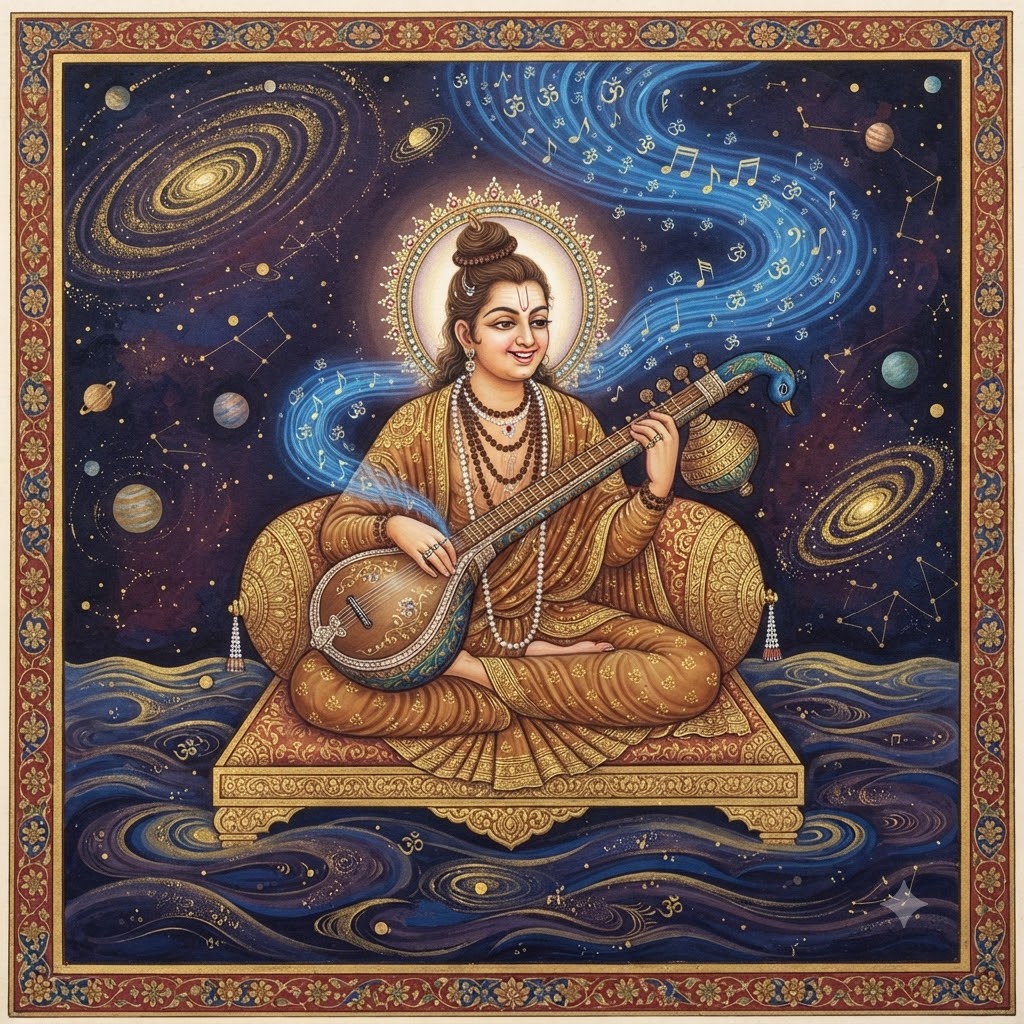
Narada Muni: The Cosmic Troubadour of Truth & Song
Narada is the ultimate communicator, carrying his iconic lute (the veena) and singing hymns across the cosmos. He represents the purest form of voice, message, and vibration.
Narada is a cheerful, slightly cheeky messenger who pops up everywhere to spark curiosity. He asks the right questions and keeps the universe communicating. He reminds us not to take ourselves too seriously, but to always use our voice with purpose and joy.
Narada embodies the power of sound and the idea that everything in the universe is vibration. Through his songs and stories, he shows us that communication isn’t just about talking — it’s a sacred art form that can shift reality, share wisdom, and heal.
Grounding Tools
To bring the soaring energy of the upper chakras like the throat back to earth, grounding stones and scents are essential. Here are some of the best gemstones, essential oils, and practices to anchor your energy:
Essential Oils
Heavy, deep, and wood, or root-based aromas are the most effective for calming the nervous system and pulling awareness back into the lower half of the body:

- Vetiver: Often called the “oil of tranquility.” Distilled from deep-set roots, its rich, earthy, smoky aroma is arguably the most powerful essential oil for deep grounding and calming a racing mind.
- Cedarwood: Warm, balsamic, and woodsy. It promotes a sense of inner strength, stability, and emotional grounding.
- Patchouli: Deeply grounding and earth-connected. It helps stabilize the root chakra, eases anxiety, and encourages presence in the physical body.
- Frankincense: While often used for spiritual connection, its heavy base notes anchor the nervous system, making it a wonderful bridge between high inspiration and embodied peace.
- Sandalwood: Rich, creamy, and deeply calming. It helps quiet mental chatter and promotes a grounded, meditative state.
Gemstones
Stones with earthy, stabilizing, and high-density vibrations help anchor you into the physical body and quiet an overactive mind:
- Black Tourmaline: The ultimate stone for energetic protection and grounding. It acts like a lightning rod for excess or scattered energy, drawing it down into the earth.
- Hematite: Heavy, metallic, and deeply anchoring. Holding a piece of Hematite instantly reminds you of your physical presence and helps quiet mental loops.
- Smoky Quartz: A gentle yet powerful root-chakra stone that neutralizes negative vibrations and gently absorbs stress, anchoring high spiritual energy down to the physical plane.
- Red Jasper: Known as the “supreme nurturer,” it sustains and supports during times of stress, bringing tranquillity, physical vitality, and a deep connection to the earth.
Simple Grounding Practices to Pair Them With
- The Stone-to-Earth Exercise: Hold a piece of Black Tourmaline or Smoky Quartz in your non-dominant hand, place a drop of diluted Vetiver on the soles of your feet, and visualize roots extending from your feet deep into the earth.
- Aromatherapy Foot Massage: Massage a few drops of Cedarwood or Patchouli mixed with a carrier oil directly into the soles of your feet (reflexology points for grounding).
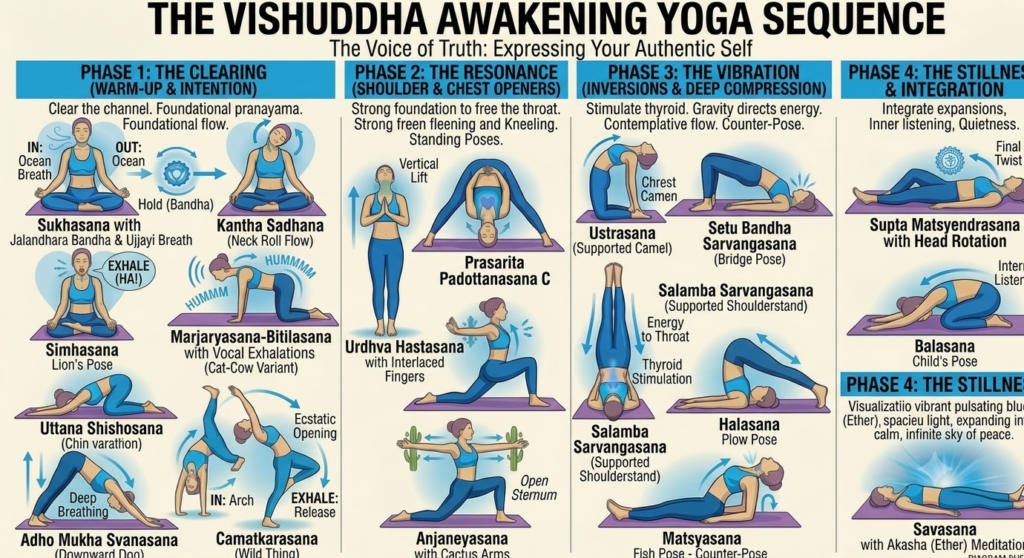
OPENING THE THROAT CHAKRA YOGA SEQUENCE
The Voice of Truth: Expressing Your Authentic Self
As the Throat Chakra governs communication, self-expression, authenticity, and hearing your inner truth, this sequence focuses heavily on opening the neck, throat, and shoulders, integrating both active throat-opening backbends and cooling, contemplative inversions.
(Only attempt what is accessible and safe for your body today. Use blocks or blankets where needed.)
Phase 1: The Clearing (Warm-Up & Intention)
Before speaking your truth, you must clear the channel. This phase releases physical tension from the neck and introduces the foundational pranayama for the throat.
- Sukhasana with Jalandhara Bandha & Ujjayi Breath: Seated comfortably, practicing the “Ocean Breath” (Ujjayi) to create a soothing, audible vibration in the back of the throat. Introduce gentle chin locks (Jalandhara Bandha) to channel the energy.
- Kantha Sadhana (Neck Roll Flow): Slow, mindful ear-to-shoulder rolls and half-circles to dissolve stiffness in the cervical spine and trapezius muscles.
- Simhasana (Lion’s Pose): From a kneeling position, leaning forward, widening the eyes, stretching the tongue out completely, and exhaling with a powerful “haaa” sound. This physically and energetically releases blockages around self-expression.
- Marjaryasana-Bitilasana with Vocal Exhalations (Cat-Cow Variant): Rhythmic spinal flexing, but introducing a humming sound (like a bee) on every exhale to vibrate the throat area.
- Uttana Shishosana (Puppy pose): variant with chin on the floor to open the neck.
- Adho Mukha Svanasana (Downface Dog)
- Camatkarasana (Wild thing): lift one leg high into a Three-Legged Dog, open the hip by bending the knee, and slowly let the weight of that foot carry you over until it lands on the floor behind you,
Phase 2: The Resonance (Shoulder & Chest Openers)
The throat chakra relies on a strong foundation from the shoulders and chest. These standing and kneeling postures expand the upper body to free the throat.
- Urdhva Hastasana with Interlaced Fingers (Upward Salute): Reaching high, interlacing fingers, and flipping the palms up while gently lifting the gaze, lengthening the front of the neck without compressing the back of it.
- Prasarita Padottanasana C (Wide-Legged Forward Fold with Chest Opener): Interlacing fingers behind the back and letting the arms drop overhead to aggressively release tension in the shoulders and upper chest.
- Anjaneyasana with Cactus Arms: Low lunge, drawing the elbows down and back, lifting the sternum toward the sky, and gently tilting the chin up to expose the throat.
Phase 3: The Vibration (Inversions & Deep Compression)
Inversions stimulate the thyroid and parathyroid glands, which are physically linked to Vishuddha. Compressing and then releasing this area flushes it with fresh energy and blood flow. Back bends, particularly belly back bends, can activate udana vayu
- Ustrasana Variation (Supported Camel Pose): Kneeling with hands firmly supporting the lower back or sacrum. Lifting the thoracic spine up and back, allowing the throat to open gracefully while ensuring the neck feels supported.
- Setu Bandha Sarvangasana (Bridge Pose): Interlacing the fingers underneath the body and walking the shoulders closer together, drawing the chest toward the chin to create a natural throat lock.
- Salamba Sarvangasana (Supported Shoulderstand): The ultimate throat chakra inversion. Gravity directs the flow of blood and energy straight into the throat center, calming the nervous system.
- Halasana (Plow Pose): Dropping the feet overhead from Shoulderstand, deepening the compression on the anterior throat area and deeply stretching the upper back.
- Matsyasana (Fish Pose – The Essential Counter-Pose): Performed immediately after Plow or Shoulderstand. Arching the back and resting on the crown of the head to completely counter-stretch and expand the throat space.
Phase 4: The Stillness & Integration
Integrating the physical expansions and cooling the energy down into quiet inner listening.
- Supta Matsyendrasana (Supine Twist with Head Rotation): Reclined twist, ensuring the head turns in the opposite direction of the knees to finish the practice with a final, gentle cervical twist.
- Balasana (Child’s Pose): Resting the forehead on the mat, drawing the senses inward, and listening to the internal sound of the breath.
- Savasana with Akasha (Ether) Meditation: Final relaxation. Visualizing a vibrant, spacious blue light radiating from the throat center, expanding into a calm, infinite sky of peace.
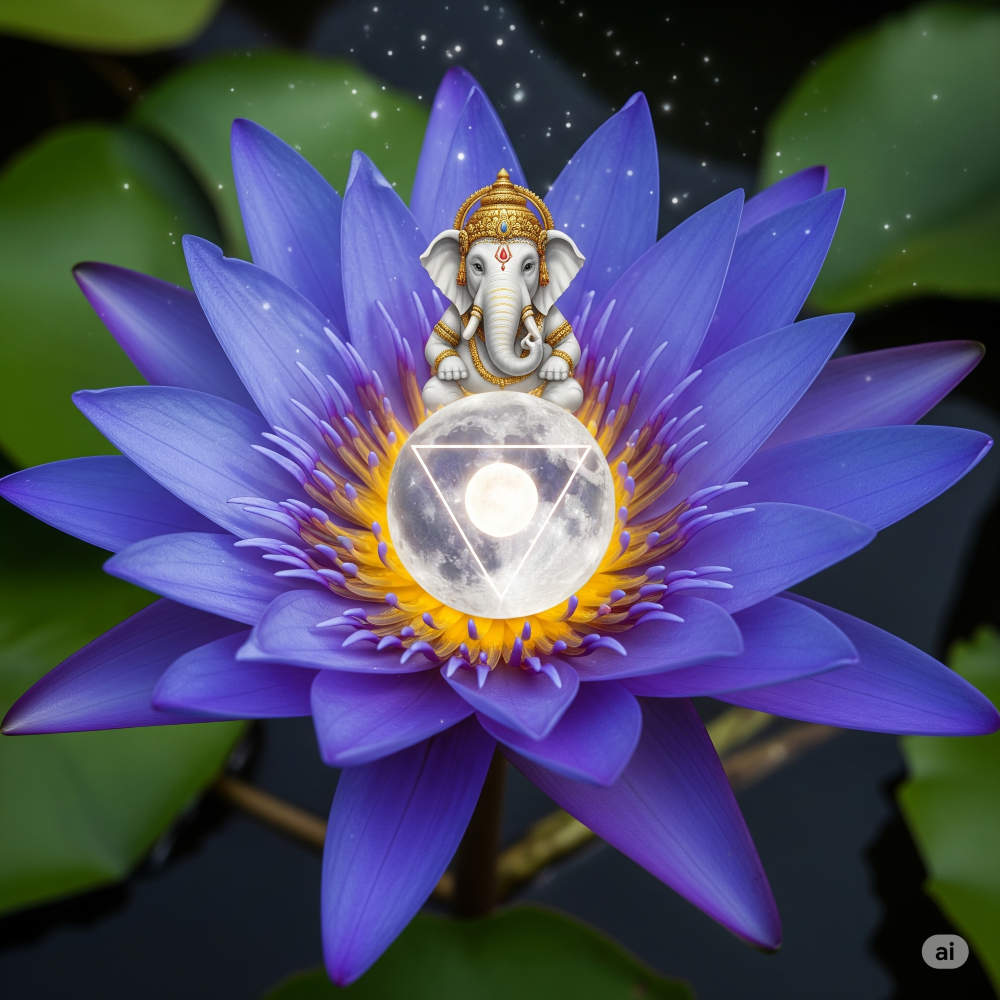
🌌 Explore Vishuddha & Beyond
Return to the main Throat Chakra hub or continue ascending through the energetic system.