
The Root Chakra
Traditional Muladhara At a Glance
Introduction to Muladhara: The Seat of Stability
- The journey of re-awakening begins at the base. Muladhara serves as the anchor that binds us to the Earth and the world around us.
- Within Muladhara is the sleeping serpent power, Kundalinī Shakti.
- The Root Chakra is an energy centre located within your subtle body at the base of the spine, in the vicinity of the tail bone or perineum. Visualize where you feel the energy in connection with the ground.
- As the foundation for all other chakras, the root chakra needs to be strong.
- It governs our most primal instincts—safety, shelter, family, and security.
Traditional Symbolism
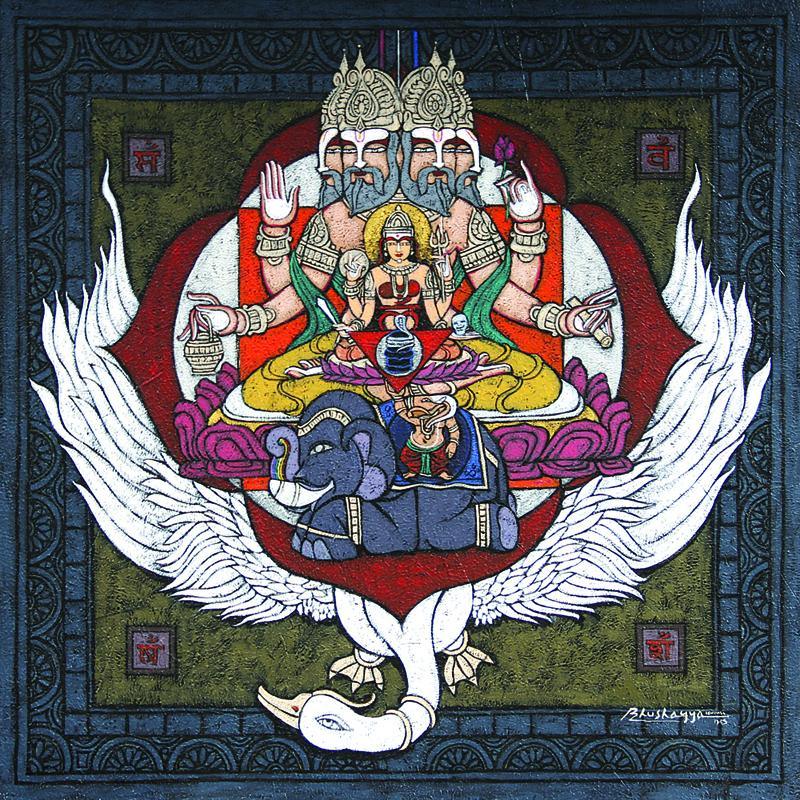
The Lotus flower is a deep crimson-red colour with four petals. Red symbolizes the movement from sleeping consciousness to an active, alert state.
The Animal Symbol: Airavata, the elephant with seven trunks, represents immense strength, patience, and the capacity to carry the heavy burdens of the physical world.
- The Earth Element & The Inverted Triangle: Inside the lotus is a yellow square, the sacred symbol for the Earth element. Supported by the square is an inverted red triangle, a powerful emblem of the feminine Shakti representing the descent of divine energy into matter. This triangle represents the dense, stable foundation of the physical realm—anchoring potential into solid matter and providing the steady base required to support all upward spiritual growth. The downward shape represents structural concentration—funnelling broad potential into a single, immovable point of physical reality.
- The Serpent & Lingam: At the centre lies the pillar of light (Swayambhu Lingam), with the serpent Kundalini coiled 3.5 times around it. She represents our dormant potential — lightning-like splendour waiting to rise.
Vibration and Sense
- The Bija Mantra (LAM): The seed sound of the Earth. This syllable is associated with helping to heal the physical body and the manifestation of consciousness into solid matter. It helps clear primal fears and is the most condensed form of sound energy.
- The Sense of Smell: Our most primal sense, used to detect danger and identify territory. Just as animals use smell for survival, the Earth element uses this sense to ground us in our environment.
The Eight Spears & Pillars: Guardians of Your Peace
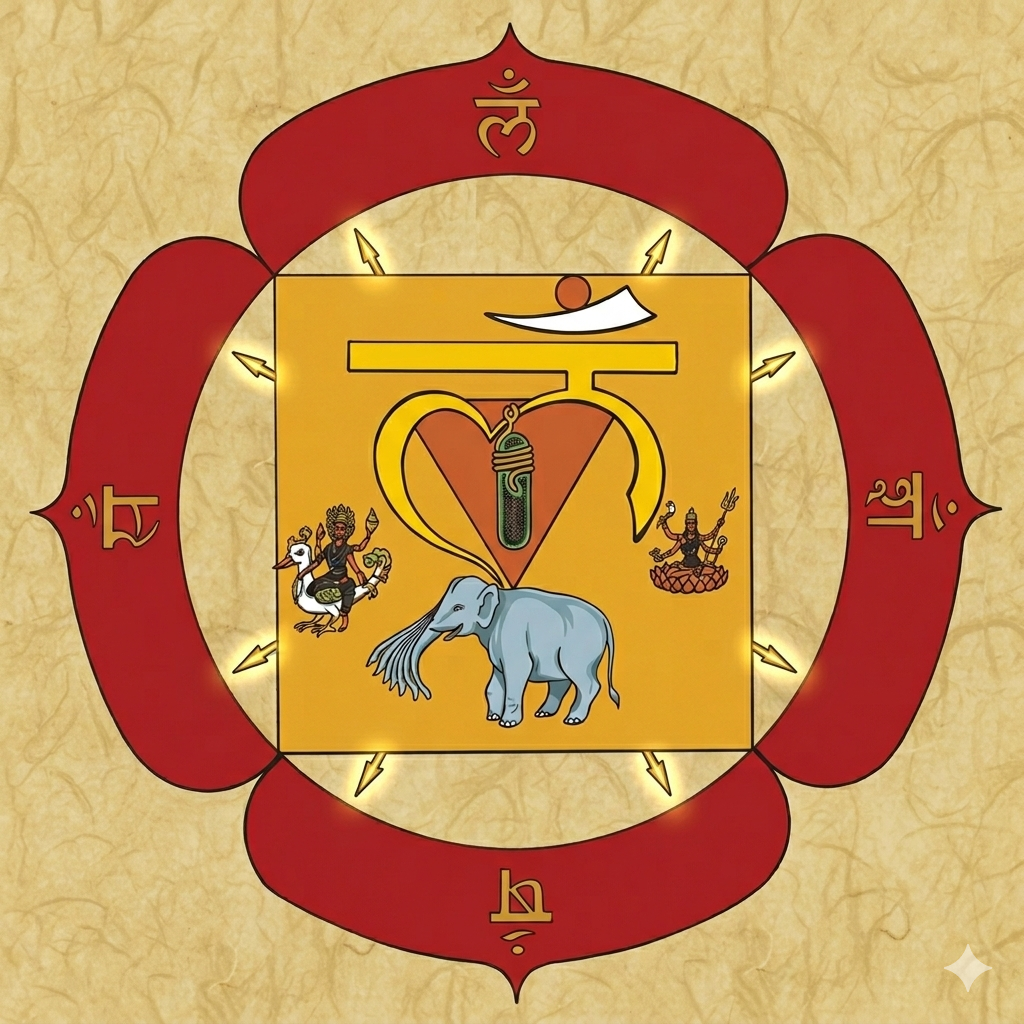
Surrounding the central yellow square of the Earth element are eight spears shining like lightning, acting as a complete map to stabilize our foundation in every direction. Together with the protective energies of the root, they offer three distinct layers of stability for our spiritual journey:
- Protecting Your Inner World (The Eight Limbs of Yoga): These spears act as protective barriers that pierce through the chaos of the external world, guarding your inner peace and sharpening your personal discipline so your spiritual roots remain undisturbed.
- Guarding Your Daily Actions (The Eight Right Ways of Living): These spears point outward into our daily lives like a spiritual compass, cutting through confusion to ensure that our choices and interactions remain rooted in universal love, truthfulness, and compassion.
- The Ancient Shield (The Eight Pillars of Protection): Beyond the spears of our own personal effort lie the Eight Pillars of Protection. These are the Eight Guardians who stand at the corners and sides of the Muladhara square. While the yoga limbs are the tools we use to stay steady, these Guardians are the ancient, steadying forces that hold the space for us.
📖 Dive Deeper into the Pillars and Spears: In the upcoming course, we will map out each of these three protective layers—including the specific actions of the Eight Limbs, the Eightfold Path, and the Eight Guardians.
The Gateway to the Inner World
Muladhara serves as the base where your body’s major energy pathways connect to the physical world, creating a solid and steady foundation for your entire energy system.
Roots need to be tended and fed. When you understand and accept your body through the Muladhara, you create a safe harbour for your soul. By drawing vitality up through Muladhara and nourishing ourselves spiritually and mentally, we can steady our physical being and bloom into our full potential, like a lotus flower rising from the mud to reach for the sun.

The Vayu
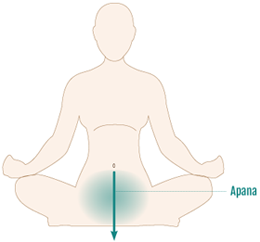
Muladhara Chakra is connected to the Annamaya kosha (the physical body) and governs the Apana Vayu, the vital breath of elimination and release. It could be considered a bliss centre.