
Solar Plexus Chakra
Introduction
Traditional Manipura At a Glance
“If humanity stays stuck in ego-driven power and endless consumption—symbolized by the solar plexus, our industrial production facilities will destroy this planet, and us, by exhausting its resources and poisoning it. So, from the point of view of survival, it is a must that our spiritual evolution progresses to the next chakra, the heart chakra.” Gregor Maehle
Manipura is the seat of health and medical knowledge. If the fire in Manipura is strong, many diseases can be neutralised and toxins destroyed. If you need to distribute prana to injured areas of the body, visualize healing radiating from Manipura chakra, sending pranic energy towards the pain on your exhalation.
Manipura Chakra is described as a lotus with 10 petals the colour of blackish blue of a storm cloud with the vrittis written in the colour of the blue lotus.
The sense of sight is associated with Manipura. Our eyes rely on light images to be conveyed via the retina to the brain. Light comes from the element of fire.
The motor faculty is walking or the feet. Manipura is the first rajasic chakra bringing activity and motivation.
Failure to go beyond this chakra leads to defining oneself through one’s wealth and always seeking profit and material advantage.
Manipura Symbol
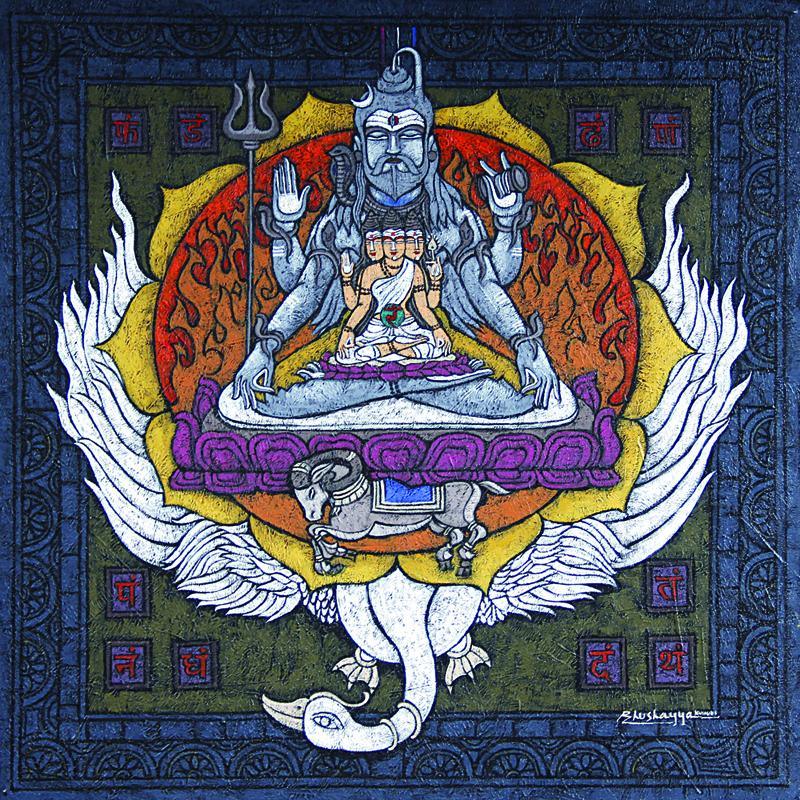
The solar plexus is visualized as a 10-petaled lotus, reflecting ten energy channels (nadis) and ten core mental tendencies (vrittis) that shape our daily actions, drives, and emotions.
The downward pointed tip of the fiery red triangle indicates the origin. The upward widening of the triangle sides indicates growth and development. There is an ancient Hindu swastika, which is actually a holy symbol that represents the sun. The swastika around the inverted red triangle is a symbol of well-being, luck, good fortune, and the cosmic sun. It is believed to have the power to remove misfortune and negative forces.
The centre of the inverted triangle has the bija mantra Ram, the sound of the fire element. It resonates from the navel when repeated in a proper manner RAANNNGGGG. The seed syllable Ram is associated with discriminating-awareness, wisdom, and the quality of realization.
The animal symbol is the ram, a sacrificial animal. A great deal must be sacrificed to gain spiritual enlightenment, including desires.
The Vayu
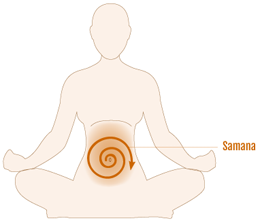
Flow of Prana: Samana-Vayu
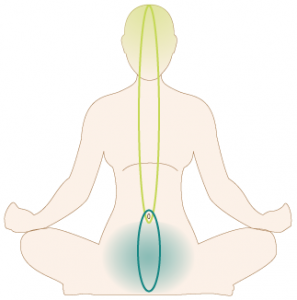
Just like a physical fire cooks food, the fire in your belly helps you digest difficult emotions. When you feel overwhelmed, bringing your awareness to your breath in the solar plexus can help you process stress and let go of negativity.
A Meditation
Through meditating on Manipura, one is said to attain the power to save, change or destroy the world. “He who concentrates successfully on this chakra has no fear of fire and is free from disease.” ~ Swami Vishnu-
Sit comfortably with a straight spine. Place your hands in Hakini Mudra (fingertips touching) at the level of your solar plexus. Begin with deep abdominal breathing for a few minutes to generate heat in the navel area.
Visualize a bright yellow lotus with 10 petals at your solar plexus. In the centre of the lotus, see a glowing red inverted triangle representing the ruling deity of Manipura, Agni, the god of fire.
Feel the warm fire radiating from your solar plexus and penetrate into every cell of your being. Watch the fire burn away pain, doubt, shame, guilt, insecurities or jealousy. Watch the fire leaving behind strength, confidence and belief in yourself.
Slowly the fire is burning down but its warmth stays at your centre. You can feel it every time you put your hands on your solar plexus. You can ignite it anytime you need it.
💎 Deepen Your Practice
Explore the sacred geometry, internal sounds, and ruling forces of the Solar Plexus.
Explore the authentic foundations of Sahasra’s Hope