
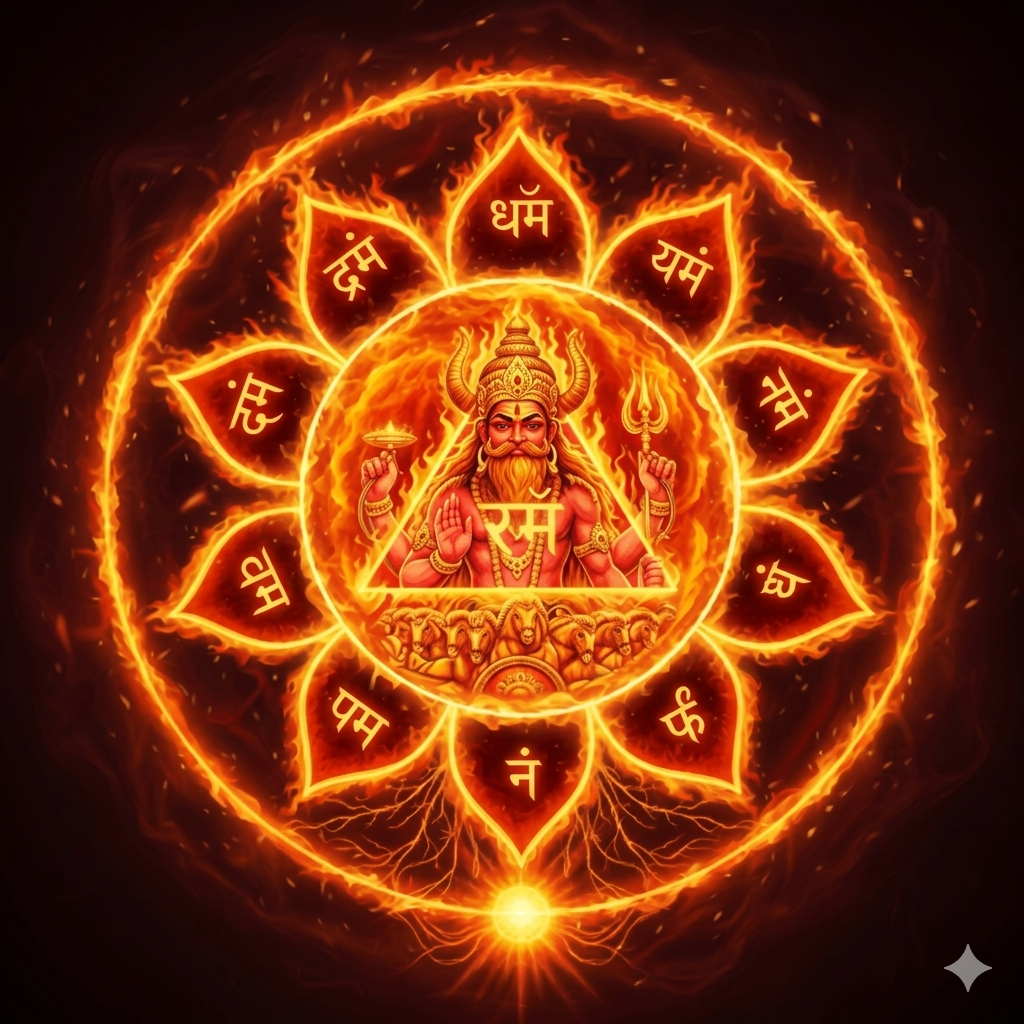
Vritti means Whirlpool. Chakras are wheels, the petals are constantly spinning around the centre, like a vortex. When the vrittis become still, the chakras become still, and our minds become still. All the thoughts and emotions stop whirling around. This action of Nirodha leads to clear perception or bliss, known as Samadhi.
The Manipura Chakra is the Agni, Fire centre. While the lower two chakras deal with survival and messy emotions, Manipura is where you develop willpower, inner strength, and individuality.
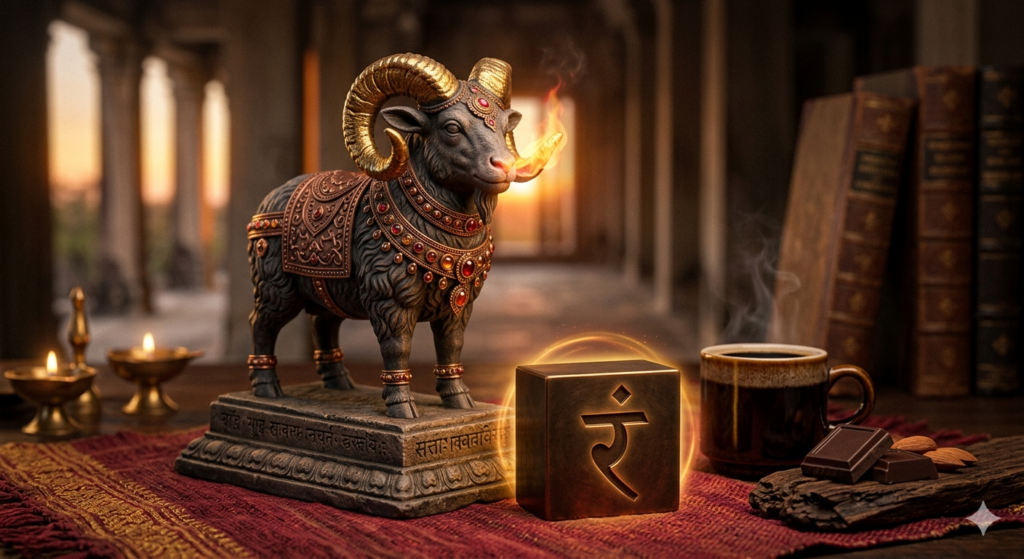
The Bija Mantra: The central seed sound of this fire is RAM.
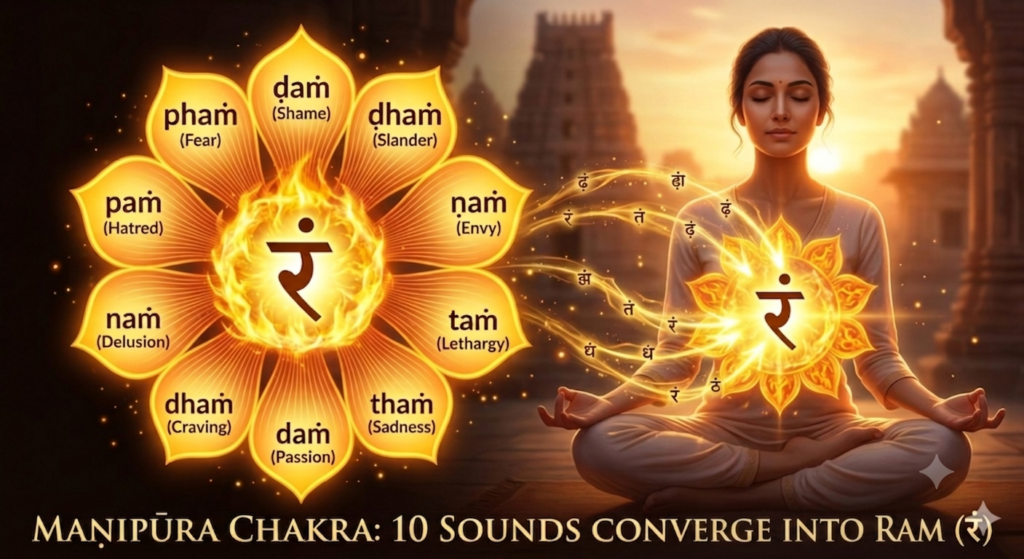
Each of these symbols corresponds to what could be called a vice, although it might more accurately be called a distraction or stumbling block.
1. ḍaṁ (डं), Shame & Shyness (Lajja): Shame is an uncomfortable feeling that you have when you know that you have done something wrong or embarrassing, or when someone close to you has.
2. ḍhaṁ (ढं), Gossip & Slander (Pishunata): Gossiping about someone who is not present drains your energy.
3. ṇaṁ (णं), Envy & Jealousy (Irsha): Feeling or showing an envious resentment of someone or their achievements, possessions, or perceived advantages.
4. taṁ (तं), Sleepiness, lethargy, laziness, dullness (Sushupti): Choosing the easy path of least resistance instead of the fiery path of personal growth.
5. thaṁ (थं), Sadness & Despair (Visada): Mental pain that clouds your inner sun.
6. Passion & Karmic Reaction (Kashaya): Passion is the cause of karmic bondage. It is ‘the ash that covers the fire’. By reacting without passion and staying tranquil, one can break the cycle of karma.
The 4 Major Emotional “Ashes” & Their Antidotes
The four Kashayas are anger (Krodha), greed (Lobha), ego (Mana) and deceit (Maya). These are what the ash is made of and what we need to clean off to break the cycle of karma. Inside the fire centre, four specific habits can dim your inner light. To digest them, apply these simple spiritual remedies:
🔥 Anger: A heat that burns you instead of lighting your way.
The Antidote: Forgiveness. Actively letting go of resentment.
💰 Greed: An insatiable hunger for more power, food, or attention.
The Antidote: Generosity. Practicing the art of giving things away.
🎭 Ego & Pride: The desire to feel superior to others, which makes the heart rigid.
The Antidote: Humility. Remembering the same divine fire burns in everyone.
🌑 Self-Deception: Wearing masks and lying to yourself about your true motives.
The Antidote: Honesty. Radical transparency in thought and action.
7. dhaṁ (धं), Craving or desire (Trsna): The craving to hold on to pleasurable experiences. This type of desire stands in contrast to wholesome forms of desire, such as the wish to benefit others.
8. naṁ (नं), Delusion & Attachment (Moha): Getting overly attached to objects, leading to greed.
9. paṁ (पं), Hatred & Disgust (Ghrna): The desire to be separated from painful or unpleasant experiences. Manipura is where we digest experiences in life; and if we can’t, it can lead to hatred or revulsion.
10. phaṁ (फं), Fear (Bhaya): Fear is the most paralysing whirlpool of all. It freezes the inner fire, locking us into a restrictive comfort zone where we feel safe but cannot step out to fulfil our life’s purpose. It can manifest as fear of failure, fear of judgment or ridicule, or fear of losing security. True courage isn’t the absence of fear; it is the momentum to move forward even when the breath is tight and the mind is uncertain. Stepping out requires us to trust our inner sun and fiery resolve. The sound Phum (like a forceful “puff” of air) represents the power to blow away the fog of fear.
The Bija Raṁ
Transform the vrittis of anger, greed and hatred into constructive, courageous and brave actions.
The Alchemy of the Sound “RAM”
Think of the 10 petals as different qualities of fire. Some are smoky and dim (Lethargy), others are flickering and unstable (Fear), and some are sharp and scorching (Envy). Instead of letting your power leak out into gossip, shame, or anxiety, when you chant the central seed sound RAM, you are performing an internal alchemy. The 10 sounds are the fluctuations of the power; Raṁ is the source of the power.
Chanting the central seed sound RAM acts like striking a match. In Vedic tradition, Repha (the letter R) is the seed sound of fire itself. The vibration gathers all those outward-facing emotional whirlpools from the edges and pulls them into the centre, “cooking” them until they turn into pure, golden self-assuredness.
The vibrating nasal “m” sound at the end is where those 10 divided, scattered energies finally resolve into a single, pointed focus that rises upward toward the heart.
The Bindu: The “ṁ” (the dot above the letter) represents the nasalized ‘m’ where the 10 divided sounds resolve into a single, pointed vibration that rises upward toward the heart.
Visualizations
The Heat Treatment: Use Manipura when you feel fear or shame, visualize the fire in your navel growing brighter, burning away the heavy ash of the negative emotion, leaving pure, glowing heat.
The Sun Visualization: Imagine a Golden Sun at your navel. If you feel sad, let that sun burn away the fog of despair. You can also use the golden sun for healing pain in your body. Imagine its warming rays throughout your body reaching where they are needed to heal your physical cells.
To see how these mental whirlpools compare to the petals of the lower chakras, visit the Vrittis in the Chakras Summary page.
Pronunciation
The sound of the petals covers three distinct phonetic families in Sanskrit, which you can practice below.
A Sound Meditation – Mantra
You can perform this in a few ways:
A. The General Balancing (Central Mantra): Chant the seed mantra RAM (pronounced like “rum” with a rolling ‘r’).
• As you chant, feel the vibration starting at the navel and moving outward.
• Focus on the feeling of internal strength and the dissolution of fear (Bhaya).
B. The Specific Purification (Petal Chanting): If you feel a specific vritti is particularly strong (e.g., you are struggling with Irshya/Jealousy or Ghrina/Aversion), you can chant the specific Bija for that petal 108 times.
C: Alternatively, you can “cycle” through all ten to harmonize the entire center:
The Sequence: > ḍaṁ — ḍhaṁ — ṇaṁ — taṁ — thaṁ — daṁ — dhaṁ — naṁ — paṁ — phaṁ
• Inhale: Visualize the yellow light expanding.
• Exhale: Chant the sequence of 10 sounds slowly, imagining each petal vibrating and turning from a dull colour to a brilliant, shining gold.
Deepen Your Journey into Manipura
Continue exploring the Fire Center through these connected paths: