
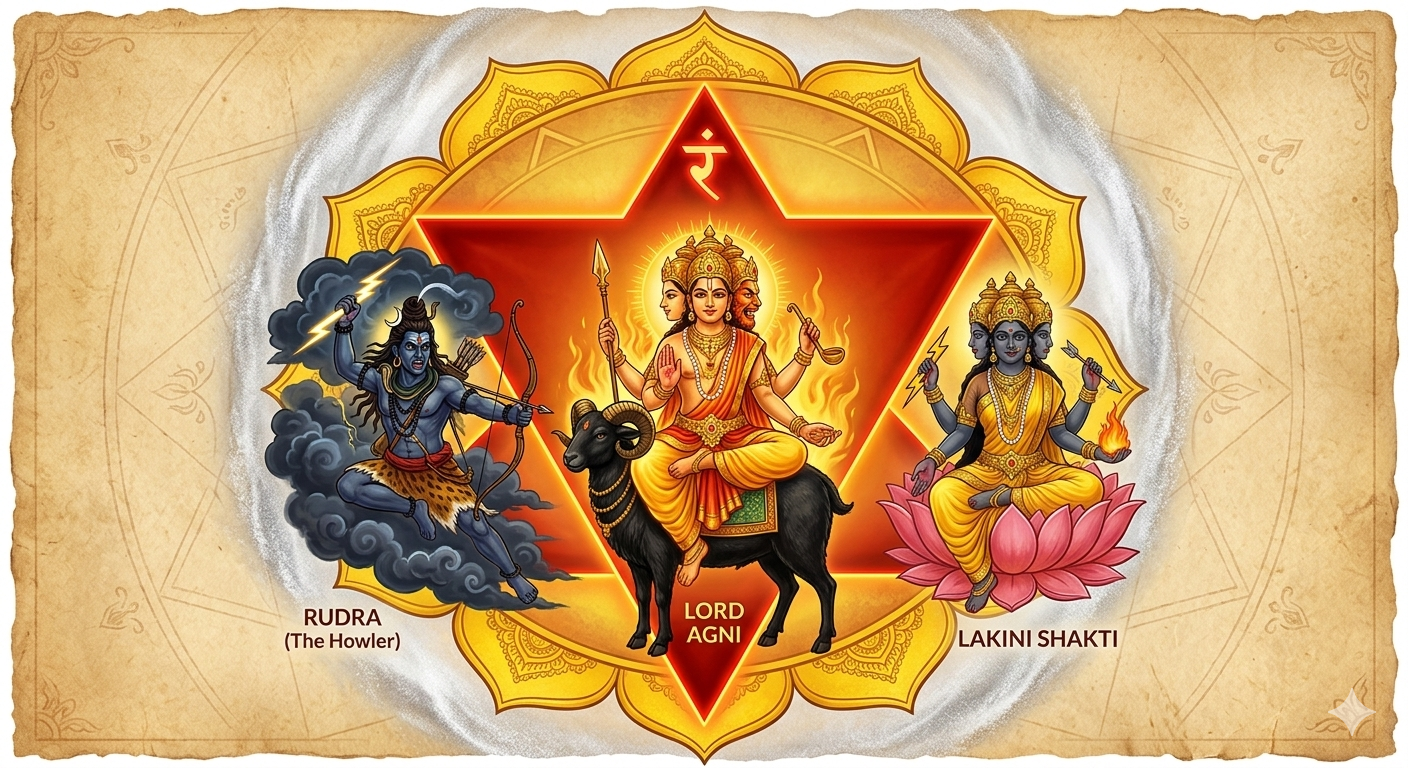
Within the ten-petaled lotus of Manipura Chakra, are the deities of will power, digestion, and transformation. This is the inner hearth where the soul’s intentions are forged into action and where the ash of our ego is burned away to reveal spiritual gold.
The deities here do not just represent abstract concepts. They represent the forces of your internal alchemy. Agni governs the fires of metabolism, while the presence of Bhadra-kali shatters the ego. Consequently, these figures teach us how transformation is a burning process.
In this realm, we move from the fluid emotions of the Sacral center to focus on the fire of the Self. Here, we learn to master the heat of our passions, the storms of our minds, and the strength of our convictions. To meditate upon these deities is to invite the “Inner Sun” to rise, illuminating our path with confidence and purifying every obstacle that stands in the way of our highest truth.
Agni, God of Fire
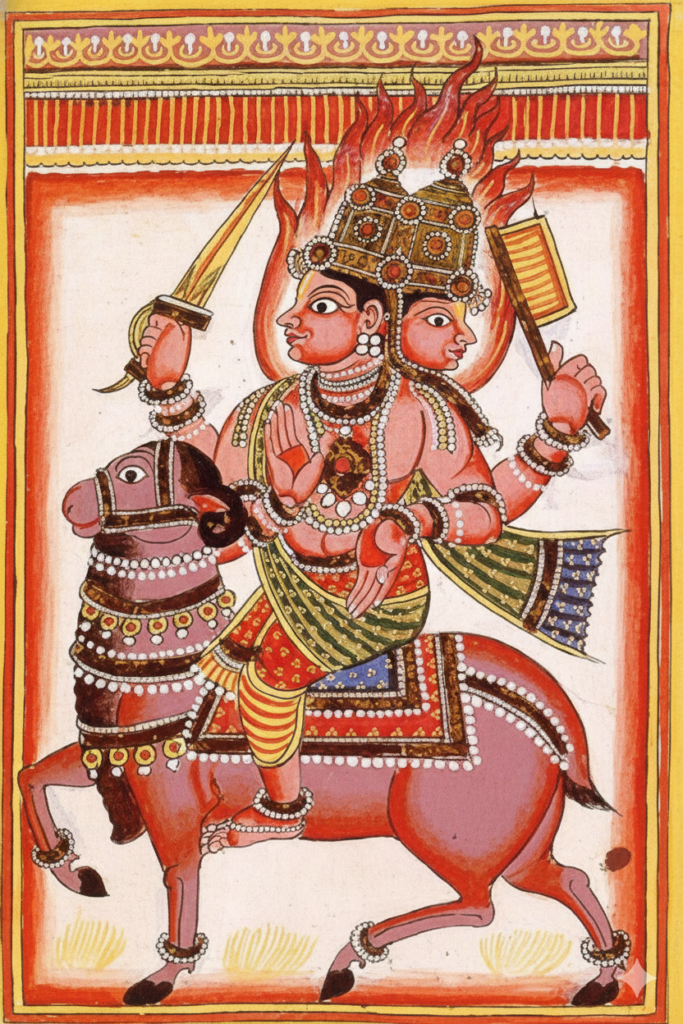
Agni is the god of the fire element and the deity of Manipura. Within the pericarp of the lotus, he sits enshrined in a fiery red triangle, protected by the floral tissue that shields the developing seed. Visualizing Agni in your core during meditation helps you anchor your inner spark, transforming self-doubt into steady, radiant confidence.
His dual faces reflect the dual nature of fire – one beneficent and one malignant – and illustrate the multifaceted nature of fire. One face represents destructive fire, funeral pyre and the digestion of karma. His other face represents the creative fire, vitality, cooking and the domestic hearth.
While his creative side fosters vitality, his malignant aspect is often interpreted as Krodha (Anger). If the fire of the Manipura is not balanced, the “beneficent” warmth of confidence becomes the “malignant” fire of rage and destruction.
Seated on a ram, this sacrificial animal symbolizes the sacrifice of worldly desires. Agni is the messenger between the humans and the Gods. Holding a Rudraksha mala and a spear, Agni embodies the piercing nature of spiritual light. To protect the seeker, his hands are held in gestures of blessing and defence against fear (Abhaya and Varada mudras).
In front of Agni are Rudra and Shakti Bhadra-kali.
Rudra – Creator and destroyer
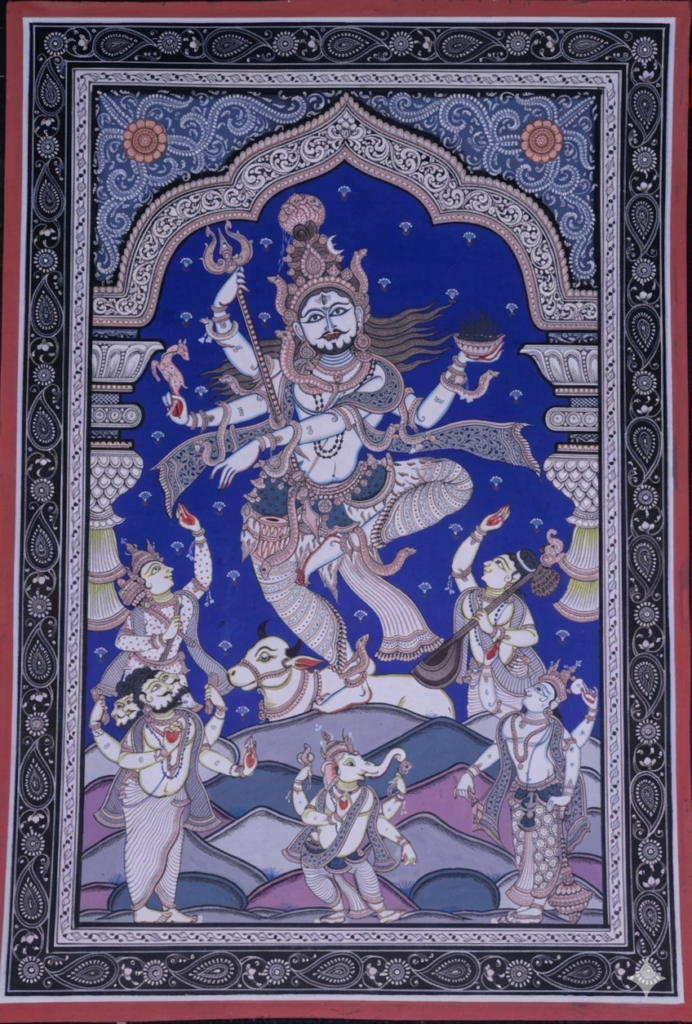
Rudra, whose name means “the howler,” was the fierce storm god of wind and death. In ancient texts, he is described as sending down streaks of lightning that shake the worlds and startle cattle in their pens—a vivid metaphor for how unpredictable and disruptive deep inner transformation can feel when it shakes up our comfort zones.
He wields the thunderbolt, bow and arrow, acting as an archer who fires fast-flying arrows of illness and challenge. Yet, in true paradoxical fashion, Rudra is also the ultimate healer, possessing a thousand medicines and standing out as the best physician of physicians. This fierce, unpredictable, and destructive nature represents the raw, powerful energy required for deep personal purification.
Old Shiva, Braddha Rudra – Transformation
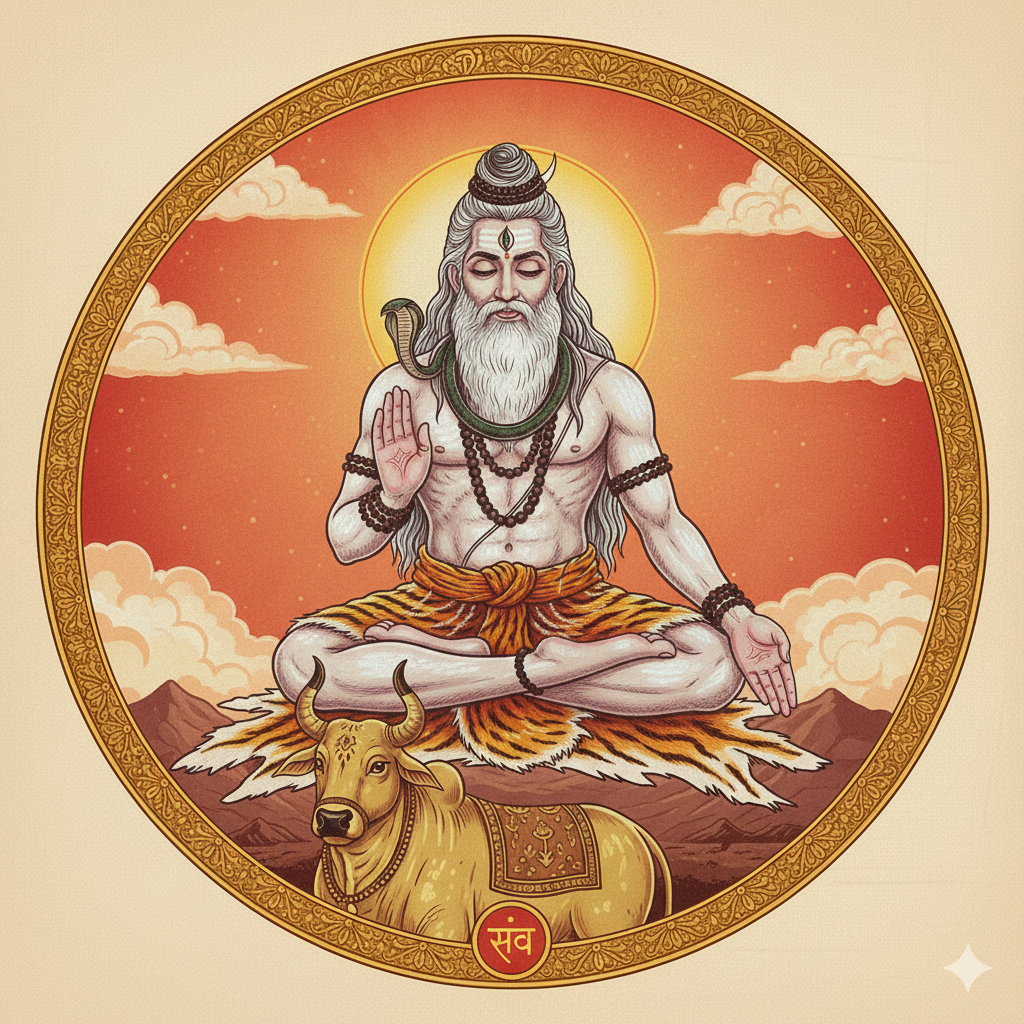
As Old Shiva, he is depicted as an old man with his body smeared with ashes. The ash symbolizes the four kashaya, anger, greed, ego and deceit.
When the ash is swept away, it reveals the clear jewel of our true nature.
He radiates the beauty and brightness of the sun, the colour of vermilion. He has three eyes and two hands. With one of these he makes the sign that grants boons and blessings, and with the other he dispels fear. He is seated either on a tiger skin or a bull, as he is the lord of cattle and wild animals and is fierce like a formidable wild beast.
Changing Nature
His nature changed as Hinduism emerged; Rudra became a beneficent and beautiful god, the lord of the animals and the patron of hunters. He transformed into Shiva, an auspiciousness god. Symbolic of how we can transform the negative vrittis and transform our lives.
Lakini Shakti – the female energy
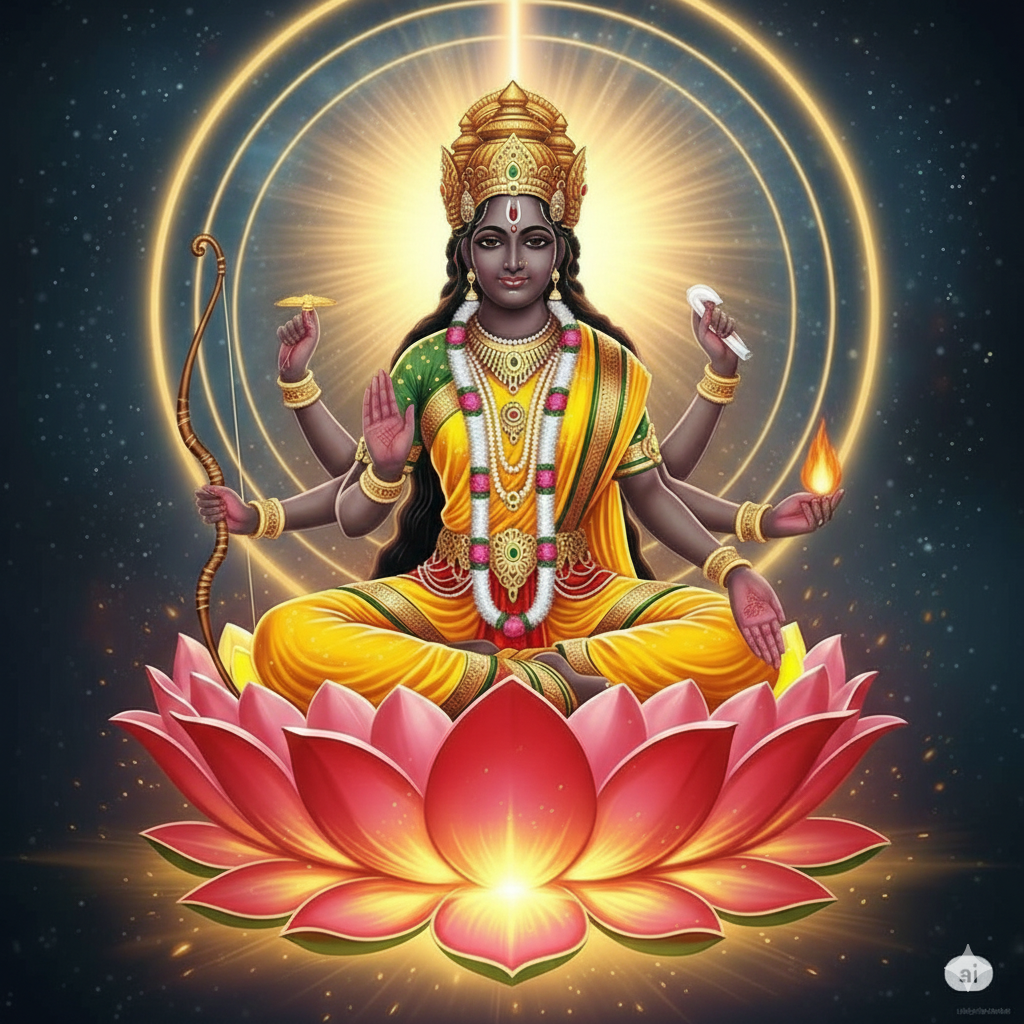
The Activating energy
Lakini Shakti is the divine feminine energy of Rudra, a powerful form of Shiva, who presides over the Manipura Chakra. She is the divine energy that empowers us to harness the power of the Manipura Chakra to live with self-worth and inner strength. She provides the energy to overcome negative emotions by transforming them into positive ones. Lakini is the daily fire you use to live with confidence. Lakini is a benefactress, focused on the digestion of food, life and experiences.
When you meditate on Lakini’s fierce presence, you can harness that dynamic inner energy to literally burn away old emotional baggage and clear the path for personal growth.
Appearance
Drunk on the sweetness of spiritual bliss, she is maddened with passion after drinking nectar (Amrita). Lakini’s complexion is dark like a rain cloud, symbolizing the void from which potential arises, the raw, silent power from which the fire of Manipura arises. She wears a yellow raiment with glittering ornaments and jewels. Shining with the golden radiance of the sun, she is dressed in the very light of the chakra she presides over. She has three faces and four arms holding a thunderbolt, an arrow from Kama’s bow, and fire, making the gesture of granting boons and dispelling fear.
Mastery over Transformation
Her ability to hold the element of fire shows her absolute command over the burning processes of the body and mind. The arrow of Kama gives direction beyond attachment. Her three faces symbolize mastery over the three Gunas (Sattva, Rajas, and Tamas) and the triple fire:
- 1. Jatharagni – the fire of digestion,
- 2. Bhutagni – the fire of the elements/metabolism),
- 3. Antaragni – the fire of spiritual transformation.
Bhadra-kali
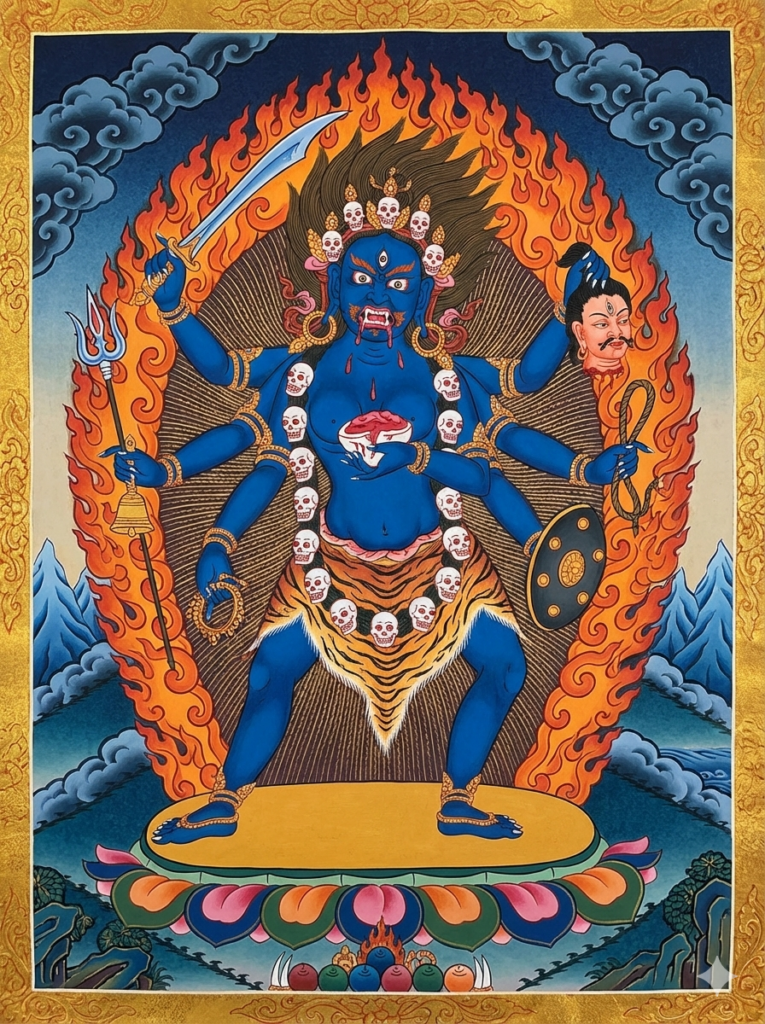
Bhadra-kali is a fierce, protective form of the dakini within Manipura. Working with her energy focuses on extreme purification and the destruction of the ego. This energy is the “emergency fire” you call upon when you need to break a deep addiction, a massive fear, or a crushing sense of shame. Bhadra-kali destroys the parts of you that are already “dead” or stagnant (the Kashaya or ash).
Appearance
Bhadra kali is jet black or deep blue, clothed only in the infinite void of time, sometimes wearing the skin of a tiger. She has a garland of 10 skulls representing the 10 vrittis. Her eight arms hold a curved sword, the head of the demon Darika, a bell, an anklet, shield, bowl noose, and a trident. With a fierce expression she bares her sharp teeth and has three eyes that burn like coals, the eye of wisdom blazes in her forehead.
Symbolism
She represents a state of “divine madness” that destroys everything false. Intoxicated by the blood of the demons that are our deep-rooted habits and ego, she is described as loving the flesh of animals, having a breast covered with blood and fat dripping from her mouth.
Above the lotus of Manipura is the abode and region of Surya, the wife of the sun. The solar region drinks the nectar which drops from the region of the Moon.
Meditation: The Alchemical Hearth of Manipura
The Preparation:
Find a seated position where your spine is tall and straight. With hands in Matangi Mudra (The Mudra of the Solar Plexus), close your eyes and bring your awareness to the space behind your navel. Visualize a glowing, downward-pointing red triangle. Feel a gentle warmth beginning to radiate from this center, pulsing with the rhythm of your breath.
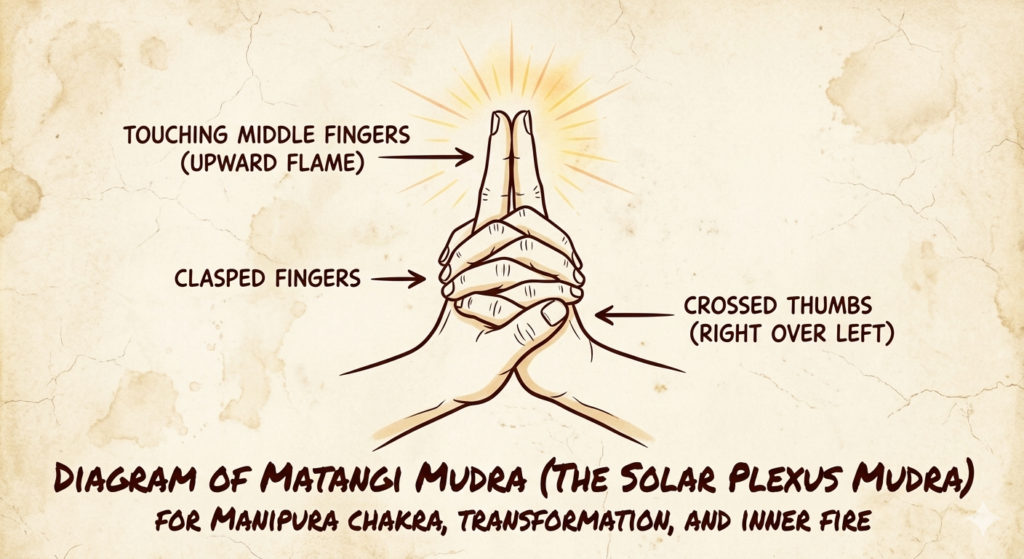
Matangi Mudra: Fold your hands at the level of your solar plexus. Extend both middle fingers and touch them together at the tips. Cross all other fingers (right over left thumb). The Benefit: It calms the “restless” fire of the solar plexus and aids in the digestion of both food and emotions.)
1. Visualizing The Fire of Agni:
At the center of the triangle, visualize the brilliant red form of Agni. He sits upon a powerful ram, representing your own drive and vitality.See his two faces glow with the soft light of a domestic hearth, the other blazes with the intensity of a sun. As you inhale, feel his creative fire warming your confidence. As you exhale, offer your past mistakes and heavy karma into his destructive flame. Let him digest what no longer serves you.
2. Rudra’s Storm:
Suddenly, the atmosphere shifts. Dark clouds gather within the chakra, and you hear the “Howl” of Rudra. The wind of your own breath becomes a storm. Feel the lightning of pure awareness striking through your ego. Do not be afraid of the “Howler”; he is the Great Physician. Let his arrows of light pierce through any sickness or stagnation in your body, clearing the path for a new strength to emerge.
3. Shakti’s Command:
Amidst the storm, a dark, rain-cloud-complexion figure appears—Lakini Shakti. She stands in her yellow rament, glowing like a sun within the darkness, calm, centered, and sovereign. Holding the fire in her bare hands, she is showing that you, too, can master the heat of your emotions. Breathe with her. Feel your inner strength stabilize. With her guidance, the “triple fires” of your body, mind, and spirit begin to burn in perfect harmony.
4. Shiva’s Sacred Ash:
As the fires settles, the heat leaves behind a fine, silver-white ash. See Braddha Rudra (Old Shiva) sitting peacefully on a tiger skin. His body is smeared with the ash of your burned-up anger, greed, and ego. He is ancient, beautiful, and vast. Look into his three eyes and feel the profound peace of transformation. The “malignant” storm has become “auspicious” silence.