
The implements wielded by the deities are manifestations of power (shakti). They aren’t just tools and weapons for combat; they are metaphors for the internal tools we use to navigate the challenges of the human experience. Everything in the universe is a vibration, and each weapon represents a universal principle that can be invoked within consciousness.
The Thunderbolt (Vajra)
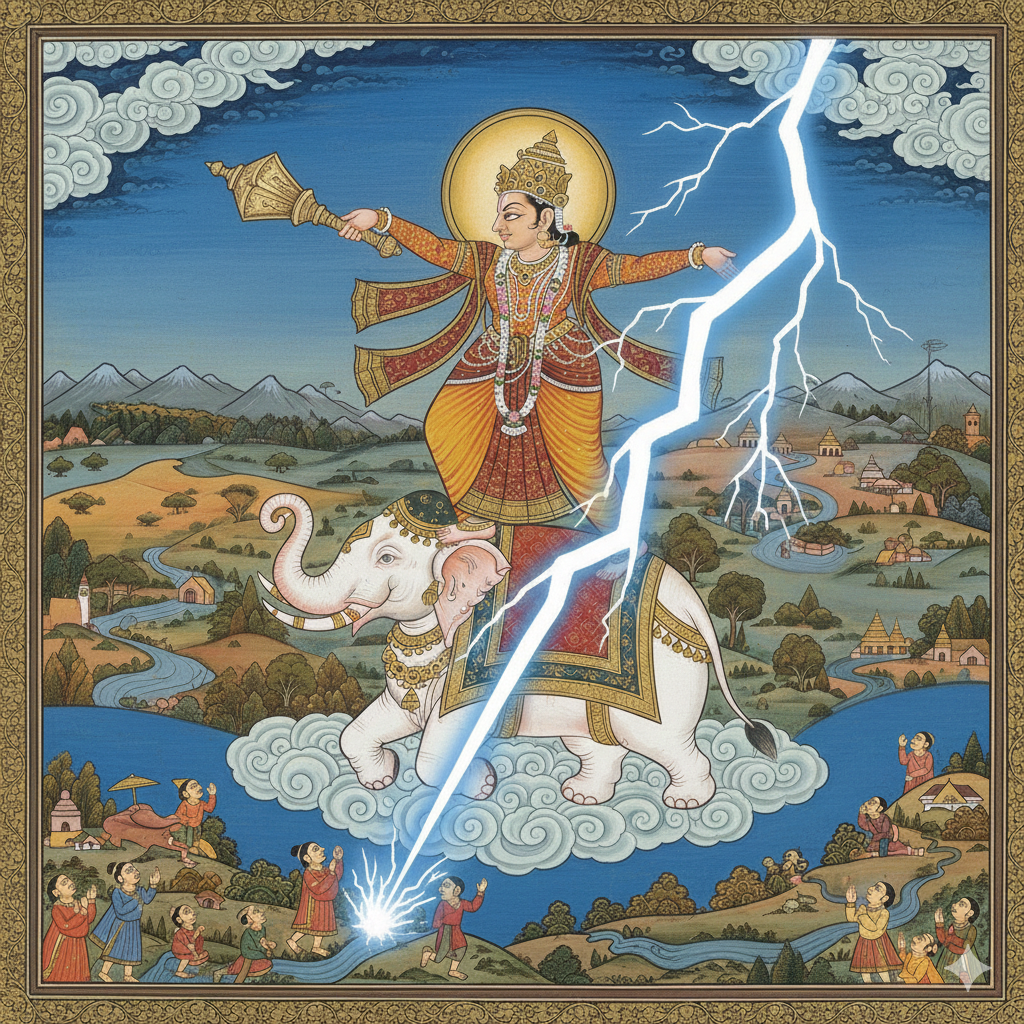
Deity: Lord Indra (King of the Heavens).
Vehicle: Airavata (The White Elephant)
Vajra translates to both “diamond” and “thunderbolt.” It represents the indestructibility of the soul and a divine force that shocks the system out of lethargy and heavy stagnation. It is used to break through deep spiritual numbness and awaken the soul, clearing away the desperate desire for external validation and deep-seated anxiety.
The Net of Illusions (Indra’s Net)
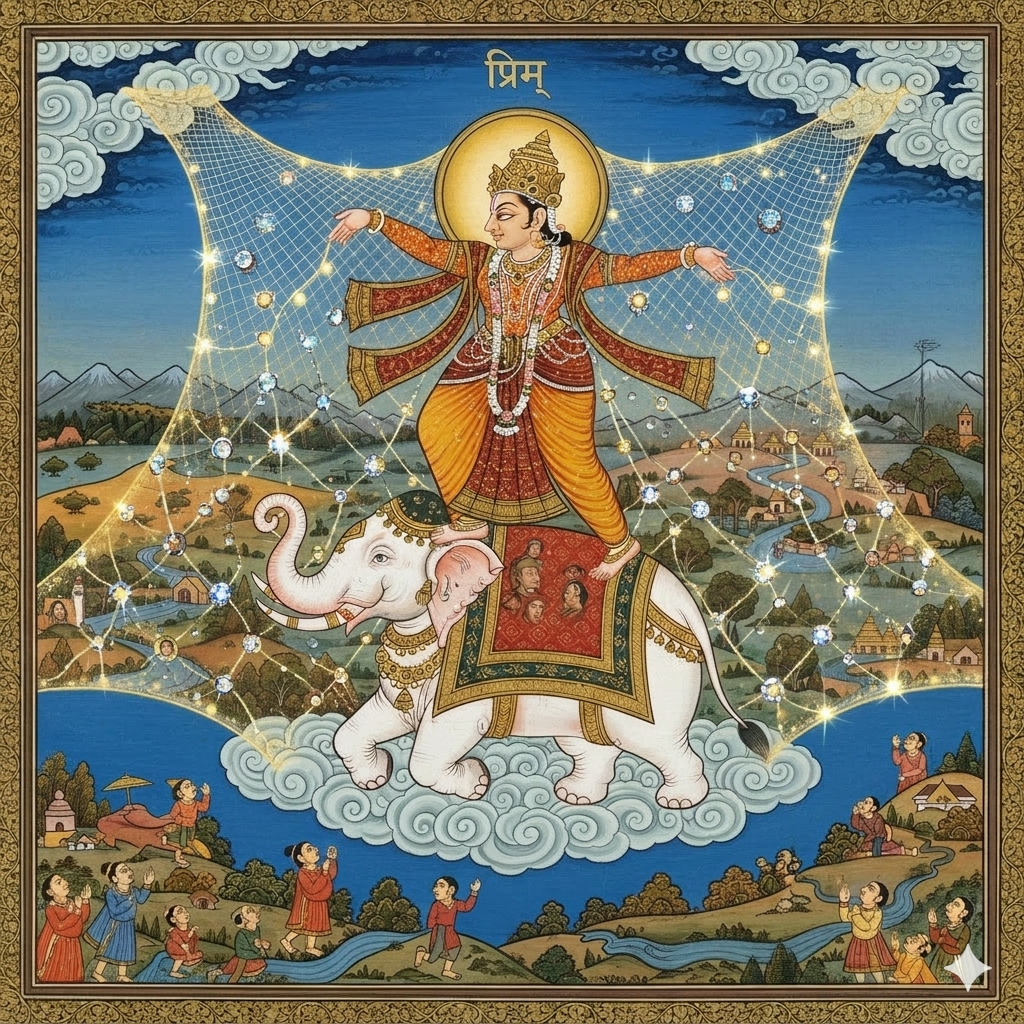
Deity: Indra, God of the heavens, lightning, thunder, storms, and rain.
A vast golden net cast across the sky, featuring a shining jewel at every single intersection. It symbolizes total interconnectedness—how every individual soul reflects every other soul like dew-drops on a spiderweb—collapsing the lonely illusion of separation.
The Spear (Shakti)
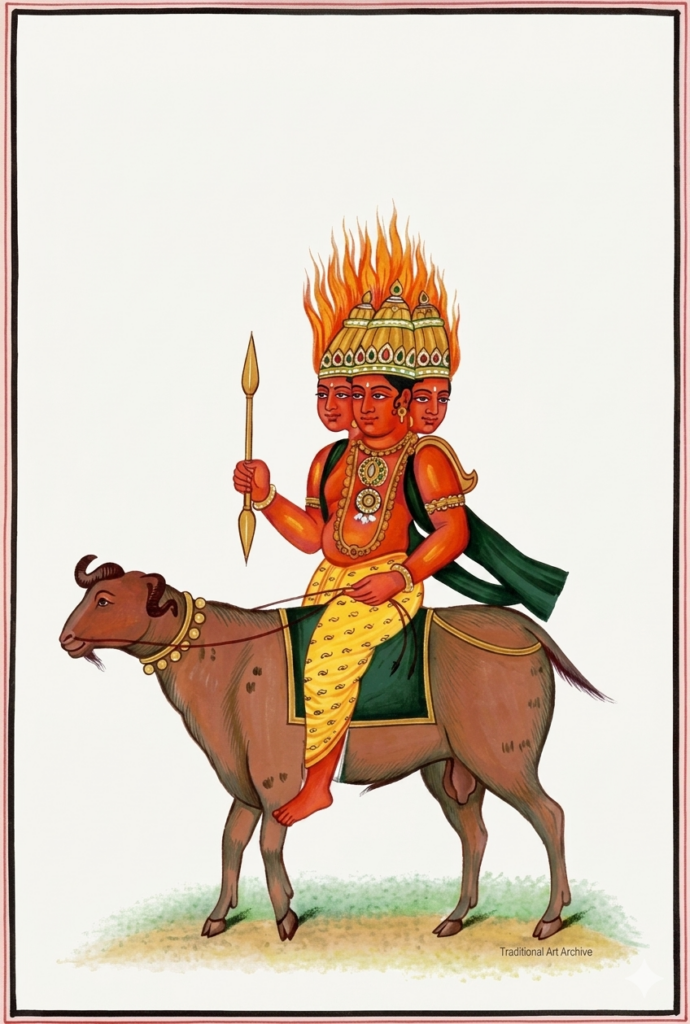
Deity: Agni (God of Fire).
A weapon of precise, one-pointed focus. Rather than simply pushing a negative desire away, its red-hot tip pierces the exact centre of delusions and obsessions, letting the craving slowly seep out until it loses all power over you.
The Trident (Trishula)
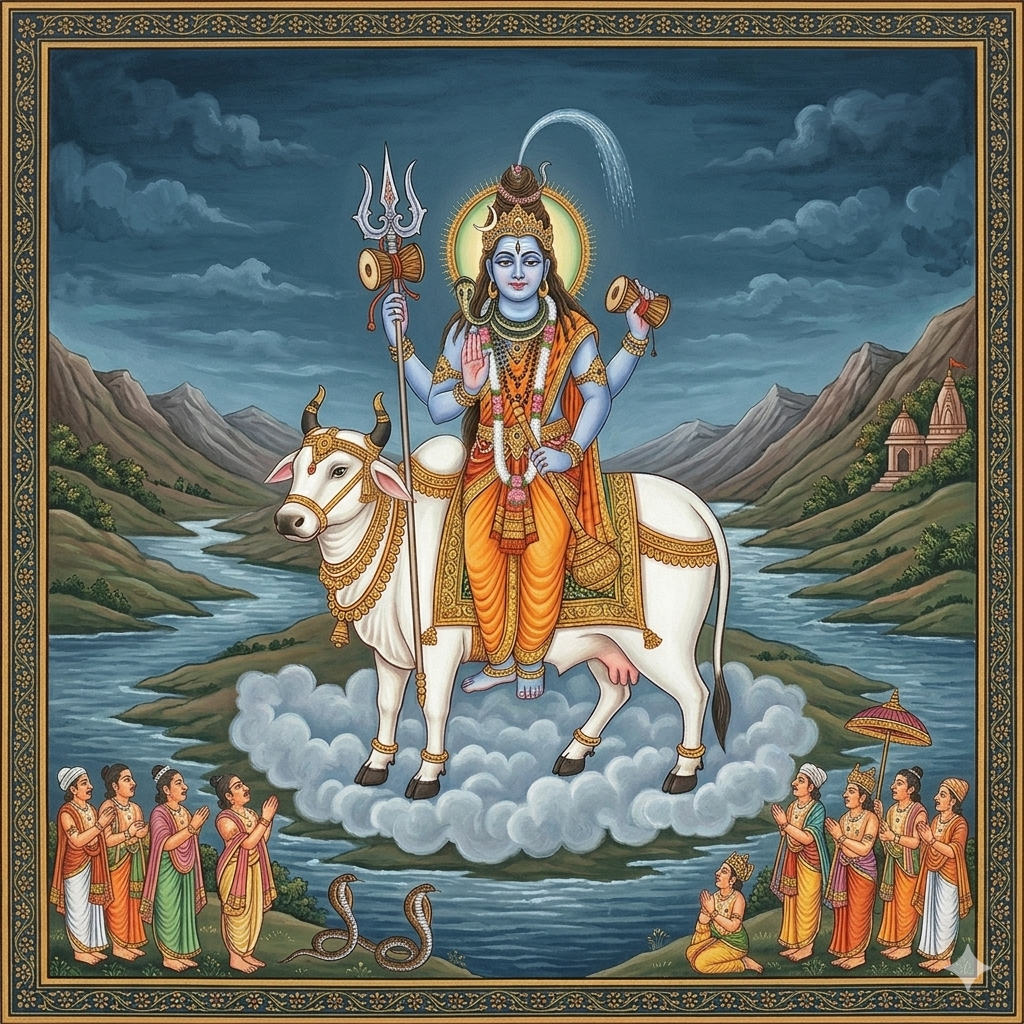
Deity: Lord Shiva and Goddess Durga.
The Trident is an instrument of ultimate balance and liberation. Its three prongs represent fundamental cosmic triads—
- The three qualities of nature (gunas: purity, passion, inertia)
- The three primary energy channels (Ida, Pingala, and Sushumna)
- The three states of consciousness (waking, dreaming, deep sleep
Meeting at a single staff signifies that all dualities merge back into unity, piercing the internal blocks that obstruct spiritual awakening.
The Discus (Sudarshana Chakra)
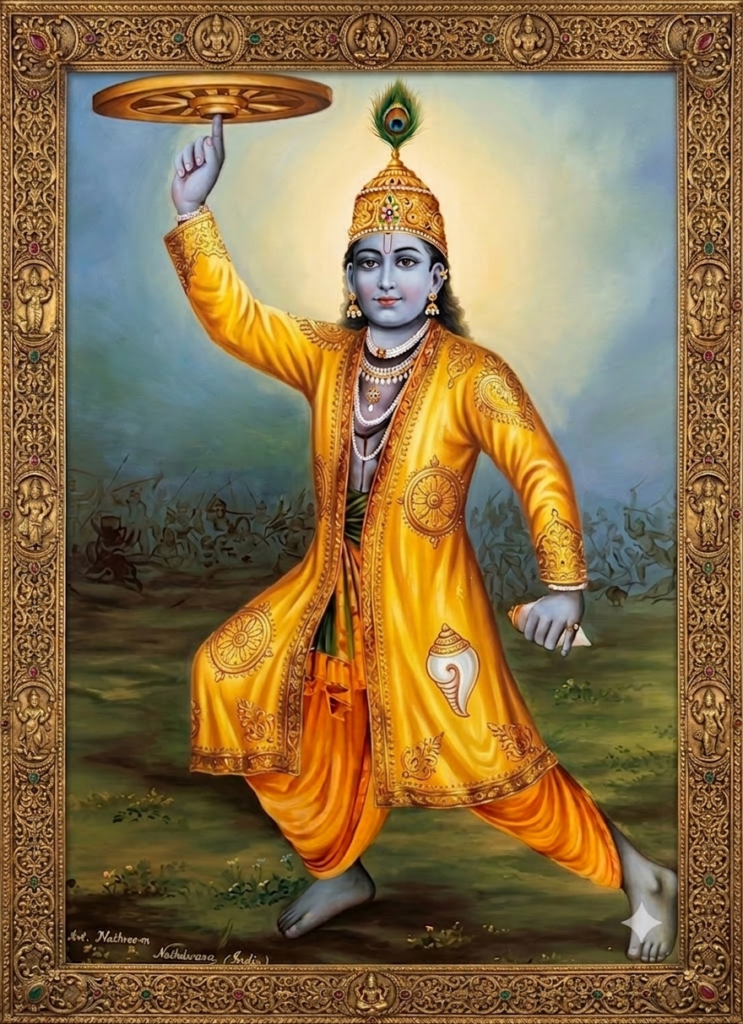
Deity: Lord Vishnu (and occasionally forms of the Goddess).
The spinning chakra wheel has millions of spokes representing cosmic order and the relentless movement of time. It acts as a high-velocity centrifuge for the mind. By spinning so fast, it throws the heaviness of ego out of the centre. The Discus actively stabilizes the seeker’s consciousness, cutting through the spinning, hyperactive mental doubts and clearing away internal confusion, allowing the mind to rest in absolute, quiet clarity.
The Shield (Kheta), Sword (Khadga) & Battle-Axe (Parashu)
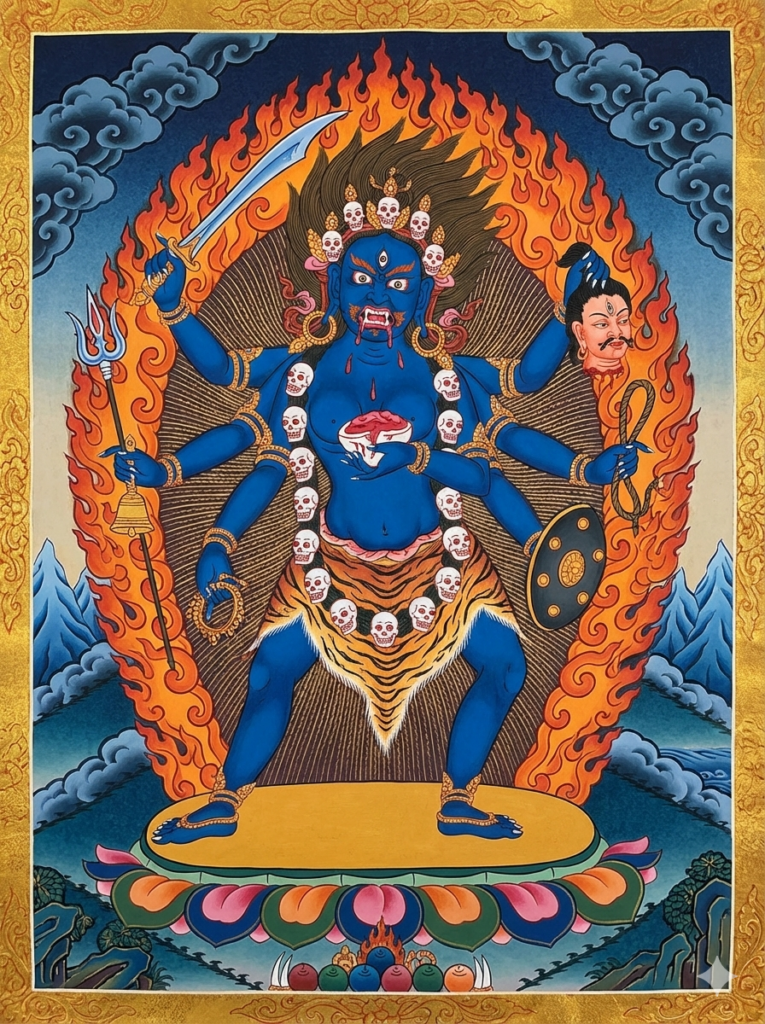
Deity: Fierce protective deities Goddess Kali, and Durga.
Instruments of swift, uncompromising spiritual surgery. The sword specifically represents sharp discernment and acts as a tool to cut off negative looping thoughts. The shield represents the impenetrable armour of pure awareness. It doesn’t just block external negativity; it protects the throat centre’s purity from the downward pull of lower emotional centres, keeping your upward-flowing life force from collapsing into worldly sorrow or panic. Together, they sever the energetic cords of backward-looking regret, shame, self-hatred, and forward-looking dread.
The Sacred Mirror (Darpana)
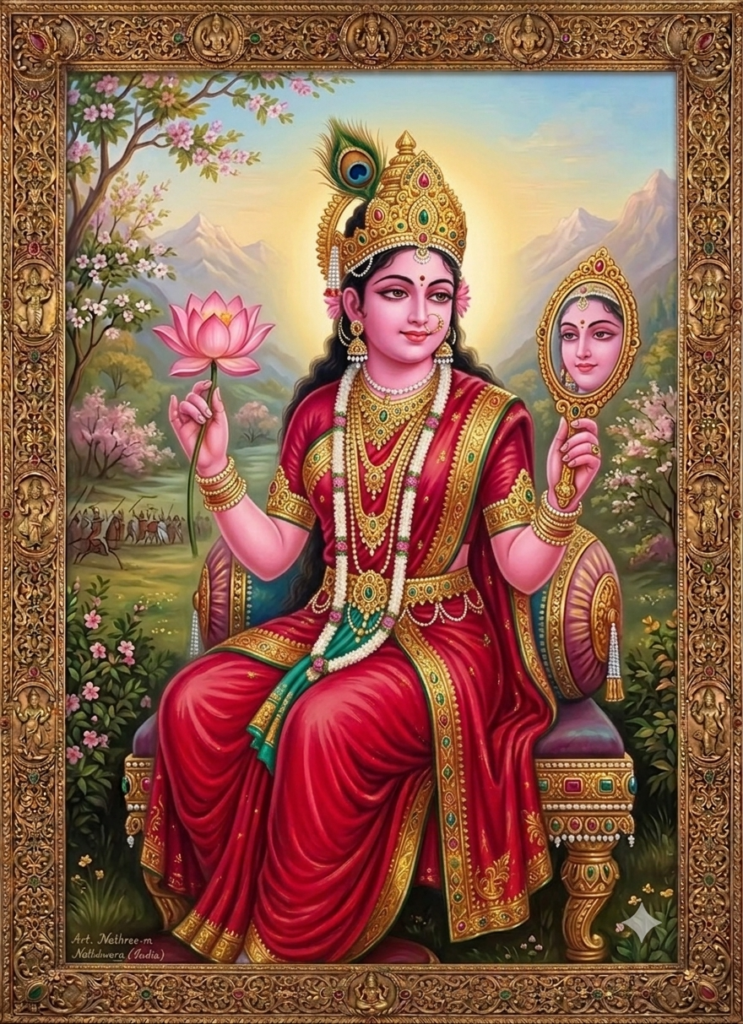
Deity: Goddess Parvati
Parvati represents Prakriti, the active, dynamic, and nurturing force of creation.
Parvati’s sacred mirror, darpana, reflects that the material, sensory, and material world is an illusion. It also reflects profound clarity. When your gaze is reflected inwards, the desire for external validation is burned up, and material attachment evaporates. It reveals that the outer world is simply a mirror of supreme consciousness.
The Arrow of Kama & The Five Flower Arrows
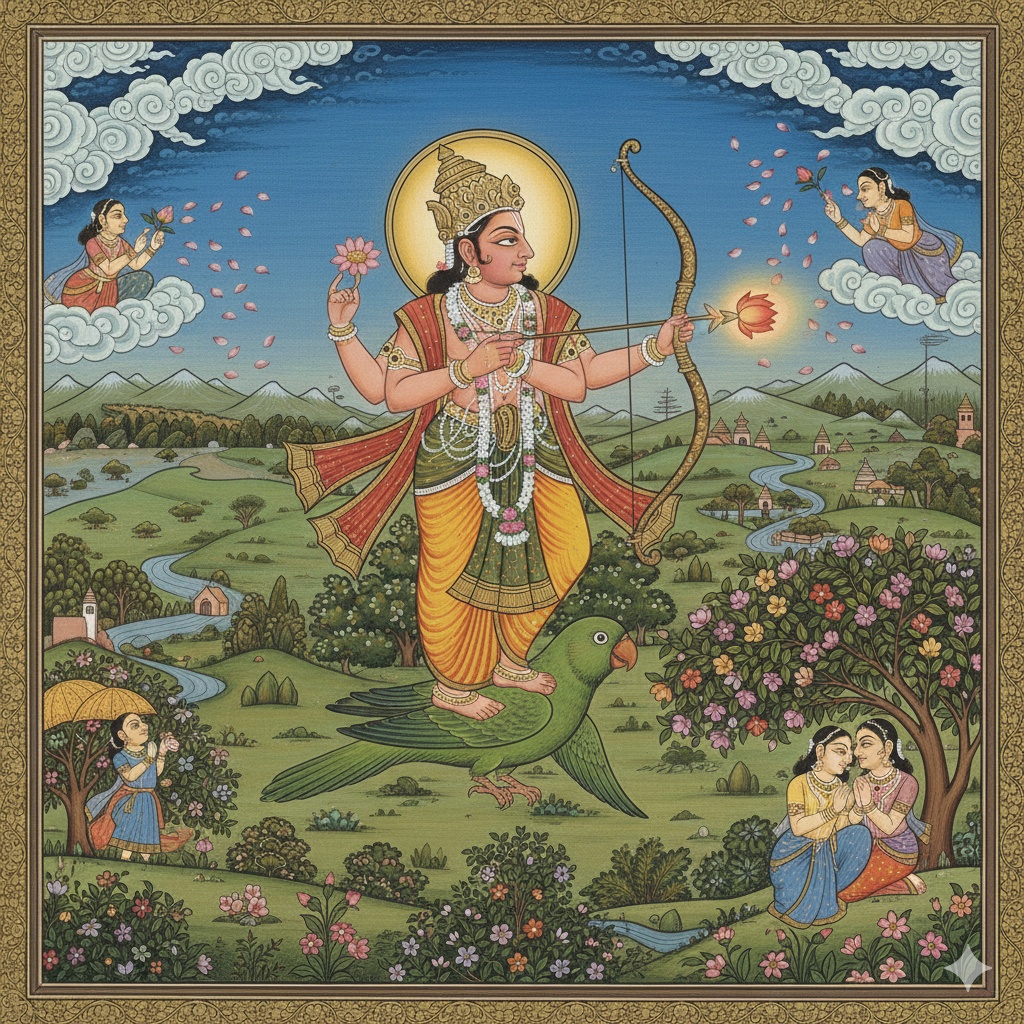
Deity: Lakini (Goddess of willpower) and Kama (God of Desire).
The Arrow represents the ability to hit your spiritual goals through intentionality, giving direction to raw energy. It pins down volatile mental flickering and grounds it into reality. Each flower arrow specifically purifies a sense pathway: Blue Water Lily: Purifies smell (clearing the deep, subtle mental imprints left by past experiences). Lotus: Purifies sight (transmuting physical attraction into seeing the divine spark). Ashoka: Purifies hearing (deflecting ego, gossip, and judgment). Mango Blossom: Purifies taste and speech (ensuring sweet, spiritually nourishing words). Jasmine: Purifies touch (cooling burning passion into devotional warmth).
The Noose (Pasha)
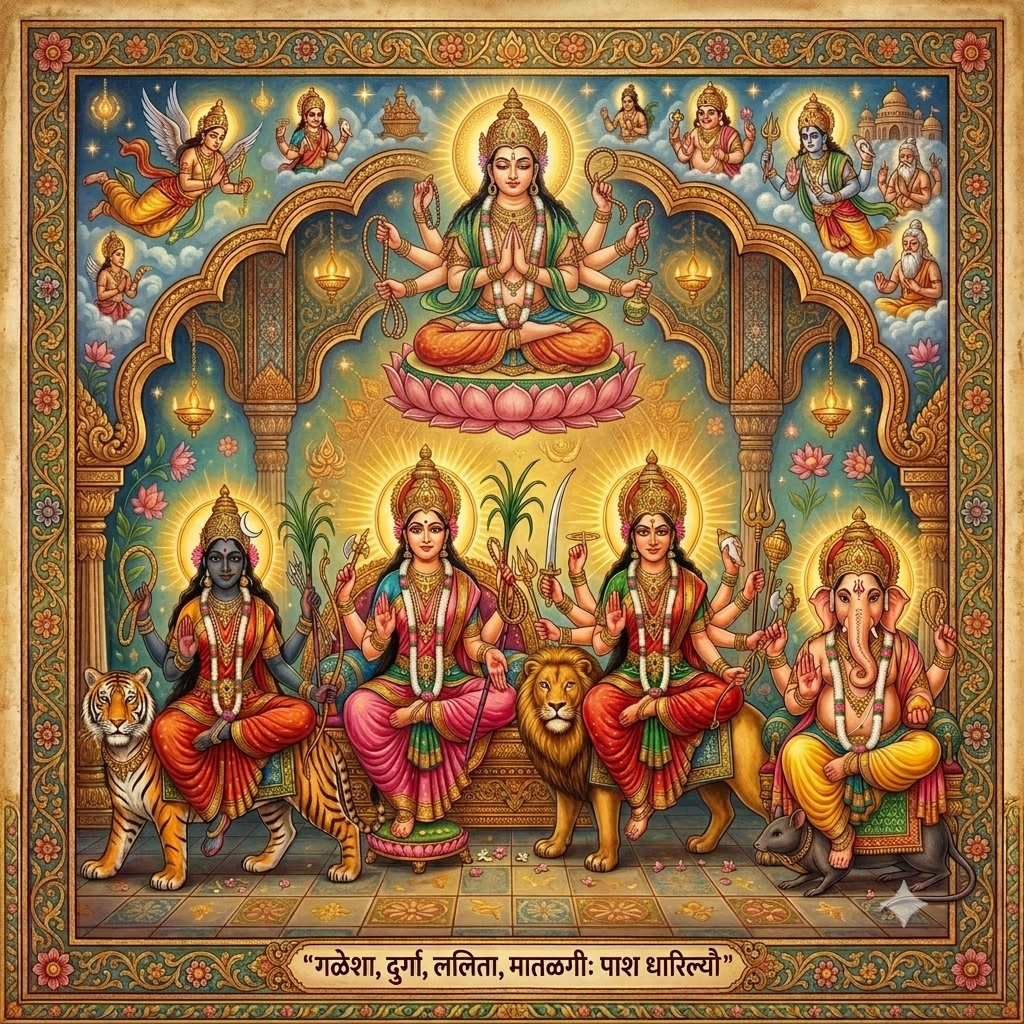
Deity: Lord Ganesha, Varuna, Yama, Amoghapasha (the Buddhist Bodhisattva of compassion), Goddess Durga, and Lalita Tripurasundari.
The noose acts as a containment field or lasso for scattered energy, reining in the wild impulses of the senses. It targets emotional volatility, co-dependency, and untamed rage, roping them back to the core to be bound by higher awareness. It represents the triple bond that keeps us from our true selves: ignorance of our divine nature, worldly delusion, and stagnant attachments.
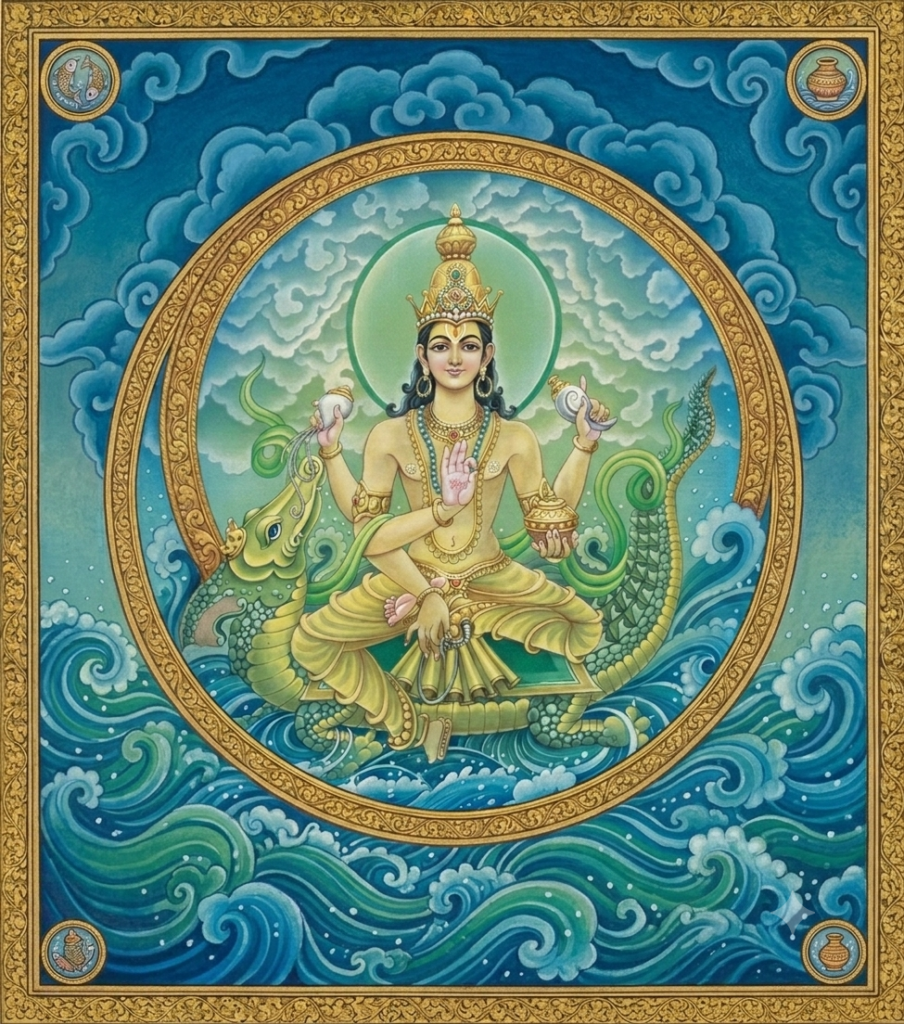
In the Svadhishthana (Sacral) Chakra, the Lasso is held by Varuna as he rides the Makara (the sea dragon).
Drawing the Soul Near: The Lasso is also used to gently pull the seeker toward the spiritual path, connecting us back to Divine love when we feel lost in the emotional tides.
Taming the Subconscious: Just as a cowboy uses a lasso to catch a wild horse, Varuna uses the Pasha to “catch” our wild, runaway emotions—like jealousy, greed, and anger—before they pull us under the water.
Yama – The God of Death and Dharma
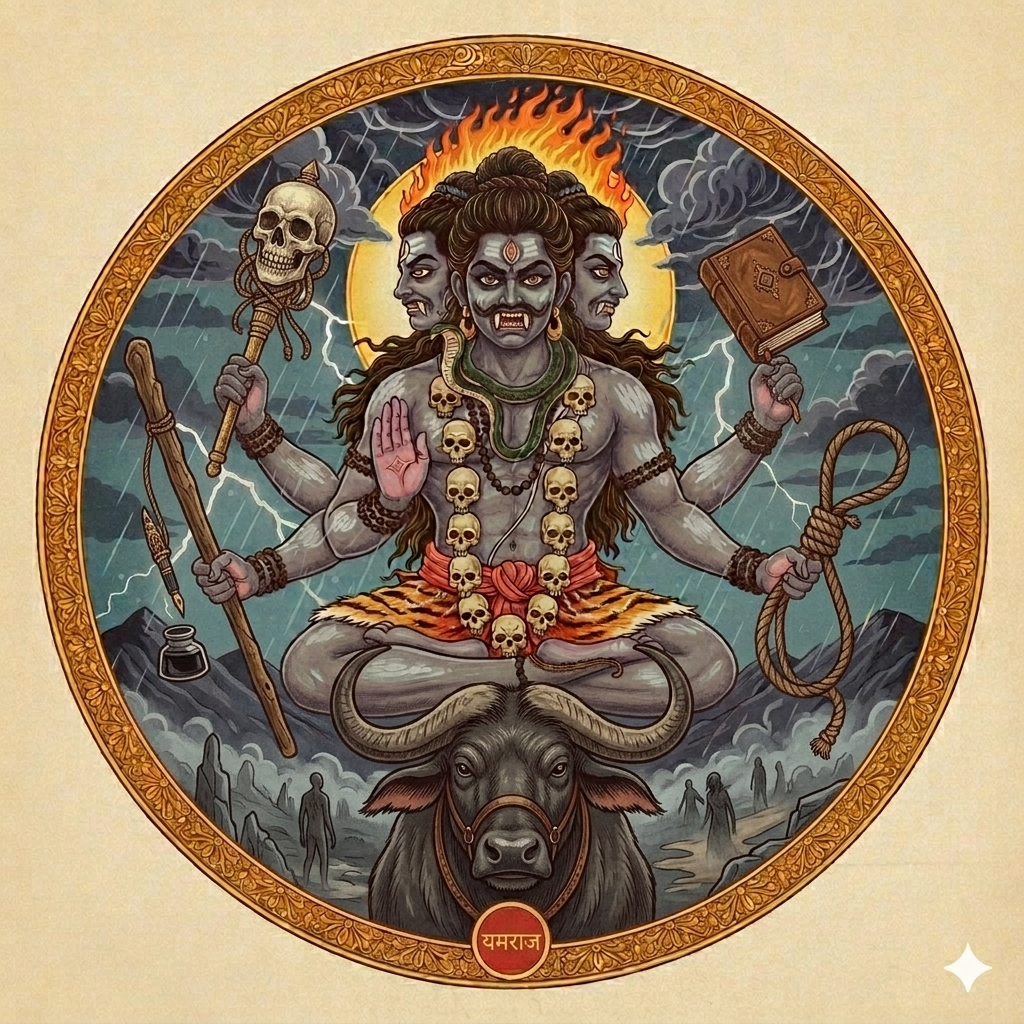
Yama, the Lord of Death and Justice, is the “Great Measurer” who carries specific instruments to represent his role in the transition of the soul. The Staff (Danda): He often carries a staff of justice used to maintain Dharma and discipline the ego. The Noose (Pasha) is the tool used to pull the soul out of the physical body at the moment of death. It represents the ultimate “binding” of karma—no one can escape the loop of their own actions. The Ledger of Breaths: While not always a physical object, Yama is believed to hold the “ledger” where every human’s pre-allocated number of breaths is recorded.
The Mala Beads
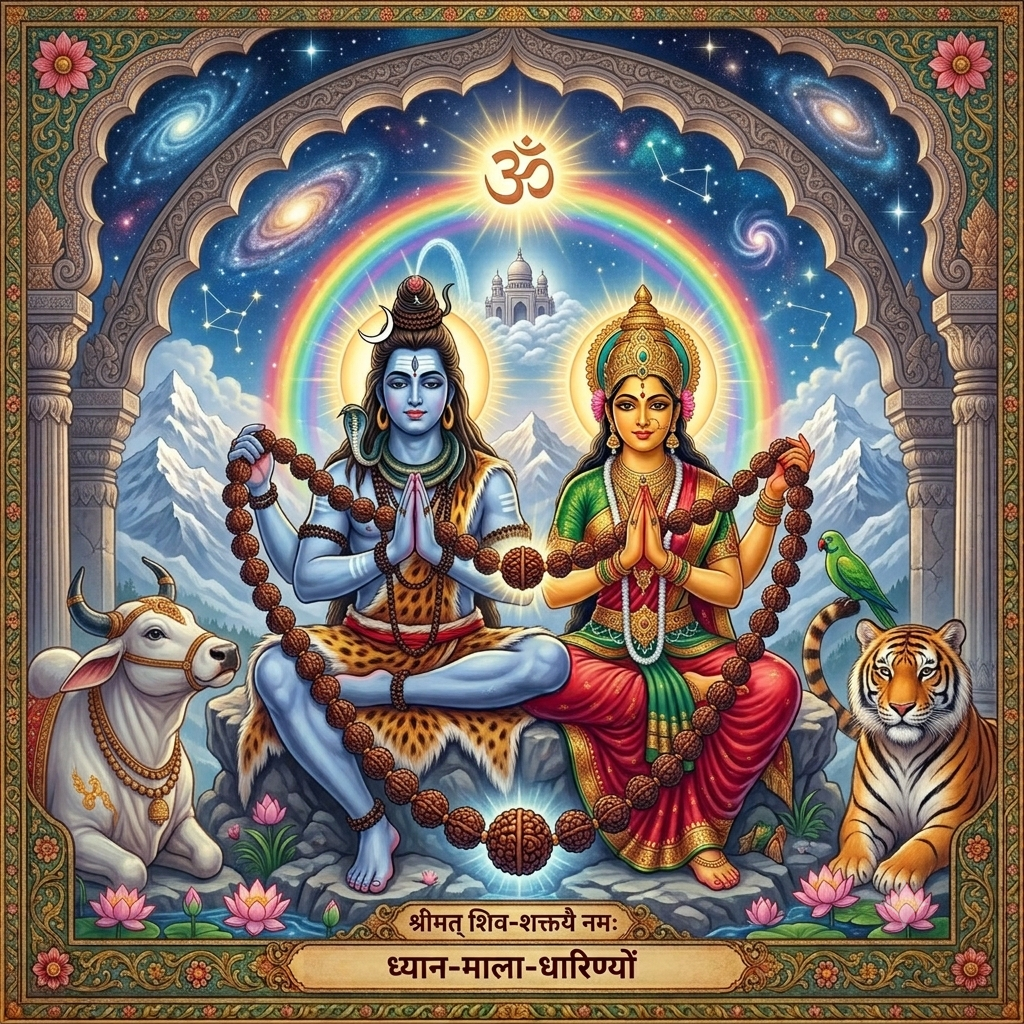
Deities: Brahma, Saraswati & Shiva
The mala beads are a timeless tool for cultivating mindfulness, mental clarity, and presence. Representing the continuous cycles of time and breath, this sacred strand serves as a physical anchor for your awareness. Instead of letting the mind drift into external chaos or worry, working with each bead systematically calms the nervous system, dissolves distractions, and trains your focus to stay centered, steady, and deeply connected to your inner truth.
The Mudras
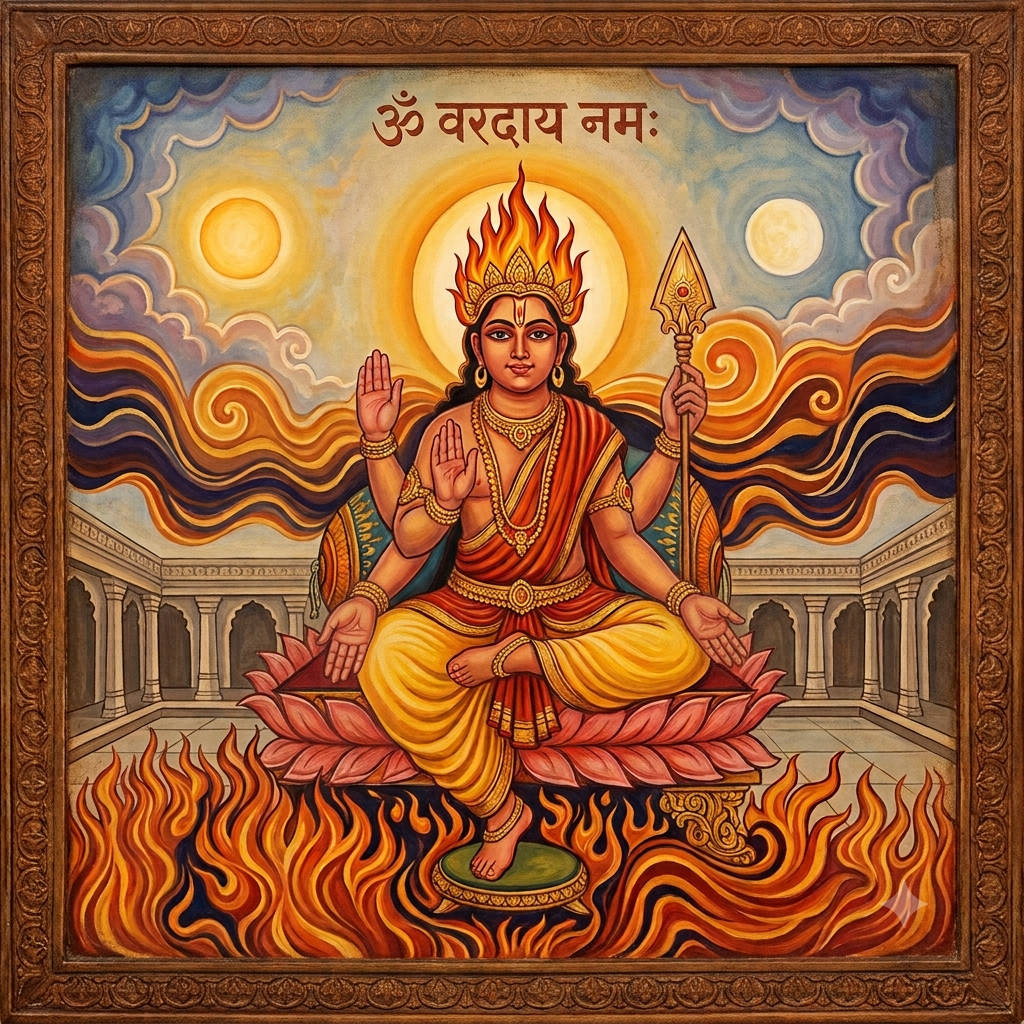
The Deities: Shiva and Agni
The Abhaya (dispelling fear) and Varada (granting boons) mudras serve as a spiritual shield against anxiety and despair. This sacred pairing acts as a powerful “weapon” of fearlessness, reflecting negative vibrations before they can disrupt your inner balance. By working with these gestures, you signal a shift from survival to safety: once your core intent is purified, the fiery, protective energy of the solar plexus transforms from a source of tension into a profound reservoir of safety, overflowing abundance, and peace.
The Lute (Veena)
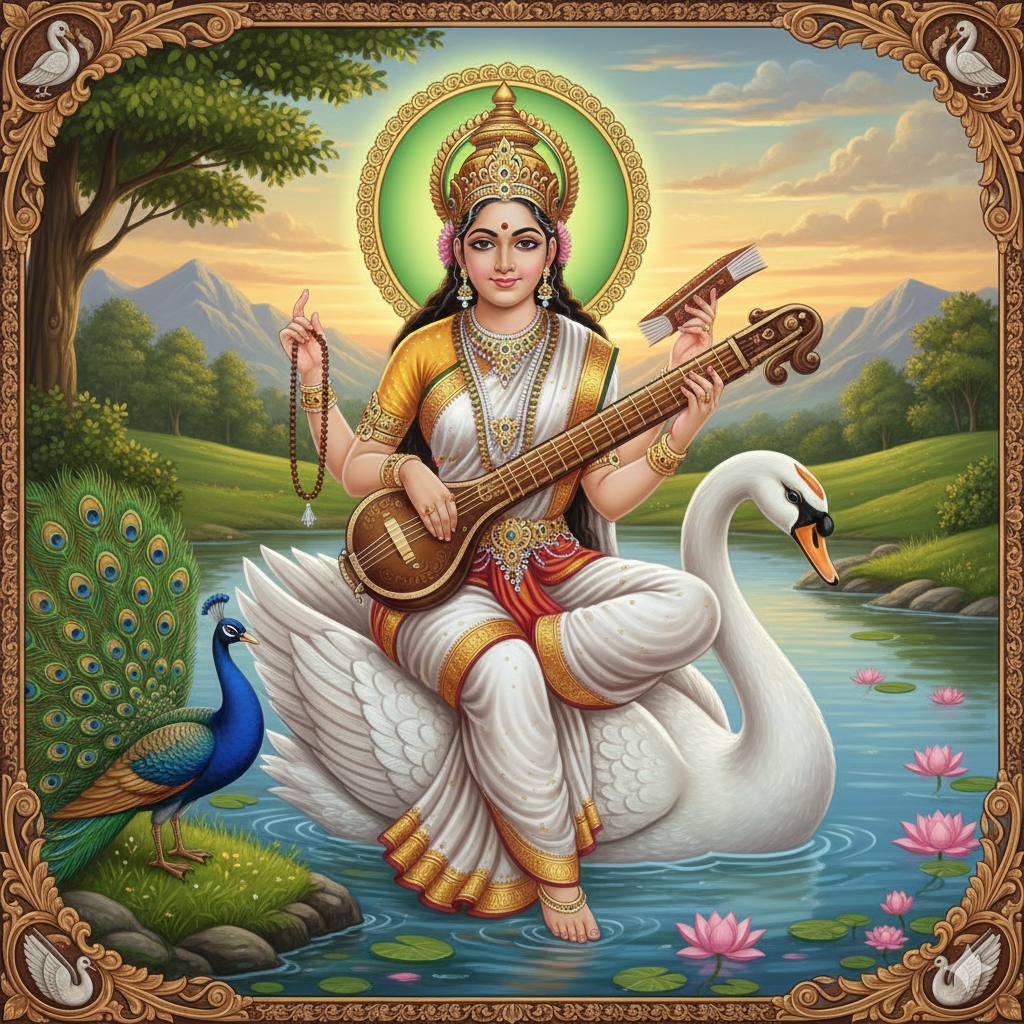
Deity: Saraswati
The lute is a precise instrument of inner harmony, designed to mirror the exact structure of the human spine and nervous system. Wielded by forces of wisdom and creative expression, its strings and frets correspond directly to the body’s primary energy pathways and centers. The action of this instrument is pure, resonant vibration. When the chords of the lute are struck, they dissolve mental static, anxiety, and internal noise, using the power of sound to tune your individual nervous system back into perfect alignment with the natural rhythm of the universe.
The Water Pot (Kamandalu)
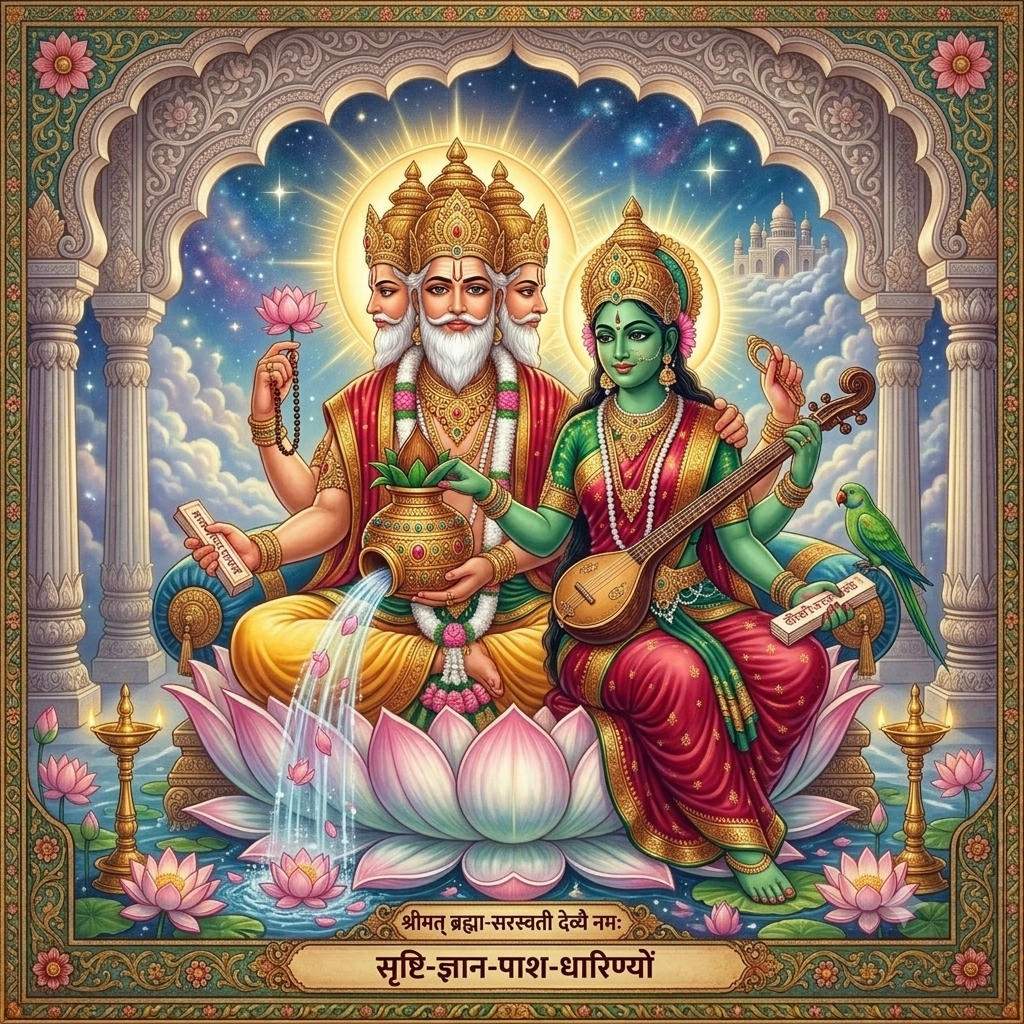
Deities: Lord Brahma and Goddess Saraswati.
The water pot serves as a universal symbol of renewal, purification, and inner wholeness. Historically associated with creators, teachers, and keepers of wisdom, this vessel represents the entire physical universe held in perfect balance. Instead of looking outside of yourself for fulfillment, the energy of the water pot represents a deep, internal cleansing. It washes away feelings of spiritual emptiness and stagnation, systematically clearing out old, heavy conditioning to transform your body and mind into a clean, vital container overflowing with life force and abundance.
Join the course to discover the bija mantras to invoke the power within your own consciousness.
🧭 Where to Next?
Return to the chakra journey you were exploring: